



(WEAT) (ZWN26) (CORN) (ZCN26) (SOYB) (ZSN26) (DBA) (TAGS)
“For Midwest grains: More heavy rains and severe weather coming”
by Jim Roemer - Meteorologist - Commodity Trading Advisor - Principal, Best Weather Inc. & Climate Predict - Publisher, Weather Wealth Newsletter and Climatelligence
Scott Mathews - Editor and Co-Producer of Climatelligence
- June 16, 2026
We posted a similar version of this article on the Substack Climatelligence page:
https://climatelligence.substack.com/
derecho /də-rā′chō/
noun
A windstorm that is accompanied by a quickly moving, usually bow-shaped band of showers or thunderstorms.
A straight wind without apparent cyclonic tendency, usually accompanied by rain and often destructive, common in the prairie regions of the United States.
A windstorm with strong straight-line winds.
Derechos are most common in the central and eastern United States, especially in the Midwest, the Southern Plains, and the Ohio and Mississippi valleys. They usually occur in late spring and summer. In fact, more than 75% of derechos in the USA occur between April and August.
A derecho starts life as a thunderstorm, or cluster of thunderstorms. If conditions are right and there is plenty of warm, humid air at the surface, combined with a strong, straight jet stream, the storm can build into a towering system.
There are going to be two major Derechos in the Midwest over the next week. One later on Wednesday and one early next week. You can follow that forecast here https://www.bestweatherinc.com/commodities/what-is-derecho-why-severe-weather-and-flooding-will-hit-some-midwestern-grain-areas/ and see why from Iowa to Indiana, major high winds, tornadoes, and heavy rains will occur.
Warm currents of rising air combine with downdrafts of colder, rain-bearing air. These spill out of the bottom of the cloud and spread out horizontally, creating strong bursts of wind. This forces warm air at the surface upwards, creating a "gust front”.
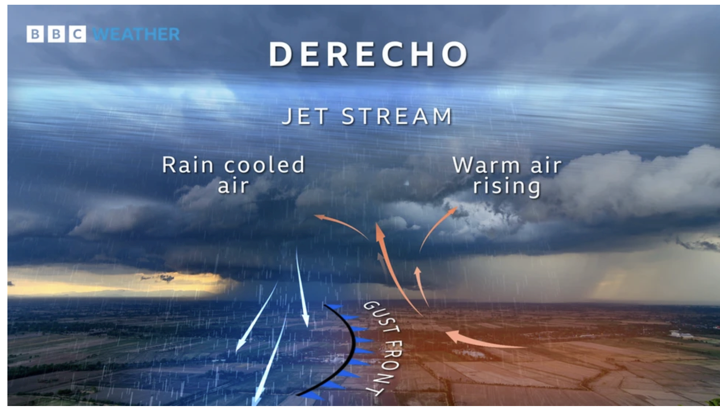
Image Source: BBC News
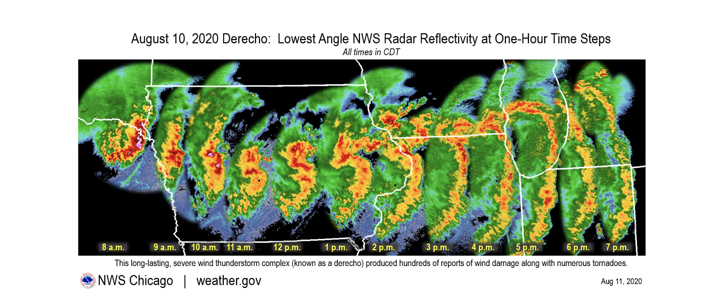
One of the worst Derechos during the Midwest corn and soybean growing season was August 10, 2020. The radar shows an intense storm that knocked over thousands of acres of crops across three or four Midwest States and damaged homes, barns, roads, etc.
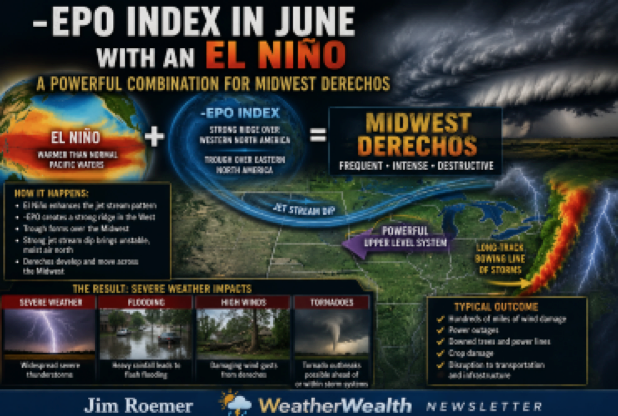
While El NIño, in itself, does not always feature major July flooding and severe weather. However, when it is combined with a negative EPO (warm block over Alaska), it can be. This was evident towards the end of the 1991-1993 El Niño cycle. Severe weather and flooding hit Midwestern grains in June and early July 1993. Usually, “rains make grains” but NOT during the early summer of 1993.
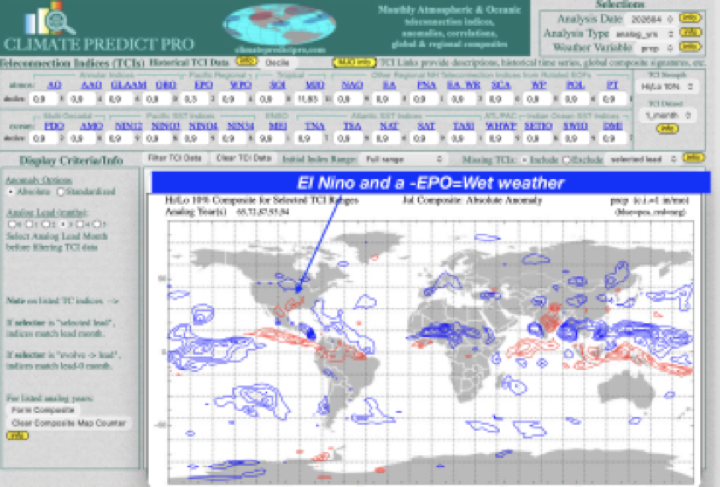
Image Source: Climate Predict, LLC
Hopefully, Midwestern farmers will get a break in July from the additional severe weather and flooding that will hit several states again over the next week.—Jim Roemer
Do you want reports like this with an occasional trade idea in commodities? We will be offering a free trial to our Climatelligence reports soon. Climatellience is a less expensive, abbreviated version of our globally popular WeatherWeath newsletter.
Make sure you download our SUBSTACK app here if you have not already. Climatelligence.substack.com
Remember, when trading commodities, always apply risk management, such as stop-loss orders and position sizing, and consider using spreads to isolate the seasonal component of a particular market move.
Thanks for your interest in Commodity Weather Intelligence!
Jim Roemer, Scott Mathews, and the BestWeather Team
Mr. Roemer owns Best Weather Inc., offering weather-related blogs for commodity traders and farmers. He is also a co-founder of Climate Predict, a detailed long-range global weather forecast tool. As one of the first meteorologists to become an NFA-registered Commodity Trading Advisor, he has worked with major hedge funds, Midwest farmers, and individual traders for over 35 years. With a special emphasis on interpreting market psychology, coupled with his short-term and long-term trend forecasting in grains, softs, and energy markets, he holds a unique standing among advisors in the commodity risk management industry.


/A%20close-up%20of%20a%20SpaceX%20sign%20by%20Sundry%20Photography%20via%20Adobe%20Stock.jpeg)
/Green%20hydrogen%20by%20Scharfsinn%20via%20Shutterstock.jpg)
/Abbvie%20Inc%20HQ%20photo-by%20vzphotos%20via%20iStock.jpg)
