



/Netflix%20On%20TV%20with%20Remote.jpg)
A short iron condor is an income strategy that aims to profit when a stock stays within a specified range over the course of the trade. The trade is composed of four options with the same expiration:
- A long put far out of the money
- A short put closer to the money
- A long call far out of the money
- A short call closer to the money
The maximum profit is limited to the premium received while the maximum potential loss is also capped. To calculate the maximum loss, take the difference in the strike prices of the long and short options, and subtract the premium received.
Traders should have a neutral outlook on the stock and ideally look to enter when the stock has a high implied volatility rank.
Let’s take a look at Barchart’s Short Iron Condor Screener for February 23rd:
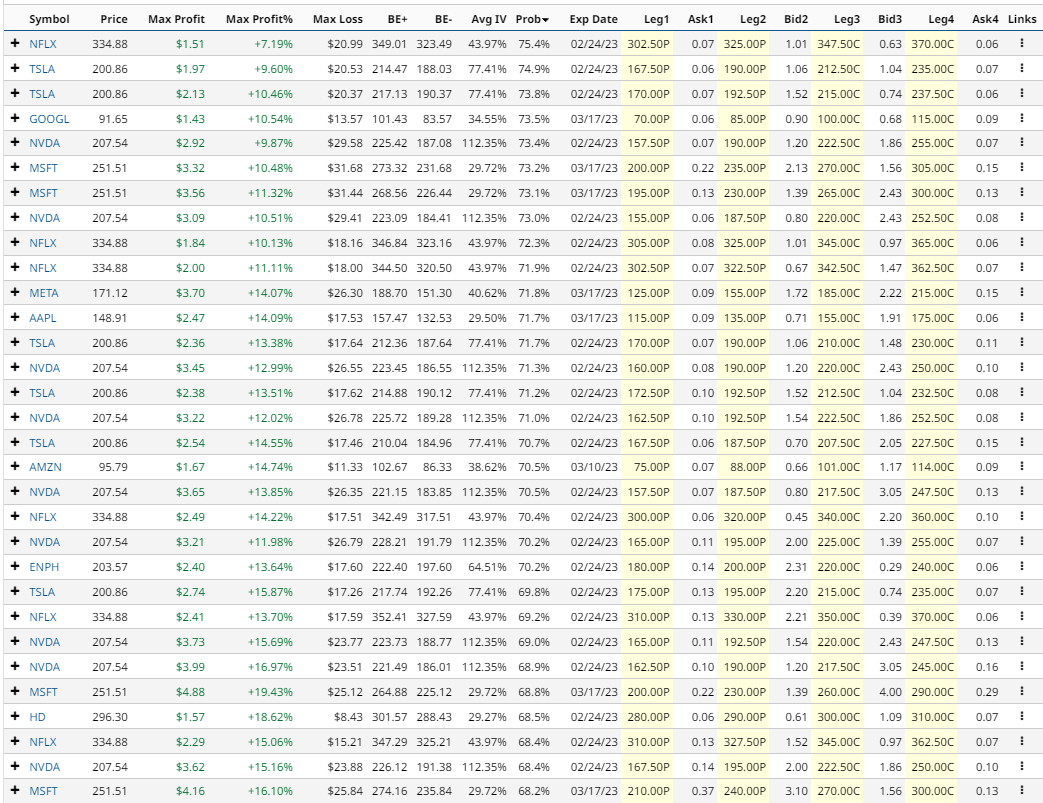
As you can see, the scanner shows some interesting Iron Condor trades on stocks such as NFLX, TSLA, GOOGL, NVDA, JPM, META and AAPL. Some of the results are very short-term trades and may not be suitable for all traders.
Let’s adjust the scanner to make sure we are only looking for iron condor trades with between 15 and 60 days to expiry. We will also set a parameter for Expires Before Earnings = Yes.
This scan gives us the following results:
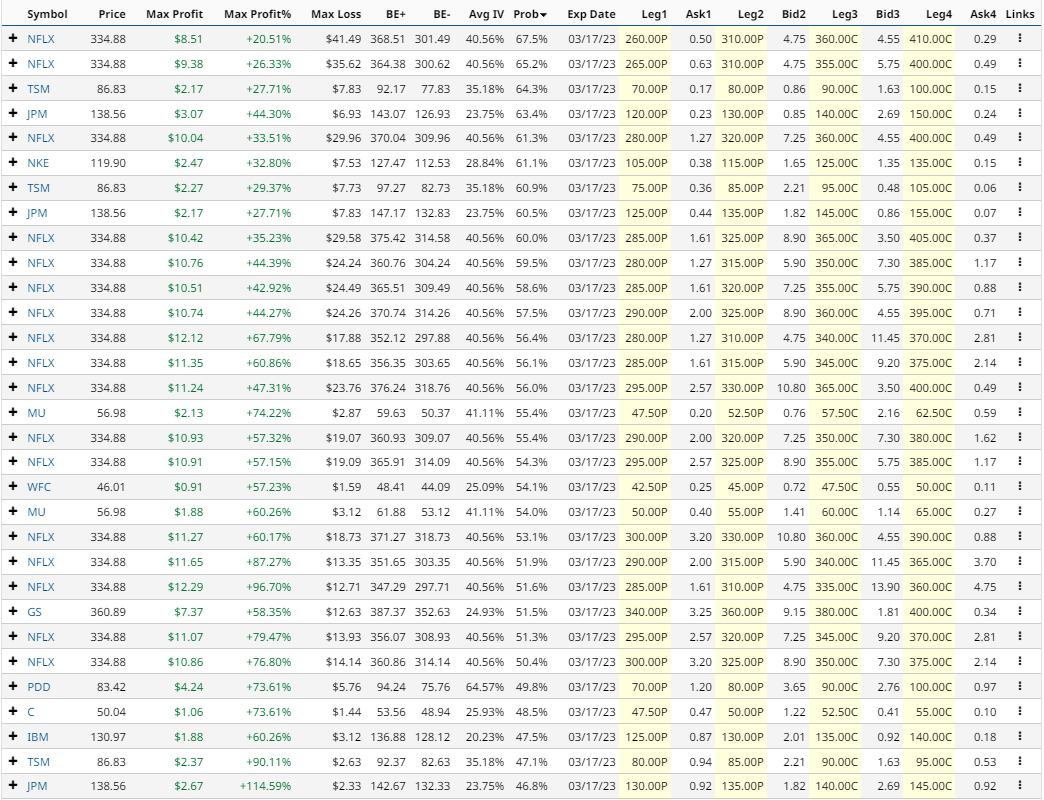
Let’s take a look at the first line item – an iron condor on Netflix.
Using the March 17 expiry, the trade would involve selling the 310 put and buying the 260 put. Then on the calls, selling the 360 call and buying the 410 call.
The price for the condor is $8.51 which means the trader would receive $851 into their account. The maximum risk is $4,149 for a total profit potential of 20.51% with a probability of 67.5%.
The profit zone ranges between 301.49 and 368.51. This can be calculated by taking the short strikes and adding or subtracting the premium received.
As both spreads are $50 wide, the maximum risk in the trade is 50 – 8.51 x 100 = $4,149.
Therefore, if we take the premium ($851) divided by the maximum risk ($4,149), we see that this iron condor trade has the potential to return 20.51%.
The Barchart Technical Opinion rating is an 80% Sell with a weakest short term outlook on maintaining the current direction.
Long term indicators fully support a continuation of the trend.
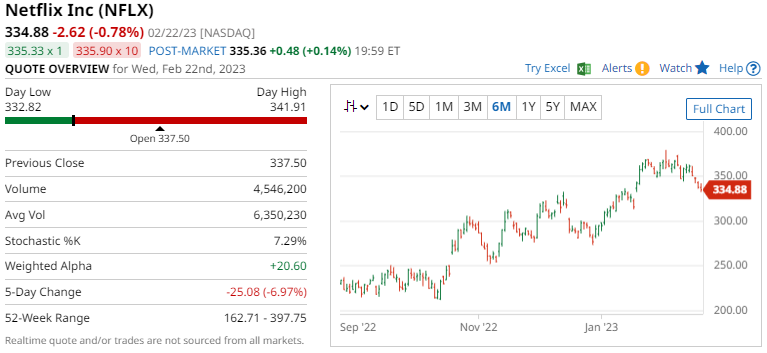
NFLX is showing an IV Percentile of 8% and an IV Rank of 9.57%. The current level of implied volatility is 41.14% compared to a 52-week high of 86.80% and a low of 36.31%.
The next Iron Condor we will look at is on JP Morgan (JPM) also for the March 17th expiration.
The JPM condor has a higher maximum profit in percentage terms at 44.30%. This example involves selling the 130 put and buying the 120 put, then selling the 140 call and buying the 150 call.
The maximum profit potential is $307 with maximum risk of $693. The total profit zone ranges between 126.93 and 143.07.
The Barchart Technical Opinion rating is an 80% Buy with a weakening short term outlook on maintaining the current direction.
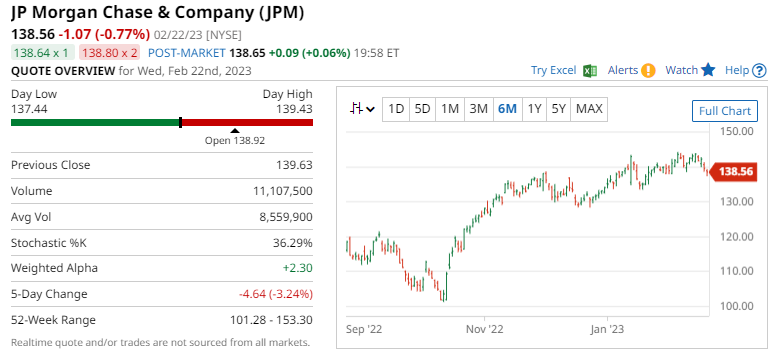
JPM is showing an IV Percentile of 14% and an IV Rank of 18.30%. The current level of implied volatility is 24.28% compared to a 52-week high of 44.62% and a low of 19.72%.
Mitigating Risk
Thankfully, iron condors are risk defined trades, so they have some build in risk management. The most the NFLX example can lose is $4,149 while the JPM condor has risk of $693.
For each trade consider setting a stop loss of 25-30% of the max loss.
Iron condors can also contain early assignment risk, so be mindful of that if the stock breaks through the short strike and it’s getting close to expiry.
Please remember that options are risky, and investors can lose 100% of their investment. This article is for education purposes only and not a trade recommendation. Remember to always do your own due diligence and consult your financial advisor before making any investment decisions.
More Stock Market News from Barchart
- The $1.8 Trillion A.I. Arms Race
- Stocks Little Changed as Hawkish FOMC Minutes Are Largely as Expected
- Now Is the Time to Buy This Mexican Underdog
- Unusual Call Options Activity in Antero Resources Shows Bullish Outlook
On the date of publication, Gavin McMaster did not have (either directly or indirectly) positions in any of the securities mentioned in this article. All information and data in this article is solely for informational purposes. For more information please view the Barchart Disclosure Policy here.

/A%20close-up%20of%20a%20SpaceX%20sign%20by%20Sundry%20Photography%20via%20Adobe%20Stock.jpeg)


/A%20close-up%20of%20the%20SpaceX%20sign%20on%20a%20black%20building%20by%20IanDewarPhotography%20via%20Adobe%20Stock.jpeg)
/NVIDIA%20Corp%20video%20chip-by%20Antonio%20Bordunovi%20via%20iStock.jpg)