




- I've been expecting noncommercial buying interest to return to commodities in general, corn and soybeans in particularly during the first week or so of August.
- The rally early Thursday could be hinting at renewed buying interest from this group, as both December corn and November soybeans follow their respective short-term technical patterns.
- Both markets remain fundamentally bullish as well, with the extended weather forecast likely playing a larger role in new-crop soybeans.
While it is still relatively early in Thursday’s session for the grain and oilseed sector, with the midpoint coming up at 11:00 (CT) opening the door to a possible “noon swoon”[i], and possible pressure heading into the last half-hour of the session[ii]. In the end, as the Wilhelmi Element[iii] tells us the only price that matters is the close. Okay, now that all this is out of the way, it has been an impressive session so far for both corn and soybeans. Notice I didn’t say “surprising”, as both markets are doing what they should from both a technical and fundamental point of view.
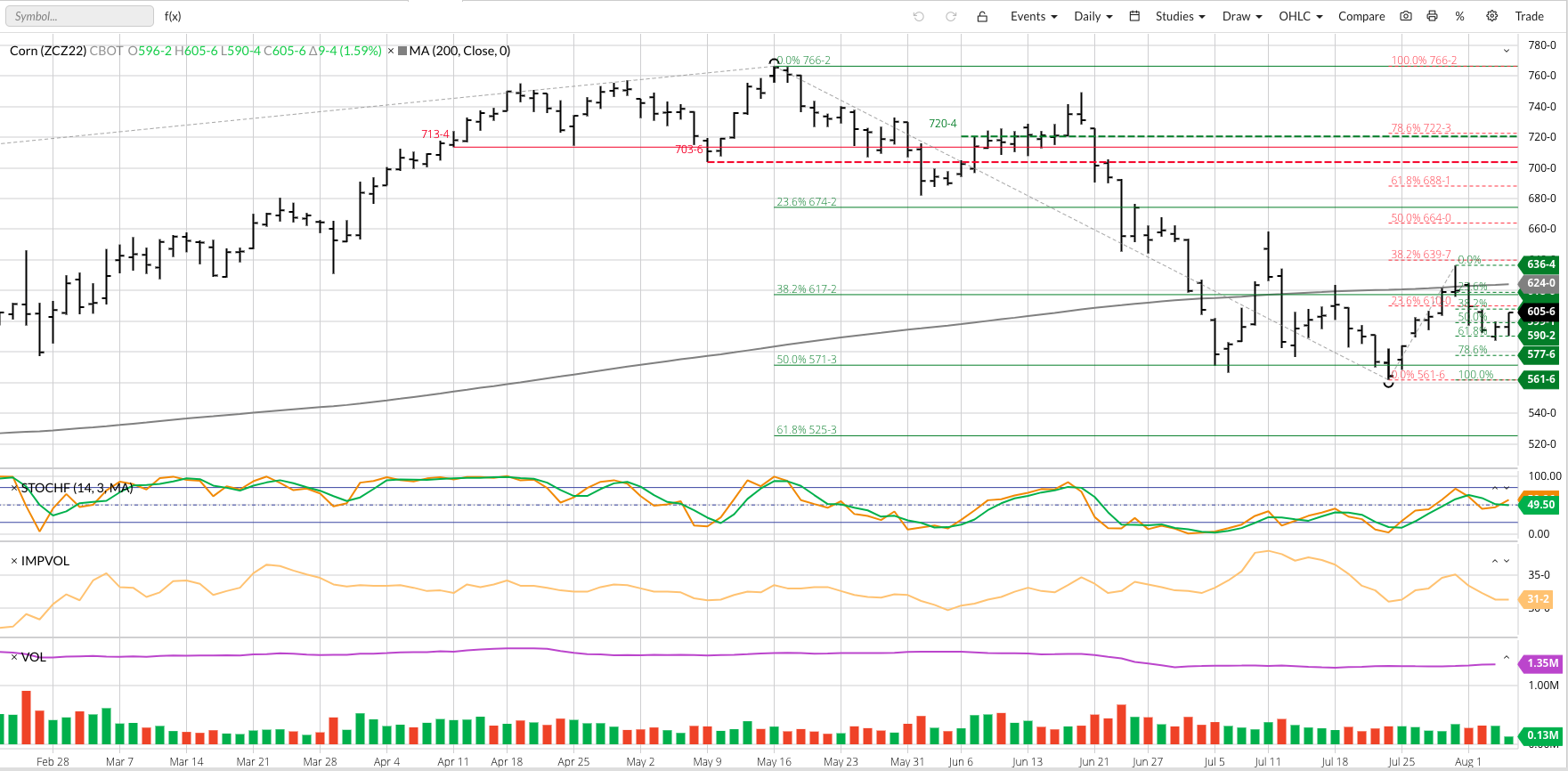
Let’s start with corn’s technical picture. If nothing else, King Corn tends to follow its chart patterns better than a number of other markets, notably the Court Jester known as Wheat. A look at December corn’s (ZCZ22) daily chart shows a short-term 5-wave uptrend is ongoing, a pattern that started with a bullish 2-day reversal completed on Monday, July 25 and was immediately followed by a breakaway gap on Tuesday, July 26. Wave 1 saw Dec quickly climb to a high of $6.3650 on Friday, July 29 before closing back below its 200-day moving average (a technical indicator I don’t use all that often, but algorithms track). The first three days of this week saw Dec corn move lower in a Wave 2 selloff, reaching support at the target of $5.9025, the 61.8% retracement level of Wave 1. If the contract is now in a Wave 3 rally we should expect a couple things: 1) Trade volume (bottom of chart) should start to increase, and 2) the contract will take out its Wave 1 high with the next upside target just beyond at $6.40.
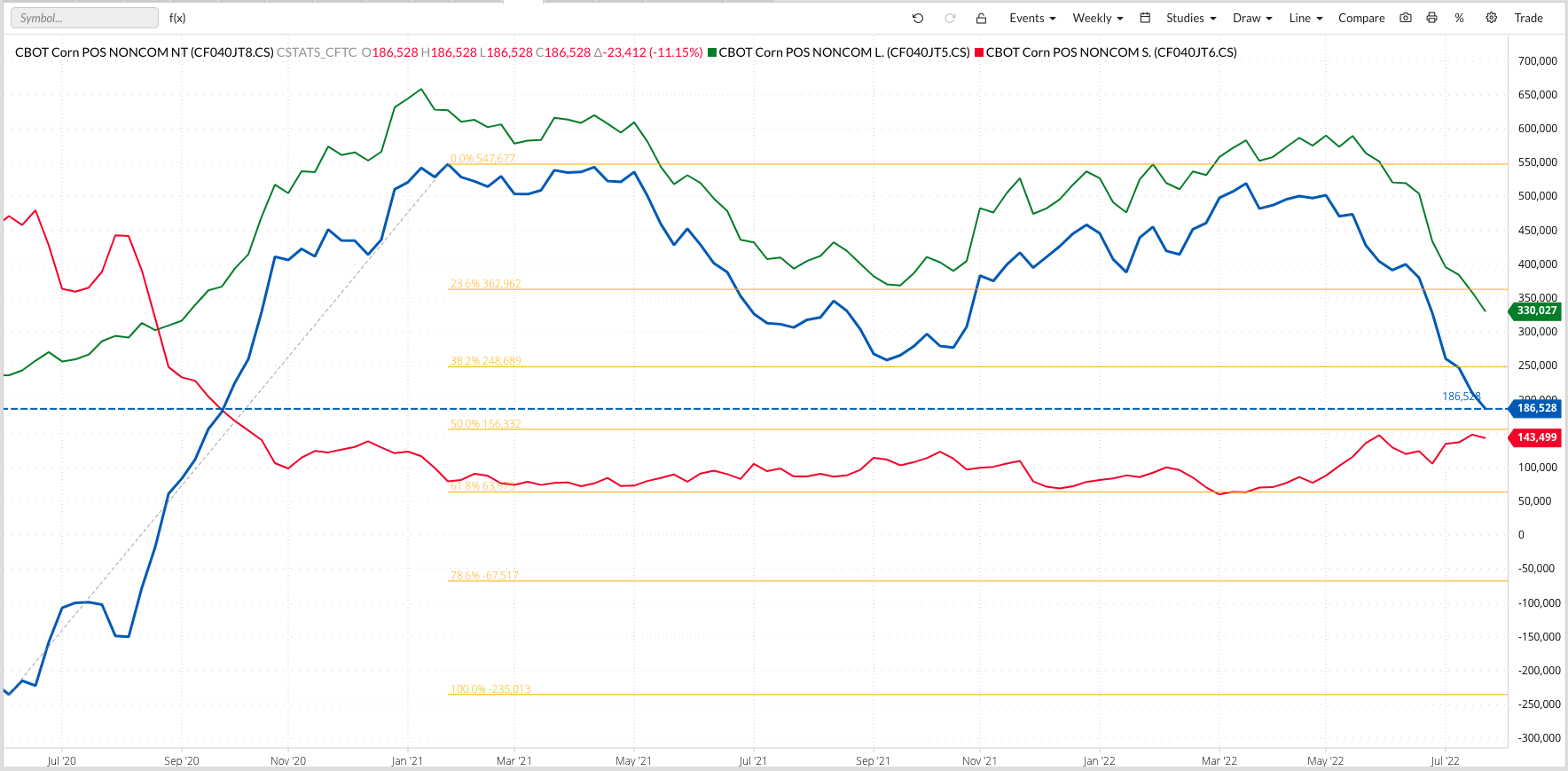
For all this to happen, corn will need to see noncommercial traders return as buyers. Recall from previous discussions I’ve been looking for this group to return to the market in early August, after the July interest rate hike by the US Federal Reserve and around the time of the next Goldman Roll that begins Friday. It will be interesting to see what the next weekly CFTC Commitments of Traders report (legacy/futures only, the only one that matters) shows, if the noncommercial net-long futures position was trimmed to near the downside target of 156,332 contracts.
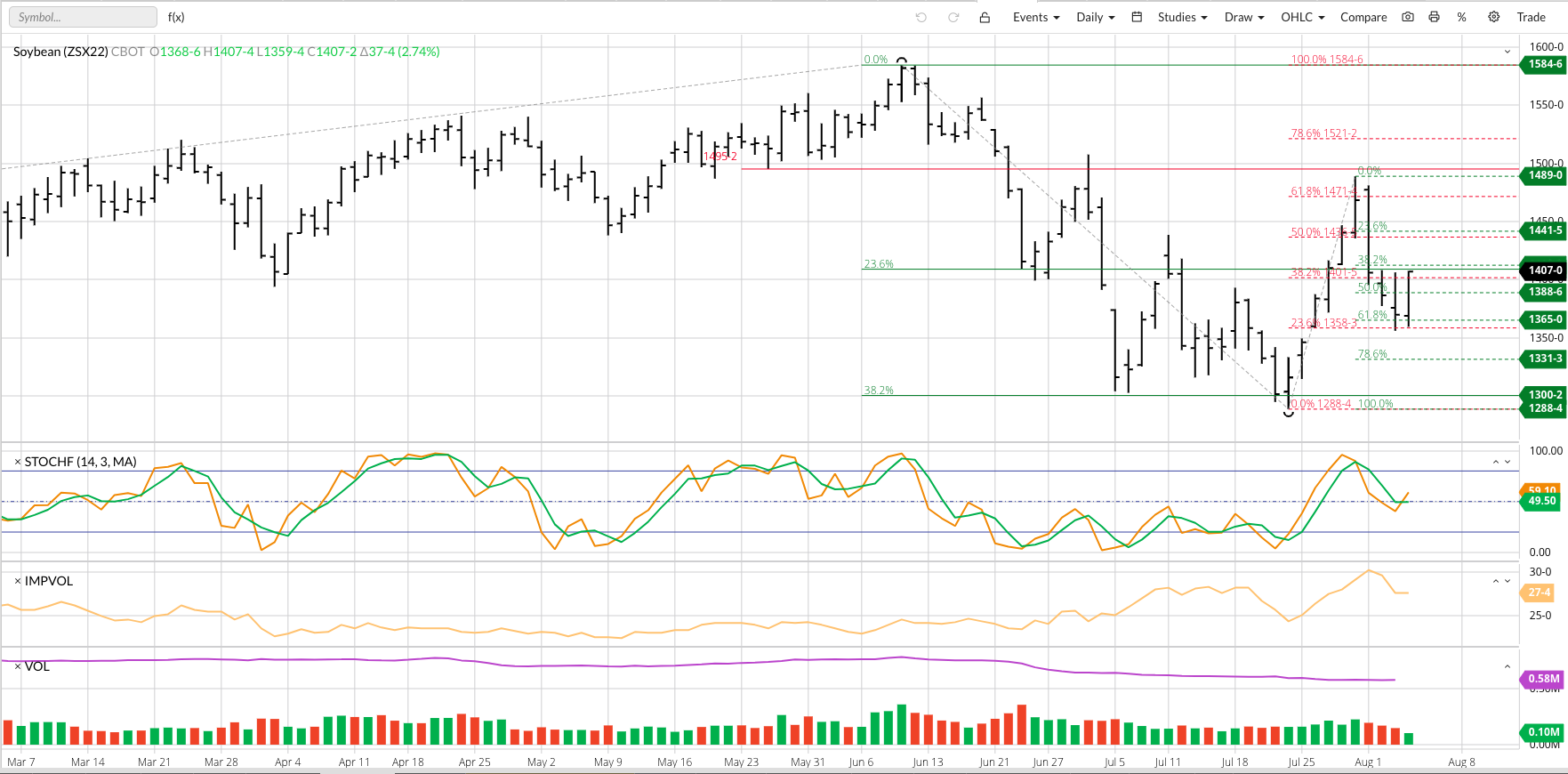
The daily chart for November soybeans (ZSX22) is showing a similar pattern, though Wednesday’s lower close brought into play a possible Benjamin Franklin Fish Similarity[iv]. This played out well as the contract rallied as much as 37.75 cents through the first-half of Thursday’s session. Again, the short-term uptrend pattern tells us we should expect Nov soybeans to take out last week’s high of $14.89. As with Dec corn, much will depend on renewed noncommercial buying.
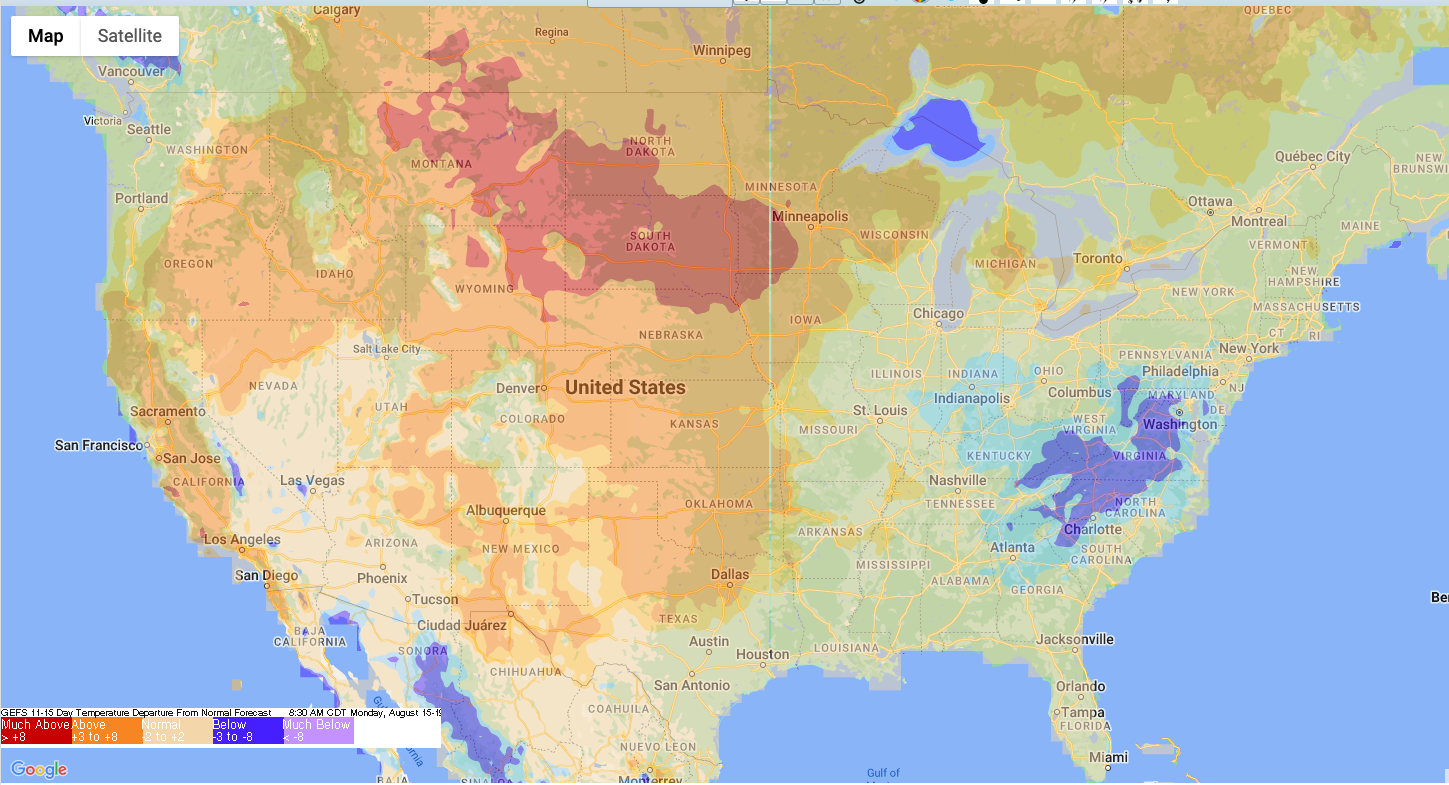
Why would this group suddenly get interested in November soybeans? In part for the same reasons December corn looks better to investors, meaning the Goldman Roll out of the ridiculous September issue putting the spotlight fully on November, and a blistering hot August forecast. Recall from previous conversations the US available stocks-to-use situation is at near record tight levels meaning there is no margin for error with 2022 production. Add to that South America is supposed to see a third year of La Nina and the world’s largest soybean buyer – China – may begrudgingly have to spend another year buying from the US.
[i] A Noon Swoon occurs when a market rallies through the early part of the session, with the move stalling out near midday. Back in the day of pit traders and lunch hours, markets would tend to regroup and rally into the close, often setting new session highs. The flip-side of the coin is called a Noon Balloon.
[ii] This brings to mind the NBA Rule that tells us all we have to watch is the last half-hour of the trading session to understand what happened.
[iii] The Wilhelmi Element is named for my late friend and long-time CBOT floor reporter Gary Wilhelmi who used to drop these little nuggets of wisdom in our conversations.
[iv] The Benjamin Fish Similarity says, “Like guests and fish, markets start to stink after three days (weeks, month, etc.) of moving against the trend”.
More Grain News from Barchart


/Microsoft%20Corporation%20logo%20on%20sign-by%20Jean-Luc%20Ichard%20via%20iStock.jpg)
/Quantum%20Computing/A%20concept%20image%20showing%20a%20ray%20of%20light%20passing%20through%20cyberspace_%20Image%20by%20metamorworks%20via%20Shutterstock_.jpg)