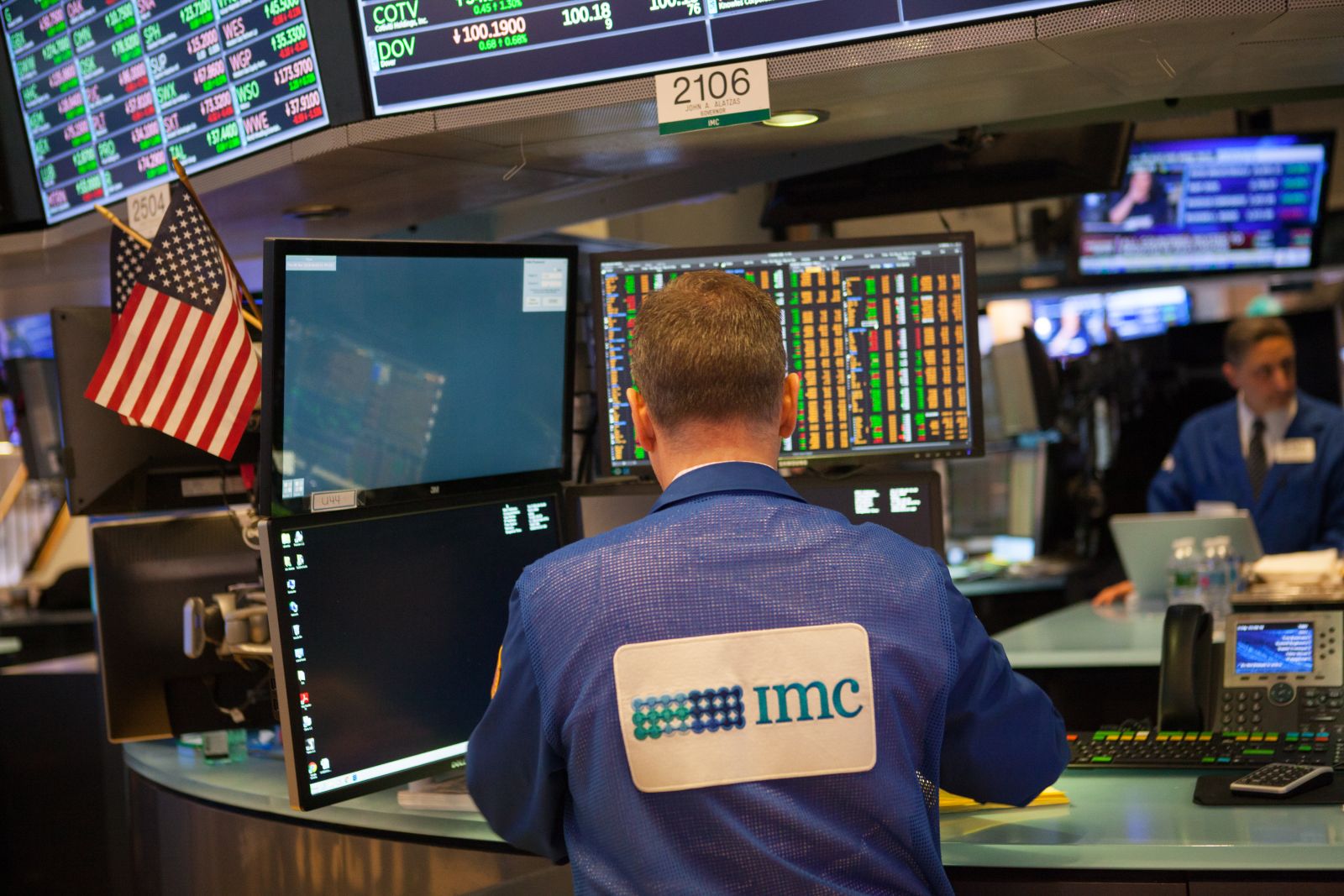
In January 2022, the stock market ended one of history's longest bull markets and economic expansions. After dropping 20% from its highs, the market entered the bear market territory in June 2022. Since then, the stock market has been in a vast and volatile sideways market, experiencing a couple of bear market rallies, only to fall back near the lows and rally again.
The media is full of opinions about when the bull market will resume. Just as many are expressing concern about further market declines, creating gridlock for the bulls and bears and explaining why the market is entrenched in a sideways market.
Defining the Market
Have you ever noticed that when somebody asks, "how did the market do?" they usually reference the Dow Jones Industrial index, which is ironic because it only has 30 stocks in the index, not precisely a broad market. The 30 companies listed on the Dow Jones Index are in the S&P 500 index.
The benchmark is the S&P 500 index which tracks the performance of 503 large companies traded on US stock exchanges and covers 11 sectors making it a popular index illustrating a broad view of the US stock market and economy.
The S&P 500 has futures contracts that trade on the CMEGroup exchange, Exchange-Traded Funds (ETFs), and options on both the futures and ETFs. Regardless of your choice to trade it, all have the most liquidity of the equity indexes traded.
Now that we have defined the market that best represents the overall equity markets in the US, how can we analyze the S&P 500 to make investing/trading decisions?
Moving Averages
Moving averages (MA) have long been a market favorite for smoothing out random price data. Then as each new random data point is added and the oldest data point drops, it creates a constantly updated average market price.
Due to the smoothing effect of the random prices calculated, market participants can see the price action trends more evident, making it a popular study.
The 200 daily MA is popular amongst traders:
- Participants perceive the market as bullish if the price exceeds 200 daily MA.
- Participants perceive the market as bearish if the price declines below the 200 daily MA.

Reviewing the ETF SPY chart, we can see that as the price trades under or above the 200 MA (red line), it often trends in that direction. With so many participants watching the price action as the SPY approaches, support and resistance can form from the MA due to a self-fulfilling prophecy.
As with all market analyses, nothing is perfect. February and March 2022 saw prices briefly trade beyond the MA, possibly causing traders to be tricked into thinking the market was changing its direction.
Market speculation requires a trading plan that delivers more significant rewards than losses. The best way to do this is to find an edge in the market. An edge might simply be adding another analysis to the strategy to help confirm if this particular setup has a higher probability of being profitable.
Adding this Edge to Your Strategy
In a recent article for Barchart, “Getting Your Edge From Consistently Profitable Traders," I discuss gaining a trading edge.
Trading equity indexes have another dimension that markets like livestock, grains, etc., don't have. Because the S&P equity index is a basket of individual companies, we can look inside the index and look for weaknesses or strengths internally of the index. Let's review one such study.
What if we could look at a single study and see how many stocks are trading above their 200 MA? Using this information, we could conclude that if more than 50% of the stocks in the S&P 500 are trading above their own 200 MA, then we could assume the market is in a bullish posture. If less than 50% of the companies are trading below their 200 MA, we could consider the market bearish.
Imagine if you had to calculate this number manually. Extremely timely, and with so many stocks a good possibility for errors to occur. Barchart has a page on its website with these numbers calculated for you.

The above chart is a comparison chart from Barchart that illustrates the SPY (red line) and the percent of S&P 500 stocks trading above their 200 MA ($S5TH) (black line). The blue line across the chart represents the 50% point. The 50% line is only used for the black line.
While February and March 2022 still had some choppiness, the black line spent most of that time under its 50% line (bearish for the SPY.) Notice the rally that began in June. As the SPY rallied higher, the stocks above their 200 MA could not surpass the 50% line. Action like this confirmed it was a bear market rally.
The current rally from the October lows illustrates that the S&P 500 internally strengthened once the black line began trading over the 50% line. During corrections of this uptrend, the market is still bullish as long as the black line stays over the 50% line.
Summary
By analyzing the S&P 500 chart with its 200 MA and the number of S&P 500 stocks greater than its 200 MA, we can better confirm how strong or weak the S&P 500 is.
Traders can now have a red or green light when they analyze bull and bear markets. The key:
- SPY price is above the 200 MA, and more than 50% of its stocks are above their 200 MA for a bullish posture
- A bearish posture would be the SPY trading under its 200 MA, and less than 50% of its stocks are trading above their 200 MA
More Stock Market News from Barchart
- It’s Time Elon Musk Plans a Holiday With Booking Holdings
- LVMH: Anatomy Of A $438 Billion Empire
- Unusual Put Option Activity with Signature Bank Stock Provides Huge Income
- Analyzing Fed policies on Unemployment, GDP, and Interest Rates
On the date of publication, Don Dawson did not have (either directly or indirectly) positions in any of the securities mentioned in this article. All information and data in this article is solely for informational purposes. For more information please view the Barchart Disclosure Policy here.


/A%20Palantir%20office%20building%20in%20Tokyo_%20Image%20by%20Hiroshi-Mori-Stock%20via%20Shutterstock_.jpg)
/Elon%20Musk%2C%20founder%2C%20CEO%2C%20and%20chief%20engineer%20of%20SpaceX%2C%20CEO%20of%20Tesla%20by%20Frederic%20Legrand%20-%20COMEO%20via%20Shutterstock.jpg)
/Microsoft%20sign%20at%20the%20headquarters%20by%20VDB%20Photos%20via%20Shutterstock.jpg)