



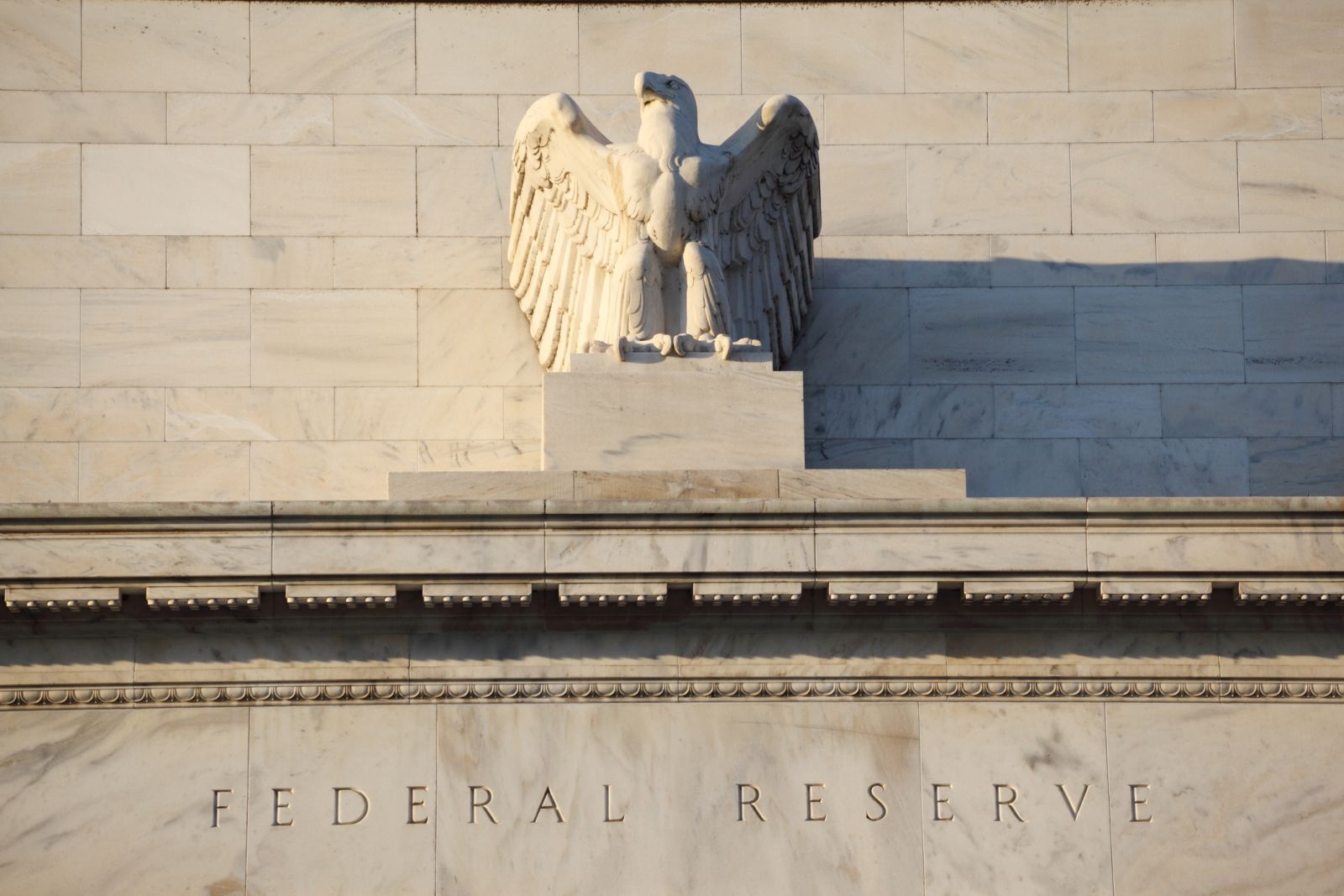
The dollar index (DXY00) on Wednesday fell by -0.62%. The dollar on Wednesday posted moderate losses. A rally in stocks Wednesday reduced the liquidity demand for the dollar. The dollar extended its losses Wednesday afternoon when T-note yields fell after Fed Chair Powell said the Fed would offer “less guidance” on rate moves and it will likely be appropriate to slow interest rate hikes at some point
Wednesday’s U.S. economic data was mixed for the dollar. On the negative side, June wholesale inventories rose +1.9% m/m, higher than expectations of +1.5% m/m. Also, June pending home sales tumbled -8.6% m/m, weaker than expectations of -1.0% m/m and the biggest decline in more than 2 years. On the positive side, June capital goods new orders nondefense ex-aircraft, a proxy for capital spending, rose +0.5% m/m, stronger than expectations of +0.2% m/m.
The FOMC Wednesday unanimously voted to raise the federal funds target range by 75 bp to 2.25% to 2.50% as expected and said that ongoing rate increases "will likely be appropriate." The post-FOMC meeting statement said that "spending and production have softened," though "job gains have been robust in recent months."
Fed Chair Powell said the labor market is extremely tight and inflation much too high, and it is "essential" we bring inflation down to the Fed's 2% goal. He also said that labor market job creation is "still robust" and "I do not think the U.S. is currently in a recession." He added that the Fed would offer less "clear guidance" on future rate moves and will likely slow rate increases at some point.
EUR/USD (^EURUSD) on Wednesday recovered from a 1-week low and rose by +0.83%. Dollar weakness Wednesday sparked short-covering in EUR/USD. Also, higher European government bond yields strengthened the euro’s interest rate differentials. EUR/USD Wednesday initially fell to a 1-week low on energy crisis concerns and after a gauge of German consumer confidence fell to a record low.
A negative factor for the euro is concern that an energy crisis in Europe could spark a recession after European nat-gas prices surged to a 4-1/2 month high Wednesday on this week’s news that Russia’s Gazprom PJSC cut gas flows to Europe through the Nord Stream pipeline to only around 20% of normal capacity.
Eurozone June M3 money supply rose +5.7% y/y, stronger than expectations of +5.4% y/y
German Aug GfK consumer confidence fell 2.9 to a record low of -30.6 (data from 2005), weaker than expectations of -28.9.
USD/JPY (^USDJPY) on Wednesday fell by -0.25%. Lower T-note yields Wednesday undercut USD/JPY and strengthened the yen. USD/JPY extended its losses Wednesday afternoon as the dollar dropped to session lows when Fed Chair Powell said it would likely be appropriate for the Fed to slow interest rate increases at some point.
August gold (GCQ22) Wednesday rose by +1.40 (+0.08%), and September silver (SIU22) rose by +0.065 (+0.35%). Precious metals on Wednesday closed slightly higher. A weaker dollar Wednesday boosted metals prices. Gold also garnered support Wednesday from lower T-note yields. Metals prices jumped after their Wednesday afternoon closes on comments from Fed Chair Powell, who said the Fed would slow rate hikes at some point. However, a rally in stocks Wednesday limited gains in metals on reduced safe-haven demand. Also, ongoing fund liquidation of long gold positions continues to bearish for gold prices as long gold positions in ETFs have dropped for 20 consecutive days to a 4-1/2 month low Tuesday.
The dollar and gold have continued safe-haven support from the negative impact of the worldwide spread of the omicron Covid variant on the global economic recovery. Close to 30 million people are under some form of movement restrictions in China as the government maintains its strict Covid-Zero strategy.
More Forex News from Barchart


/Advanced%20Micro%20Devices%20Inc_%20office%20sign-by%20Poetra_RH%20via%20Shutterstock.jpg)
/Alphabet%20(Google)%20Image%20by%20Markus%20Mainka%20via%20Shutterstock.jpg)

/Tesla%20Inc%20logo%20by-%20baileystock%20via%20iStock.jpg)