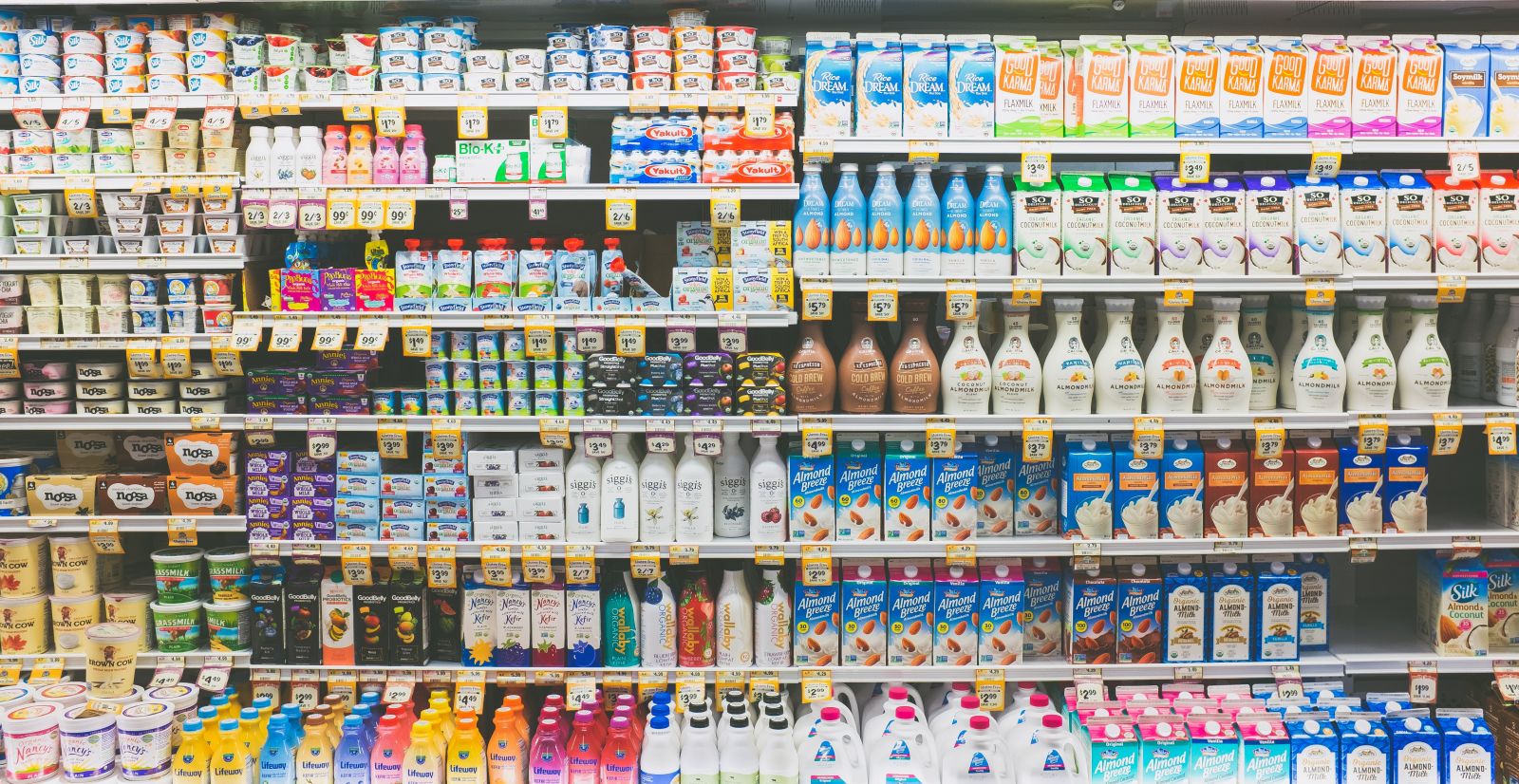
A report from Canada’s CBC News recently highlighted the developing global mustard shortage due to a lousy mustard crop in 2021.
Canada is one of the world’s biggest growers of mustard seeds. In the province of Saskatchewan, there was a 25% drop in acres of mustard seeds planted in 2021, down from a 10-year average of 400,000 acres. As a result, mustard prices are likely to increase over the remainder of 2022.
A year ago, 45 kilograms of mustard seeds cost 50 Canadian Dollars ($38.82). Today, those mustard seeds cost 3x as much.
Two of the largest producers of mustard are Kraft Heinz (KHC) and McCormick & Co. (MKC). Only one of them is a buy. Here’s why.
Kraft Heinz Is the Bigger of the Two
Kraft Heinz has two mustard brands: Heinz Mustard and Grey Poupon. According to Statista, Heinz Mustard was used by 52.82 million Americans in 2020, while Grey Poupon got into the hands of 31.96 million people that year. Statista suggests that another 28.17 million Americans used Kraft Mustard in 2020.
As a result, more than 112 million Americans used a Kraft Heinz mustard product in 2020. While I don’t have revenue details for Kraft Heinz’s mustard products, it's an integral part of the company’s Taste Elevation platform, one of six intended to grow sales over the long haul.
As part of the company’s ongoing transformation of its business, each platform is expected to generate 50% of sales from growth products, another 30% from brands that can be revitalized, and the remaining 20% require stabilization before moving them into revitalization mode.
Kraft Heinz is a tremendously large business. Its current market cap of $47.1 billion is more than double McCormick’s market cap. In terms of revenue, its trailing 12-month (TTM) revenue is $25.7 billion, 4x McCormick’s revenue. There’s no question who the bigger of the two is.
The company’s long-term annual goals include 1-2% organic net sales growth, 2-3% adjusted EBITDA growth, and 4-6% adjusted EPS growth while converting more than 100% of its earnings into free cash flow (FCF).
Kraft Heinz reports its Q2 2022 results on July 27. When it reported Q1 2022 results in late April, the company said that its organic net sales for the entire year would be 4-6% over 2021, while adjusted EBITDA is expected to be between $5.8 billion and $6.0 billion.
The company’s TTM FCF through Q1 2022 is $4.15 billion. That’s 85% of its operating income of $4.88 billion, so it has some work to do to achieve its goal of converting more than 100% of its income.
Kraft Heinz’s FCF yield is 8.8%. I consider anything above 8% to be in value territory.
McCormick’s Got the Leading Mustard
In 2020, according to Statista, 146.94 million Americans used French’s Mustard, making it the undisputed champion of mustard use, 1.3x Kraft Heinz’s three brands.
At the end of June, McCormick reported disappointing Q2 2022 results. While analysts were expecting second-quarter EPS of 65 cents, the company delivered 48 cents, a 26% miss on analyst estimate. Its sales in the quarter were $1.54 billion, $60 million shy of the consensus and down $20 million from a year earlier.
In its earnings release, company management suggested a laundry list of things that caused the disappointing results, including inflation, supply-chain issues, China lockdowns, etc.
As a result, McCormick’s EPS for all of 2022 was lowered by 14 cents at the low-end of its guidance to $3.03 a share from $3.17 previously.
Analysts aren’t very optimistic about McCormick’s near-term situation. As a result, only one of 13 analysts covering MKC stock has a “buy” rating, while three have an outright “sell” with a median target price of $87.50 and less than 5% upside over the next 12 months.
As for McCormick’s valuation, it’s got a current FCF yield of 2.2%, about one-quarter of Kraft Heinz’s FCF yield, making it less attractive to value investors. In addition, from a balance sheet perspective, it has net debt of $5.03 billion or 22% of its market cap, while Kraft Heinz’s net debt is $18.77 billion or 40% of its market cap.
The Better Buy Is?
Over the past five years, McCormick’s stock gained 75.6%, considerably better than Kraft Heinz’s negative return of -55.9% over the same period. Only in 2022 has Kraft Heinz stock begun to outperform MKC.
So, is that a sign of things to come from Kraft Heinz? Or is it merely a brief period of decent performance? An outlier, if you will.
Some analysts believe that the company’s eight consecutive quarters beating estimates is a sign that management’s turnaround is gaining traction. However, with only five “buy” ratings out of 22 rating KHC a “buy,” the jury is still very much out.
For me, I can’t overlook Kraft Heinz’s balance sheet. Its net debt is almost 4x more McCormick’s. And even though I use the products of both companies, McCormick’s Frank’s RedHot sauce is my favorite. It goes on virtually everything I eat.
Over the long run, despite McCormick’s near-term issues, I remain convinced MKC is a better buy than KHC.
More Food & Beverage News from Barchart

/Dell%20Technologies%20by%20Poetra_RH%20via%20Shutterstock.jpg)
/The%20sign%20for%20Marvell%20Technology%20out%20front%20of%20a%20corporate%20office%20by%20Valeriya%20Zankovych%20via%20Shutterstock.jpg)

/Intel%20Corp_%20badge%20holder-by%20hasrul_rais%20via%20Shutterstock.jpg)