The technology sector is facing its most grueling start to a year since 2022, as a deepening rift between hardware winners and software laggards threatens to cap broader market gains. The S&P 500 information technology index has retreated 3.5% so far in 2026, weighed down by a historic 23% collapse in software and services. Investors have grown increasingly skeptical of the "AI payoff," fleeing software stalwarts over fears of structural disruption while rotating capital into long-neglected pockets like energy and materials. All eyes now turn to Nvidia (NVDA), the undisputed linchpin of the megacap trade, whose quarterly results Wednesday serve as a high-stakes referendum on the entire artificial intelligence thesis. While the broader S&P 500 has remained remarkably resilient due to a 20% surge in cyclical sectors, the index is struggling to find a second gear without its heavyweight engine. Microsoft (MSFT) has emerged as the single largest drag on the benchmark this year, with shares sliding nearly 20% as Wall Street questions the return on investment for its massive infrastructure spend. The divergence is stark: while semiconductor and hardware groups have managed modest gains, software giants like Intuit (INTU) and Salesforce (CRM) have seen their valuations eviscerated by as much as 46% and 30%, respectively, amid fears that generative AI will cannibalize their core business models. Market Overview:
- The S&P 500 tech sector is down 3.5% in 2026, marking its worst season opener in four years.
- Software stocks have plunged 23% this year, the group's most disastrous start on record.
- Semiconductors and hardware remain rare bright spots, rising 7% and 4% respectively.
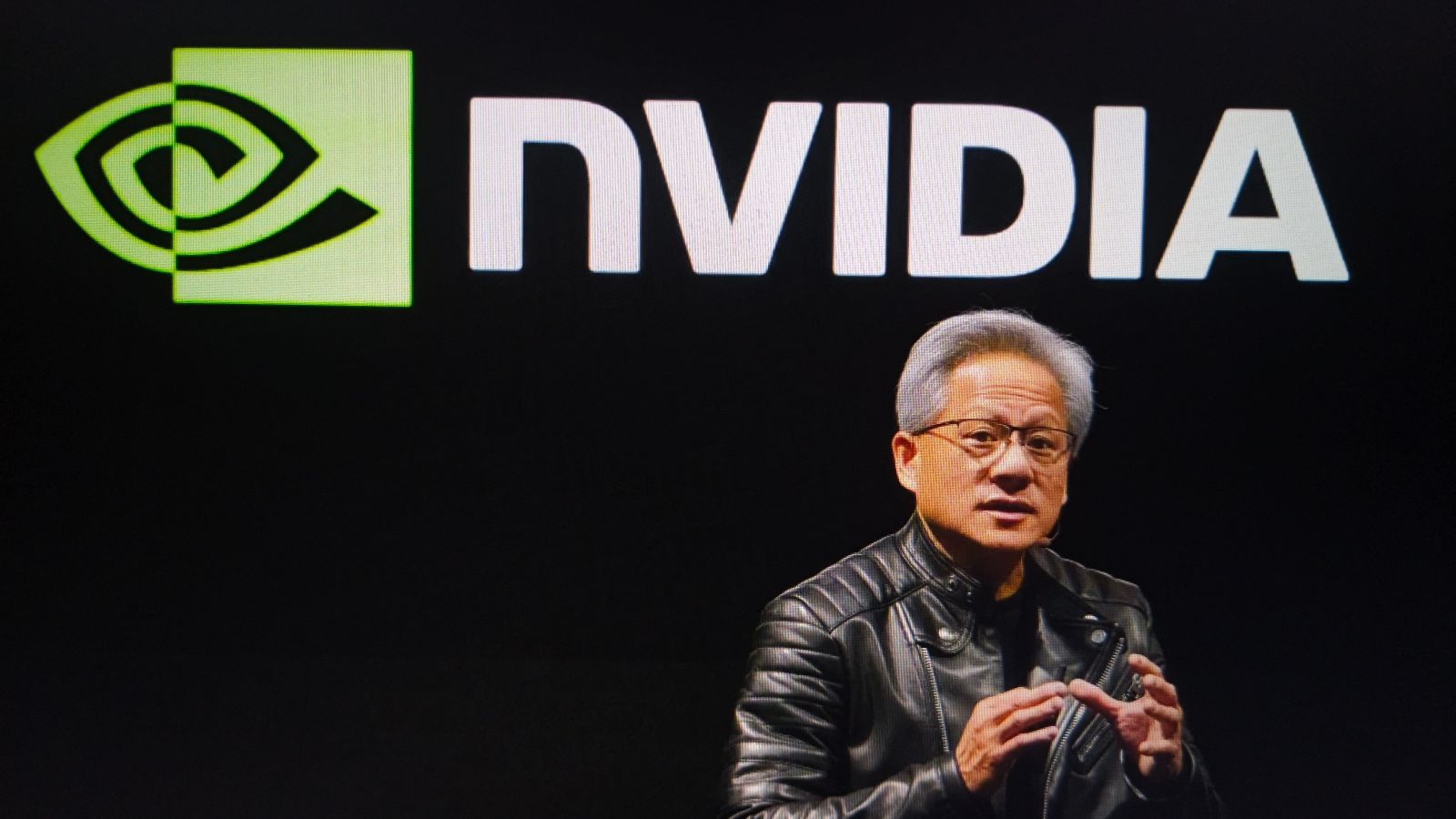
- Nvidia (NVDA) is the lone "Magnificent Seven" outperformer this year, up over 3% ahead of earnings.
- Microsoft (MSFT) is the market's primary laggard, weighed down by multi-billion dollar AI capex worries.
- Rotation into materials and energy—both up over 20% since October—has buffered the S&P 500's downside.
- Nvidia reports after the bell Wednesday; its outlook will likely dictate the sector's trajectory for Q1.
- Salesforce (CRM) and Intuit (INTU) earnings this week will test if software selloffs have been overdone.
- The S&P 500's 33% tech weighting means benchmark indices cannot rally significantly without a sector rebound.
- The brutal 23% drawdown in software and services versus modest gains in semis and hardware has created an extreme dispersion that is approaching historical limits, setting up conditions for a tactical mean-reversion trade if Nvidia’s earnings and guidance reaffirm the durability of AI demand [web:4][web:5].
- Energy, materials, and other cyclicals are up more than 20% since October, helping the S&P 500 hold near flat despite tech weakness—evidence that the market is broadening rather than breaking, and that leadership rotation is cushioning index-level downside [web:4].
- The core AI infrastructure story remains intact: semiconductors are up about 7% and hardware over 4% year-to-date, reflecting strong earnings and spending visibility for physical “picks and shovels” even as software valuations reset [web:4][web:5].
- With tech still commanding roughly 33% of the S&P 500’s weight, even a modest stabilization in software or a post-earnings surge in Nvidia could quickly re-ignite index-level upside, especially if upcoming results from Salesforce and Intuit show that fears of AI-driven cannibalization were overdone [web:4][web:3].
- For stock pickers, the shift from hype to cash-flow scrutiny favors high-quality franchises that can clearly monetize AI; current dislocations may allow long-term investors to accumulate such names at far more attractive entry points than a year ago [web:5][web:8].
- The S&P 500 tech sector is off 3.5% in 2026—its worst start since 2022—driven by a record 23% collapse in software as investors question whether AI will erode, rather than enhance, the core economics of legacy SaaS and services businesses [web:4][web:5].
- Key software bellwethers have been hit hard, with Intuit down about 46% and Salesforce off roughly 30% year-to-date, reinforcing the perception that AI tools may compress pricing power and margins across large swaths of the group [web:4].
- Microsoft has become the single largest drag on the S&P 500, as doubts grow over whether its massive AI and cloud capex will deliver adequate returns—pressure that has also weighed on Amazon, Alphabet, and other mega-cap platforms [web:5].
- The “Magnificent Seven” trade has splintered; Nvidia is the only member showing gains this year, leaving the broader tech complex vulnerable if its upcoming earnings or outlook disappoint and the last major AI pillar falters [web:4][web:12][web:14].
- Given technology’s roughly 33% weight in the S&P 500, ongoing tech underperformance will cap index-level upside even if financials, industrials, energy, and materials continue to rally—meaning the broader market remains hostage to a sector in the middle of a painful re-rating [web:4][web:7].
- Until companies demonstrate that AI spending is translating into durable, incremental revenue (rather than just higher costs), software could remain in the penalty box, and any bounce may prove to be a short-covering rally rather than the start of a sustainable new uptrend [web:3][web:16].
This article contains syndicated content. We have not reviewed, approved, or endorsed the content, and may receive compensation for placement of the content on this site. For more information please view the Barchart Disclosure Policy here.

/AI%20(artificial%20intelligence)/Ai%20chip%20by%20Quality%20Stock%20Arts%20via%20Shutterstock.jpg)
/A%20close-up%20of%20the%20Broadcom%20logo%20on%20a%20smartphone%20by%20Timon%20via%20Adobe%20Stock.jpeg)