



The United States and Japan executed a rare coordinated yen-buying intervention last Friday, July 31, marking the first joint action to strengthen the Japanese currency since 1998.
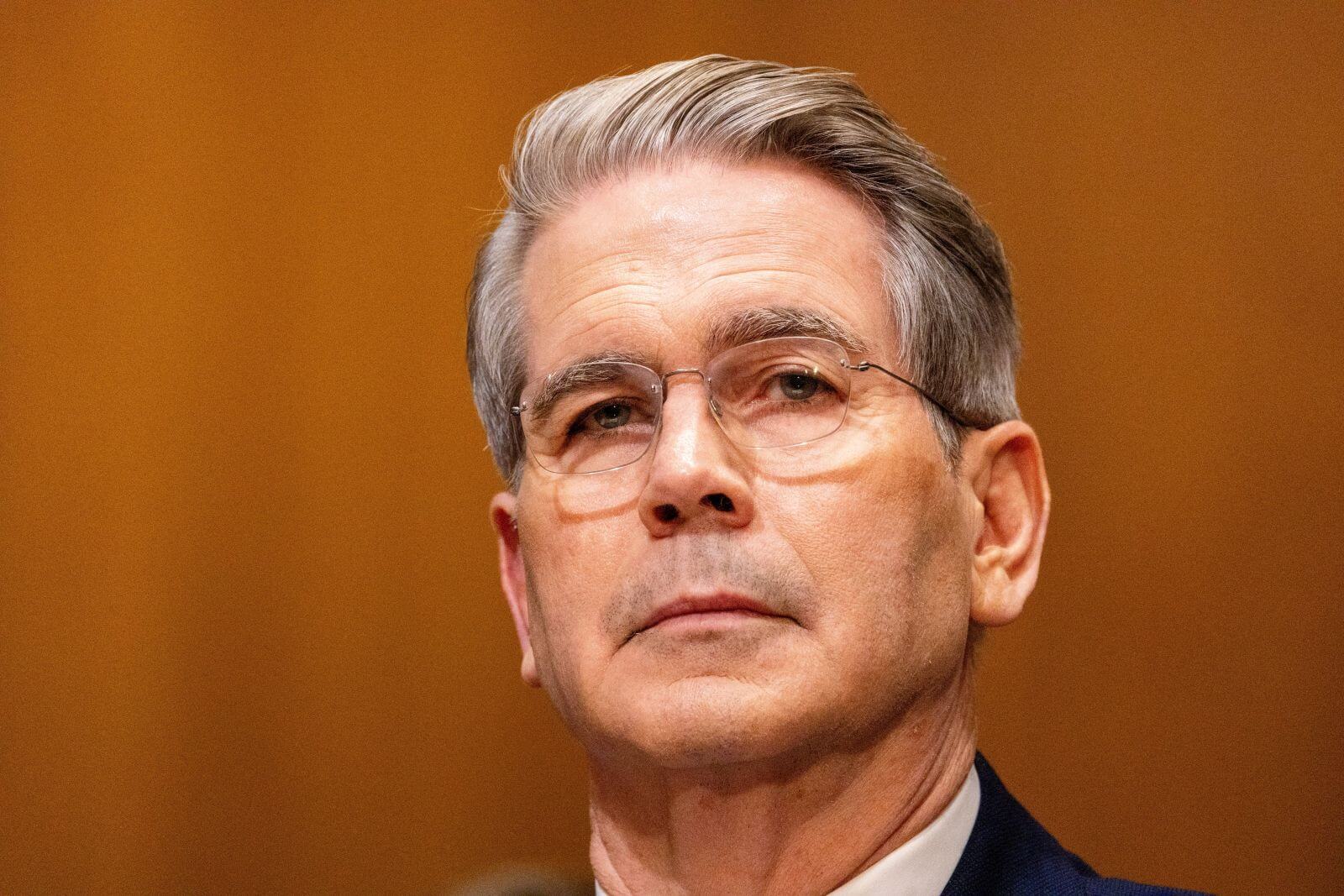
The operation was confirmed today, Aug. 3, by both Japan's Finance Minister Satsuki Katayama and U.S. Treasury Secretary Scott Bessent, with both officials explicitly warning that they would not hesitate to intervene again.
“The Trump Administration delivers for America's trusted partners,” wrote Bessent on social media. “Economic security is national security. And the U.S.-Japan alliance is built on both,” he continued, adding that “We will not hesitate to participate in further joint intervention.”
The Mechanics of US Intervention in the Yen
The yen (JPYUSD) had plunged to nearly 164 per dollar on July 23, its weakest level in approximately 40 years, before the combined intervention drove it back to the 155-157 range by Monday morning.
The scale of the operation was extraordinary. Bank of Japan data suggests Tokyo may have sold as much as $59 billion to buy yen on Thursday alone, likely its largest single-day intervention ever.
On the U.S. side, a Reuters photograph captured Bessent's handwritten notepad at a Camp David cabinet meeting reading "Buy Japanese Yen (JPY) $5-10 bil," and the Federal Reserve Bank of New York subsequently sold euros to purchase yen on behalf of the Treasury through Goldman Sachs (GS) and Morgan Stanley (MS).
What Could Trigger Another Round of US Intervention?
Bessent's rationale for calling the crisis potentially unfinished rests on deeply unfavorable structural fundamentals that intervention alone cannot resolve.
Japan's government debt exceeds 237% of GDP, Prime Minister Takaichi's expansionary fiscal policies continue to undermine confidence in the currency, and elevated energy import costs denominated in dollars place persistent downward pressure on the yen.
The Fed-BOJ interest rate gap remains enormous, with U.S. rates at 3.50-3.75% versus Japan's 1%, making the yen an unattractive holding and fueling the carry trade.
In a recent “Market on Close” livestream, Barchart’s Senior Market Strategist John Rowland detailed the “carry trade” dynamics, and how the unwinding of this play can have disastrous effects on US markets.
The US Treasury Catalyst Behind the Yen Rescue
The U.S. motivation for this unprecedented step is fundamentally one of self-preservation. Japan holds $1.14 trillion in U.S. Treasury securities, the largest foreign holdings of any nation.
A collapsing yen forces Japan to sell those Treasuries to finance unilateral currency defense, which directly pushes up American borrowing costs at a time when U.S. debt has reached $39.84 trillion and annual interest payments already exceed $1 trillion.
The 30-year Treasury yield closed July at 5.27%, and any additional selling pressure from Japan would ripple into mortgage rates, auto loans, and credit card costs across America.
Don’t Overlook the FIMA Signal
The emphasis on the Federal Reserve's FIMA Repo Facility is arguably the most strategically significant signal from the entire episode.
Bessent called for this facility to be "upsized," and Japan announced plans to utilize it for future operations. This mechanism allows Japan to obtain dollar liquidity by temporarily pledging Treasury securities as collateral rather than selling them outright, effectively enabling yen defense without destabilizing U.S. bond markets.
One State Street analyst suggested this signal may be more important than the intervention itself:
“It’s an attempt to maximize the signaling effect and get the biggest bang for the buck with the tools already available,” noted Masahiko Loo in comments quoted by CNBC.
Is This a Fix for the Yen, or a Band-Aid?
Despite the historic nature of coordinated action, market analysts remain deeply skeptical about the durability of any yen recovery.
Multiple strategists noted that unless the Bank of Japan accelerates its rate-hiking cycle or the Federal Reserve begins cutting rates, the fundamental forces driving yen weakness persist.
The BOJ kept rates unchanged at its July meeting but signaled a possible September hike, and financial markets are now pricing that move as increasingly likely. However, carry trade positioning remains massive, with hedge funds holding approximately $9.5 billion in yen-short contracts as of late July, and any sustained yen appreciation risks triggering a disorderly unwinding reminiscent of August 2024's global equity selloff.
The intervention also carries geopolitical dimensions that explain Washington's willingness to act. A weak yen effectively neutralizes the trade advantage created by Trump's tariffs by making Japanese exports cheaper, giving the U.S. an economic incentive to correct what it views as substantial currency undervaluation.
In particular, the decision to reportedly sell euros rather than dollars to fund the U.S. portion of the intervention has raised questions among some analysts about whether Washington was trying to minimize direct dollar weakness, potentially undercutting the perceived commitment.
What’s Next for the Yen
Bessent's statement that he plans to meet BOJ Governor Ueda at the G20 ahead of the September policy meeting underscores that the yen crisis remains a live issue, with the trajectory depending far more on whether Japan can narrow interest rate differentials than on any amount of foreign exchange reserves deployed in the spot market.
This article was created with the support of automated content tools from our partners at Sigma.AI. Together, our financial data and AI solutions help us to deliver more informed market headline analysis to readers faster than ever.
On the date of publication, Sarah Holzmann did not have (either directly or indirectly) positions in any of the securities mentioned in this article. All information and data in this article is solely for informational purposes. For more information please view the Barchart Disclosure Policy here.

/A%20Palantir%20office%20building%20in%20Tokyo_%20Image%20by%20Hiroshi-Mori-Stock%20via%20Shutterstock_.jpg)
/BlackRock's%20global%20headquarters%20By%20Tada%20Images.jpeg)
/A%20hand%20holding%20a%20phone%20with%20the%20Reddit%20logo_%20Mamun_Sheikh%20via%20Shutterstock_.jpg)
/The%20CoreWeave%20logo%20displayed%20on%20a%20smartphone%20screen_%20Image%20by%20Robert%20Way%20via%20Shutterstock_.jpg)
/Apple%20logo%20on%20store%20front%20by%20frantic00%20via%20iStock.jpg)