

The best Fidelity ETFs you can buy include a little more ... and thus, a little something for everyone.
If you want, a few of Fidelity's exchange-traded funds (ETFs) give you cheap, passive exposure to basic broader market indexes, like the Nasdaq Composite. But where Fidelity really shines is by providing more tactical ways of tapping into specific areas of Wall Street. Sometimes, their best ETFs are "smart beta" products tethered to more selective indexes. At other times, they're funds piloted by skilled investment managers who dig deep into their research resources to discover the best growth stocks or small-cap companies.
Or, put more succinctly: Whether you're looking for passive market exposure, tactical indexes, or humans at the helm, this list of the best Fidelity ETFs you can buy likely has something for you.
Disclaimer: This article does not constitute individualized investment advice. Individual securities, funds, and/or other investments appear for your consideration and not as personalized investment recommendations. Act at your own discretion.
Why Choose Fidelity ETFs?
Fidelity doesn't have an enormous ETF line: As of my most recent check, it offers 84 products.
But those 84 funds cover a lot of ground.
If you're looking only for the most vanilla of core investments, Fidelity funds can get the job done. My list includes a couple really straightforward index products like these.
However, I think more often than not, the best Fidelity ETFs are more tactical in nature, focusing on indexes beyond staid benchmarks like the S&P 500. Some are instead actively managed, with human managers trying to provide investors with an edge. And these funds cover a variety of market subsets, such as mid-cap stocks, high-momentum shares, and municipal bonds.
Make sure you sign up for The Weekend Tea, Young and the Invested's free weekly newsletter that over 10k monthly readers use to level up their money know-how.
The Best Fidelity ETFs You Can Buy
I start virtually every review of investment funds by booting up Morningstar Investor and running a quality screen I customize for each article.
In this case, I started by narrowing down Fidelity ETFs to those that have earned a Morningstar Medalist rating of Bronze or better. Unlike Morningstar's Star ratings, which are based upon past performance, Morningstar Medalist ratings are a forward-looking analytical view of a fund. Per Morningstar:
"For actively managed funds, the top three ratings of Gold, Silver, and Bronze all indicate that our analysts expect the rated investment vehicle to produce positive alpha relative to its Morningstar Category index over the long term, meaning a period of at least five years. For passive strategies, the same ratings indicate that we expect the fund to deliver alpha relative to its Morningstar Category index that is above the lesser of the category median or zero over the long term."
As I've written in other Young and the Invested articles, a Medalist rating doesn't mean Morningstar is necessarily bullish on the underlying asset class or categorization. It's merely an expression of confidence in the fund compared to its peers.
Past that, I only looked at ETFs with fees that are considered "Below Average" (second-least-expensive 20% of funds in their Morningstar Category) or "Low" (least expensive 20%). As it turns out, all ETFs selected fall within that bottom 20% by fees, so they're as cost-effective as you could want. And a handful have recently reduced their fees even further.
The rest was “dealer's choice.”
Let's look at three of the top picks from my longer article reviewing the best Fidelity ETFs to buy.
Fidelity Nasdaq Composite Index ETF
- Style: Large-cap growth stock
- Management: Index
- Assets under management: $10.5 billion
- Dividend yield: 0.5%
- Expense ratio: 0.21%, or $2.10 per year for every $1,000 invested
- Morningstar Medalist rating: Gold
I frequently start fund lists with an S&P 500 index fund, when applicable. After all, U.S. large caps are frequently recommended to build a portfolio core, and for that, it's difficult to do better than the S&P 500!
Difficult ... but not impossible.
Related: The 11 Best Fidelity Funds You Can Own
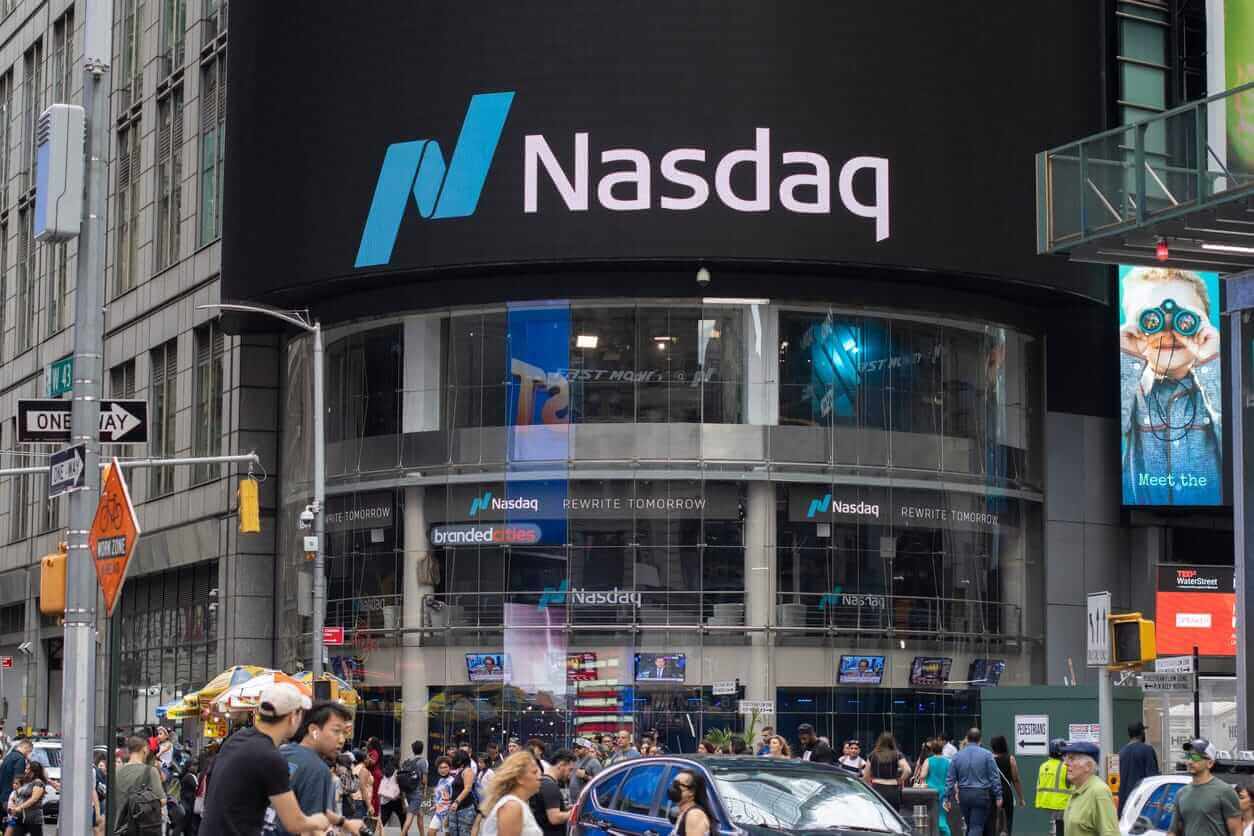
The Nasdaq Composite Index—made up of the roughly 3,500 stocks listed on the Nasdaq stock exchange—has pummeled the S&P 500 for quite some time. On a pure price basis (which gives us a longer trail of data), the Nasdaq has outdone the S&P 500 by about 445% to 260% over the trailing 10 years, 1,100% to 490% over the trailing 20, and 2,100% to 1,020% over the past 30 years. The S&P 500's underperformance isn't as great when you include dividends ... but it's still a wide disparity.
The Fidelity Nasdaq Composite Index ETF (ONEQ) is a diversified index fund that holds much of the Nasdaq Composite, but not all. Instead, ONEQ uses statistical sampling to come up with a sizable portfolio (approximately 1,030 holdings currently) that has a "similar investment profile" to the index.
Like the index, the Fidelity Nasdaq Composite Index ETF is weighted by size, so the larger the company, the more assets are invested in that company's stock. Thus, the biggest holdings are popular companies you might recognize: Nvidia (NVDA). Apple (AAPL). Alphabet (GOOG/GOOGL).
Just don't mistake ONEQ for a complete S&P 500 replacement. The Nasdaq Composite, while technically diversified across market sectors, is even more heavily weighted in technology stocks (53%) than the S&P 500 (34%) right now. And while both indexes' sector blends can and will shift over time, the Nasdaq has historically been more tethered to tech.
Fidelity Momentum Factor ETF
- Style: Large-cap growth stock
- Management: Index
- Assets under management: $945.4 million
- Dividend yield: 0.6%
- Expense ratio: 0.15%, or $1.50 per year for every $1,000 invested
- Morningstar Medalist rating: Gold
Another Fidelity product that's outside the norm of humdrum index offerings is the Fidelity Momentum Factor ETF (FDMO)—a large-cap growth fund whose motto likely would be "the trend is your friend."
Momentum strategies are largely based around the idea that you want to own stocks that are outperforming while avoiding stocks that are underperforming. Why? Because other investors often tend to buy stocks whose price is going up, which creates a virtuous cycle.
Related: 8 Best Stock Picking Services, Subscriptions, Advisors & Sites
The Fidelity Momentum Factor ETF does this by tracking the Fidelity U.S. Momentum Factor Index. The index starts with the largest 1,000 U.S. stocks based on market cap, then scores them based on multiple measures of momentum:
- 12-month return minus 1-month return (35%)
- Volatility-adjusted 12-month return minus 1-month return (35%)
- 12-month earnings surprise (15%)
- 12-month average short interest, which is the number of a company's shares sold short divided by the monthly average of shares traded (15%)
From there, the index selects the highest-ranked stocks within each sector. Stocks are then weighted by market cap, but adjusted in a way that reduces the potential for hyperconcentration in very large stocks.
You can't count on FDMO to have a certain sector bent at any given time—it can easily change based on how different parts of the market are moving. But right now, the 142-stock portfolio is heaviest in tech stocks, which account for almost 40% of assets. Financials account for 12%, while consumer discretionary, communication services, industrials, and healthcare stocks all enjoy high-single-digit weights. The mega-caps listed above, as well as computer-memory giants Micron (MU) and SanDisk (SNDK), lead the way.
The fund came to life in September 2016, so we don't yet have 10-year return data. But it's among the top 10% of funds in its Morningstar category over the trailing five-year period, and it's within the top 20% over the past one and three years.
It's worth noting a major risk of momentum investing, which is that it's susceptible to sharp trend reversals. Because FDMO only rebalances every quarter, it could be forced to absorb a lot of momentum downside before being able to adjust its portfolio. would be particularly at risk, given that it only rebalances quarterly.
Learn More About These and Other Funds With Morningstar Investor
If you're buying a fund you plan on holding for years (if not forever), you want to know you're making the right selection. And Morningstar Investor can help you do that.
Morningstar Investor provides a wealth of information and comparable data points about mutual funds and ETFs—fees, risk, portfolio composition, performance, distributions, and more. Morningstar experts also provide detailed explanations and analysis of many of the funds the site covers.
With Morningstar Investor, you'll enjoy a wealth of features, including Morningstar Portfolio X-Ray®, stock and fund watchlists, news and commentary, screeners, and more. And you can try it before you buy it. Right now, Morningstar Investor is offering a free seven-day trial and a discount on your first year's subscription when you use our exclusive link.
Fidelity Municipal Bond Opportunities ETF
- Style: U.S. intermediate municipal bond
- Management: Active
- Assets under management: $212.2 million
- SEC yield: 3.4%*
- Expense ratio: 0.30%, or $3.00 per year for every $1,000 invested
- Morningstar Medalist rating: Gold
Municipal bonds are typically issued by states, counties, cities, and other sub-federal government agencies. They’re sometimes used to fund general obligations and are backed by the municipality, though some are backed by the revenue a project would generate—say, a toll road. Muni bonds’ quality usually isn’t as high as similar federal debt but higher than comparable corporates.
But the glitziest trait of “munibonds” is their tax treatment. Municipal bonds’ interest is exempt from federal income taxes and net investment income tax (NIIT) … and if you live in the municipality in which it was issued, state and possibly even local income taxes. So whatever headline yield you see on a municipal bond, you’re probably earning much more once you factor in taxes.
In the Fidelity Municipal Bond Opportunities ETF (FMUB), managers Cormac Cullen, Michael Maka, and Elizah McLaughlin own about 500 issues. Currently, 17% of the portfolio enjoys the highest credit rating of AAA, while another 77% sports other investment-grade ratings. The small remainder falls into "junk" territory. Top holdings include munibonds tethered to Dallas Fort Worth International Airport, Alabama's Black Belt Energy Gas District, and the San Francisco City and County Airport Commission.
Related: 16 Best Stock Research + Analysis Apps, Tools and Software
Maturities run the gamut, from one year to more than 30, but about 60% of the fund's assets are invested in bonds maturing in 10 years or more. Duration (a gauge of interest-rate risk) is 5.8 years, which implies that a 1-percentage-point increase in market interest rates would result in a short-term loss of 5.8% for FMUB, and vice versa.** That's a moderate amount of risk.
You might raise an eyebrow, then, to see that the risk is rewarded with a modest 3.4% yield currently. But remember: At a bare minimum, you won't owe federal or NIIT on that yield. For comparison's sake, if you were in the top (37%) federal tax bracket and also needed to pay an additional 3.8% in NIIT, a taxable bond fund would need to yield a whopping 5.6% to provide the same level of take-home income as FMUB.
Want to put the wisdom of this asset manager's munibond experts to work in your portfolio? Then FMUB is one of the best Fidelity ETFs to do just that. While it's a young fund, with a 2023 inception, management has done well, sitting in the top 10% of all category funds over the trailing three-year period.
* SEC yield reflects the interest earned across the most recent 30-day period. This is a standard measure for funds holding bonds and preferred stocks.
** The actual calculation for duration is more complex; this is just a simplification that helps investors understand that the greater the duration, the greater the risk.
Related: 12 Best Vanguard ETFs You Can Buy [Build a Low-Cost Portfolio]
Read More from Young and the Invested
- Best Custodial Accounts: How to Start Investing for Kids
- Beginner's Guide to Fidelity Target-Date Funds
- Best Vanguard Funds to Hold in an HSA

/Nvidia%20logo%20by%20Konstantin%20Savusia%20via%20Shutterstock.jpg)

/A%20game%20controller%20in%20front%20of%20a%20Roblox%20computer%20screen%20by%20Miguel%20Lagoa%20via%20Shutterstock.jpg)
/A%20photo%20of%20a%20Sandisk%20Solid%20State%20Drive%20by%20Top%20Popular%20Vector%20by%20Shutterstock.jpg)