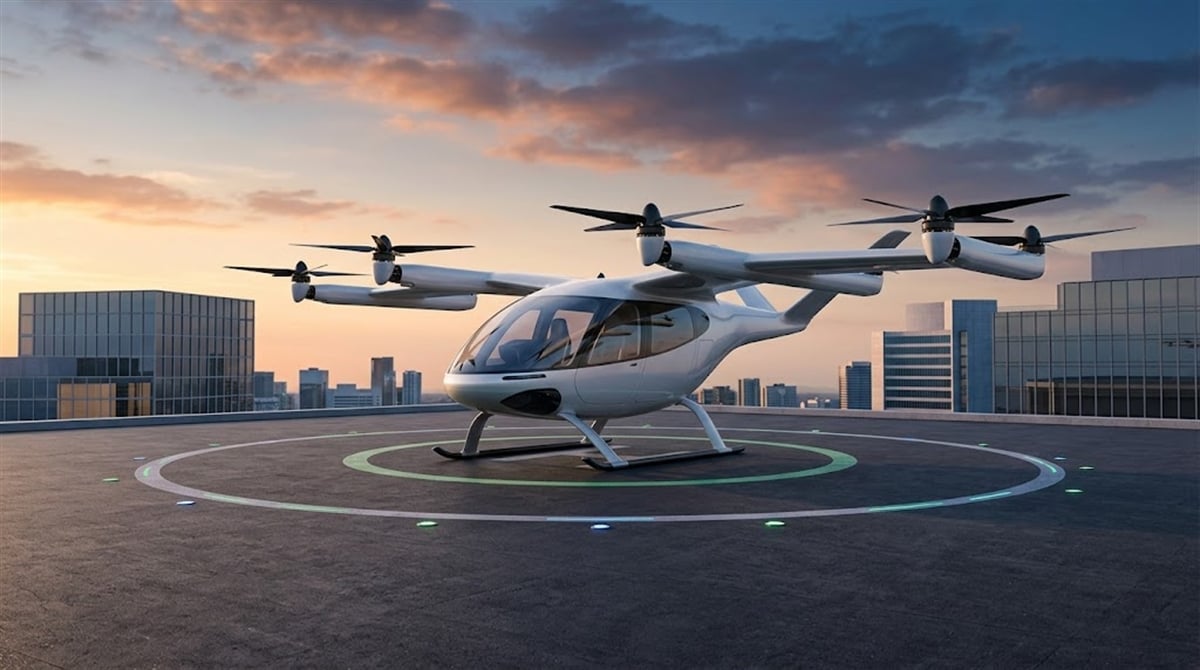
The urban air mobility sector is undergoing a terminal bifurcation in which actual flight operations and, more critically, viable business models are cannibalizing speculative narratives. As the industry transitions from conceptual designs to certifiable hardware, a stark divergence is emerging between capital-intensive, vertically integrated air taxi networks and leaner, de-risked B2B manufacturing frameworks.
While regulatory bodies like the FAA and CAA continue to give their stamps of approval, a high-interest-rate environment is forcing a brutal reassessment of what it will actually take to turn these futuristic aircraft into profitable enterprises. For investors in the eVTOL sector, the focus must now shift from the optics of test flights to the underlying structural integrity of the business model.
OEM Manufacturer Vs. TaaS Airline
The fundamental split in the eVTOL space comes down to two opposing commercialization philosophies. On one side are the vertically integrated operators, primarily represented by Joby Aviation (NYSE: JOBY) and Archer Aviation (NYSE: ACHR). Both companies' strategy models mirror those of a next-generation airline, encompassing aircraft design and manufacturing, fleet operations, maintenance, and the development of a ground-based vertiport infrastructure.
The potential reward is capturing the entire value chain, leading to high-margin Transportation-as-a-Service (TaaS) revenue. The risk, however, is the colossal front-loaded capital expenditure required to build and scale such a network from scratch, a challenge compounded by a macroeconomic climate hostile to such ambitious, cash-burning ventures.
On the other side of this strategic divide is Vertical Aerospace (NYSE: EVTL). Vertical Aerospace is pursuing a pure-play Original Equipment Manufacturer (OEM) model. Instead of building and operating its own air taxi service, Vertical Aerospace focuses solely on designing, certifying, and manufacturing its aircraft for sale to established, global aviation leaders.
This B2B framework effectively outsources the substantial operational and infrastructure costs to its customers, including major players such as American Airlines (NASDAQ: AAL), Virgin Atlantic, and Japan Airlines. This capital-light approach insulates Vertical Aerospace from the severe financing headwinds now facing its TaaS competitors.
How Headwinds Are Grounding Grand Ambitions
The era of cheap capital that fueled speculative technology sector ventures is over. Today's elevated risk-free rates create a punishing environment for the TaaS model's voracious appetite for cash. Joby Aviation and Archer Aviation boast significant liquidity, with cash and short-term investments totaling $2.5 billion and $1.77 billion, respectively.
This capital, however, must fund not only ongoing R&D and certification but also the eventual mass production of hundreds of aircraft and the co-development of a sprawling, nationwide vertiport network. Each new city and route represents another layer of significant CapEx, creating a dauntingly long and expensive path to positive cash flow.
Vertical Aerospace appears better positioned to navigate this restrictive financial climate. Vertical Aerospace recently secured a financing package of up to $850 million, a critical injection that addresses near-term liquidity concerns and provides a clear runway through its certification milestones. Its business model avoids the infrastructure quagmire entirely. With a pre-order book for roughly 1,450 aircraft, representing billions in potential revenue, Vertical Aerospace's path to profitability is tied to production and delivery, a far more conventional and financially manageable aerospace sector endeavor.
Outsourcing Overhead Vs. In-House Operational Friction
Regulatory progress remains a key catalyst for the entire sector. Archer Aviation recently became the first eVTOL company to clear Phase 3 of the FAA's four-phase Type Certification process, while Joby Aviation's first FAA-conforming aircraft has taken flight to support Type Inspection Authorization testing. These are significant engineering achievements that demonstrate the technology's viability. Vertical Aerospace has achieved equally critical milestones with the UK's Civil Aviation Authority, including the successful completion of a two-way piloted transition flight, a complex maneuver essential for validating its aircraft's design.
The next great hurdle is manufacturing at scale, and it is here that the strategic divergence becomes most apparent. Vertical Aerospace mitigates this challenge by leveraging a world-class, de-risked supply chain comprising Tier-1 aerospace titans, including Rolls-Royce (OTCMKTS: RYCEY) for its powertrain and Honeywell (NASDAQ: HON) for its avionics. This strategy offloads immense R&D and certification overhead, allowing Vertical Aerospace to focus on system integration and final assembly.
Conversely, the more insular, in-house manufacturing approach favored by Joby Aviation and Archer Aviation increases operational friction and supply-chain vulnerability. Archer Aviation's focus also appears diluted by multi-front intellectual property litigation, including an ongoing trade-secret dispute with Joby Aviation, which further drains capital and management resources.
Why the Smart Money May Favor the Factory Over the Fleet
The eVTOL sector is clearly advancing beyond the drawing board, but the economic landscape has fundamentally changed the rules of the game. The market appears to be mispricing the structural risk embedded in the TaaS model. Joby Aviation and Archer Aviation command multi-billion-dollar market capitalizations, while Vertical Aerospace, with its capital-light OEM model, established airline partnerships, and significantly de-risked financial and manufacturing profile, trades at a fraction of that valuation.
Investors evaluating the urban air mobility space should consider the profound impact of the current macroeconomic environment on these competing business models. While the allure and marketing hype of a vertically integrated transportation network is strong, the associated capital burn and infrastructure challenges present substantial headwinds. The alternative, a focused B2B manufacturing play that leverages existing industry infrastructure, may offer a more resilient and fundamentally sound exposure to this transformative aviation sector. Cautious investors might find that, in an industry defined by burning cash to get off the ground, the operator with the clearest, most capital-efficient path to positive EBITDA presents the most compelling long-term opportunity.
Where Should You Invest $1,000 Right Now?
Before you make your next trade, you'll want to hear this.
MarketBeat keeps track of Wall Street's top-rated and best performing research analysts and the stocks they recommend to their clients on a daily basis.
Our team has identified the five stocks that top analysts are quietly whispering to their clients to buy now before the broader market catches on... and none of the big name stocks were on the list.
They believe these five stocks are the five best companies for investors to buy now...
The article "eVTOL Investing: Ditch the Taxi, Buy the Blueprint" first appeared on MarketBeat.

/Microsoft%20sign%20at%20the%20headquarters%20by%20VDB%20Photos%20via%20Shutterstock.jpg)

/Apple%20Inc%20logo%20on%20Apple%20store-by%20PhillDanze%20via%20iStock.jpg)