



HONG KONG (AP) — Stocks retreated in Asia on Thursday after an initial jump that pushed Japan's Nikkei 225 index above 60,000 for the first time, while oil prices gained as investors reacted to shaky prospects for more talks on ending the war with Iran.
U.S. futures also fell back after indexes on Wall Street rallied to records a day earlier, helped by strong corporate earnings.
Markets in Japan and South Korea briefly touched new records, driven by buying of tech shares. Tokyo’s Nikkei 225 lost 1.5% to 58,707.60 after climbing to 60,013.98.
South Korea’s Kospi was 0.1% lower at 6,414.57, giving up earlier gains after briefly surpassing 6,500. The government reported a better-than-expected 1.7% annual economic growth rate for the January-March quarter, boosted by strong exports, particularly of computer chips used in the artificial intelligence boom.
Hong Kong’s Hang Seng shed 1.1% to 25,865.88, while the Shanghai Composite index fell 0.8% to 4,073.71.
Australia’s S&P/ASX 200 declined 0.8% to 8,770.70.
Taiwan’s Taiex sank 1.6% and the Sensex in India lost 0.6%.
A growing sense of unease over prospects for an end to the Iran war, which is in its eighth week, is weighing on investor sentiment even after U.S. President Donald Trump extended a ceasefire. It's unclear whether and when another round of peace talks will take place.
Iran fired on three ships in the Strait of Hormuz on Wednesday after the U.S. began imposing a sea blockade of Iranian ports last week, and Trump said the U.S. would continue its blockade of Iranian ports.
Maritime traffic through the Strait of Hormuz, where roughly a fifth of the world’s oil normally passed before the war, is still largely halted and the likelihood of its reopening dimmed after Iran’s Revolutionary Guard seized two of the three ships that were attacked.
Global energy prices have surged on the Iran war energy shock. Brent crude, the international standard, was 1.5% higher early Thursday at $103.39 per barrel. It was around $70 a barrel before the Iran war began in late February.
Benchmark U.S. crude was up 1.8% to $94.66 per barrel.
As hopes for a resolution between the U.S. and Iran faded and peace talks stalled, the oil market “is having to reprice expectations,” ING Bank strategists Warren Patterson and Ewa Manthey said in a research note.
“As hopes fade, the reality of the supply disruption will set in, leaving further upside for prices,” they said. “If no progress is made, the market will become increasingly numb to the noise and headlines that have dictated price action recently.”
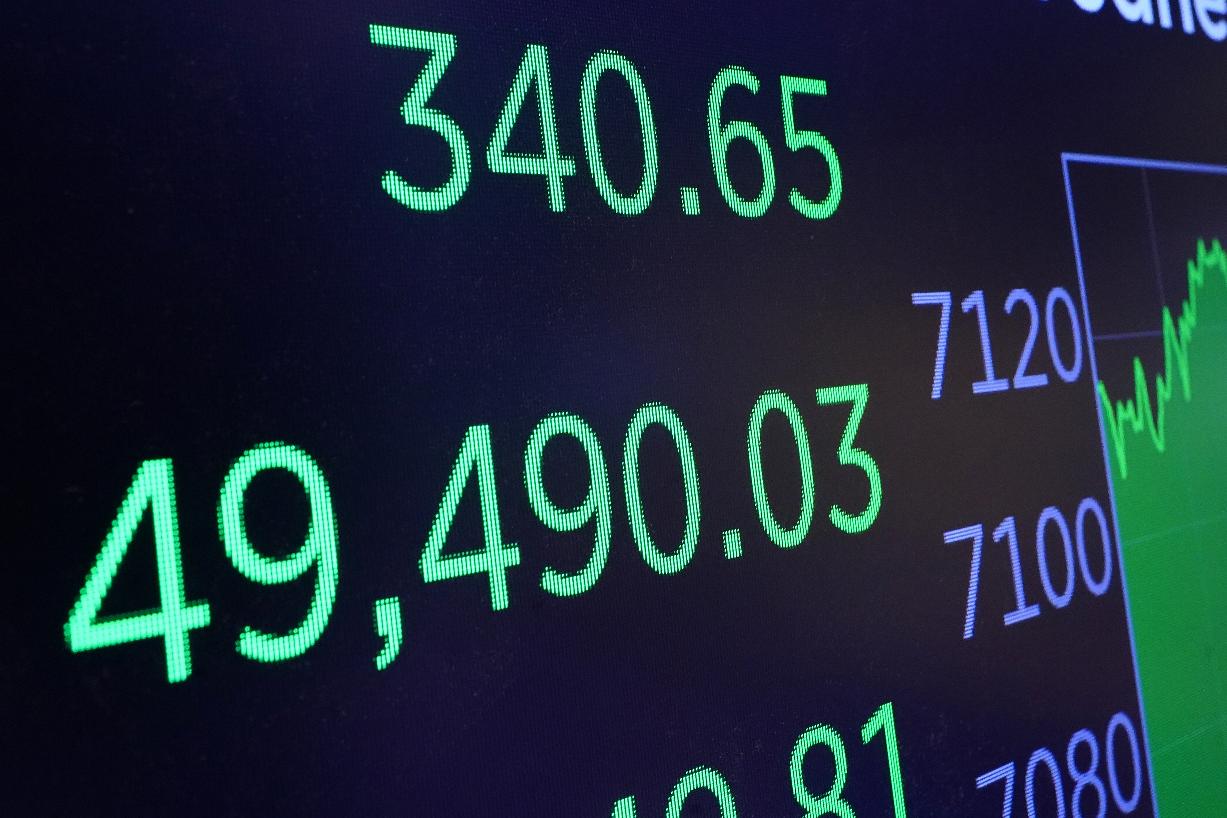
Wall Street set more records Wednesday following a series of strong corporate earnings and an extension of the Iran war ceasefire, with the benchmark S&P 500 jumping 1% to 7,137.90, eclipsing its previous record high set on Friday. The Dow Jones Industrial Average climbed 0.7% to 49,490.03, while the Nasdaq composite also set a record, gaining 1.6% to 24,657.57.
Shares of GE Vernova jumped 13.7% after the company reported stronger-than-expected quarterly profits. The energy equipment maker is also benefiting from the AI boom with robust equipment orders including for data centers. Boeing gained 5.5%, and Philip Morris International was up 7%, also following better-than-expected results.
In other dealings early Thursday, gold and silver prices fell. Gold prices dropped 0.6% to $4,722.70 per ounce. Silver prices lost 2.3% to $76.17 an ounce.
The U.S. dollar rose to 159.53 Japanese yen from 159.48 yen. The euro was trading at $1.1696, down from $1.1705.
___
AP Business Writer Stan Choe contributed to this report.

/Palo%20Alto%20Networks%20Inc%20HQ%20sign-by%20Sundry%20Photography%20via%20Shutterstock.jpg)
/Broadcom%20Inc%20logo%20on%20building-by%20Poetra_%20RH%20via%20Shutterstock.jpg)
/PayPal%20Holdings%20Inc%20logo%20and%20money-by%20Sergio%20Photone%20via%20Shutterstock.jpg)
/Microsoft%20Corporation%20logo%20on%20sign-by%20Jean-Luc%20Ichard%20via%20iStock.jpg)