
Yesterday, we looked at some bullish trades, so today, we are going to look for some bearish candidates.
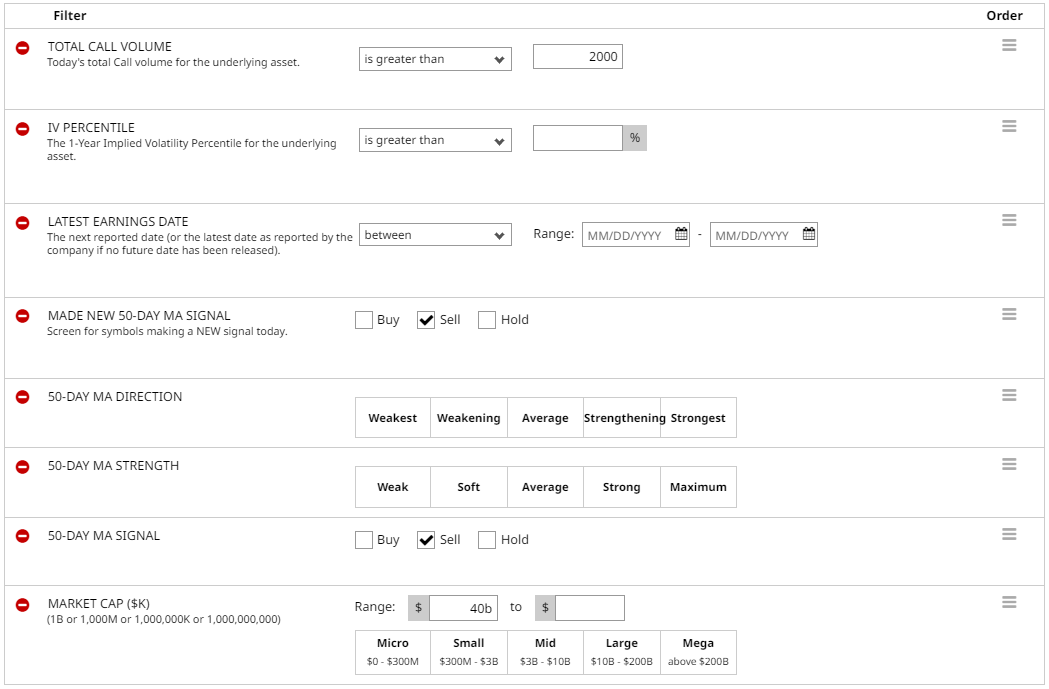
We will be using some moving average filters to find bearish stocks and then looking at a couple of different trade ideas.
First the stock scanner:
Which produces these results:
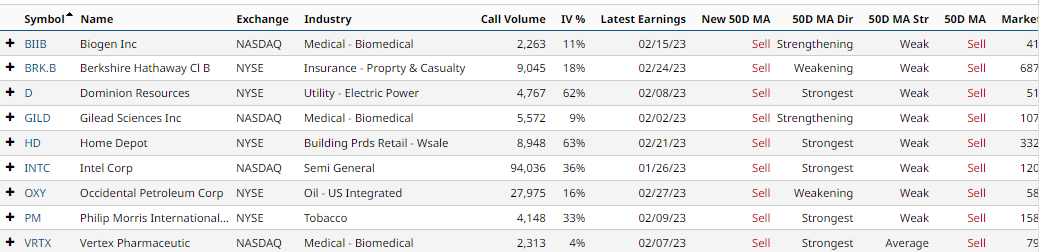
After looking through the charts, we’ll focus our attention on Home Depot Resources (D) and Home Depot (HD).
Home Depot Bear Call Spread
A bear call spread is a defined risk option strategy that profits if the stock closes below the short strike at expiry.
To execute a bear call spread an investor would sell an out-of-the-money call and then buy a further out-of-the-money call.
Running the Barchart Bear Call Spread Screener shows these results for Home Depot:
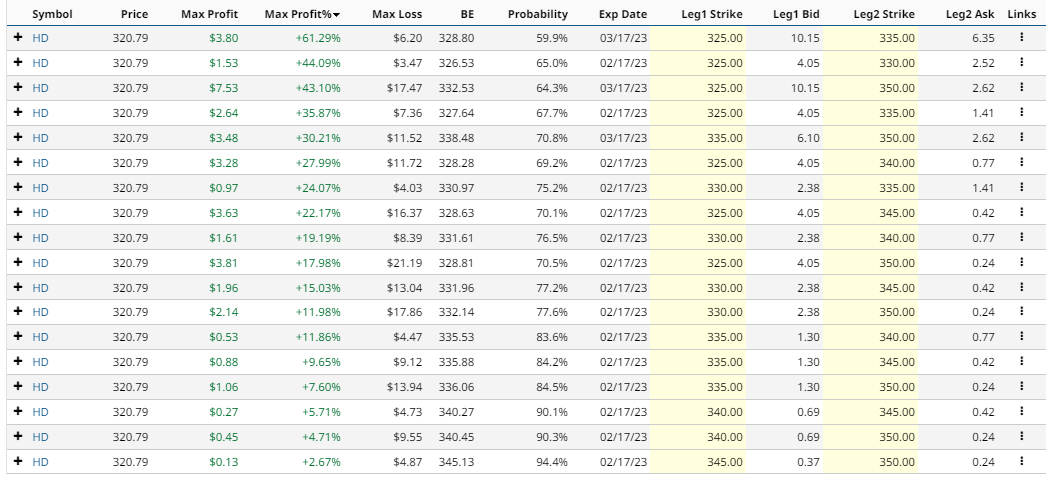
Let’s use the first line item as an example. This bear call spread trade involves selling the March expiry 325 strike call and buying the 335 strike call.
Selling this spread results in a credit of around $3.80 or $380 per contract. That is also the maximum possible gain on the trade. The maximum potential loss can be calculated by taking the spread width, less the premium received and multiplying by 100. That give us:
10 – 3.80 x 100 = $620.
If we take the maximum gain divided by the maximum loss, we see the trade has a return potential of 61.29%.
The probability of the trade being successful is 59.9%, although this is just an estimate.
For Dominion, let’s look at the bear put spread screener.
Dominion Bear Put Spread
Here are the results of the bear put call spread screener:

A bear put spread is created through buying a put and then selling a further out-of-the-money put.
Selling the further out-of-the-money put reduces the cost of the trade but also limits the upside.
A bear put spread is a risk defined trade, so you always know the worst-case scenario. Bear put spreads are negative delta (bearish) and positive vega (benefit from a rise in implied volatility).
The first item on the screener involves buying the April expiration, 60-strike put and selling the 52.50-strike put.
The trade cost would be $220, and the maximum potential profit would be $530 (difference in strike prices, multiplied by 100 less the premium paid).
This trade has a max profit potential of 240.91% and a probability of 38.0%.
Conclusion
There you have two different bearish trade ideas on two different stocks. Remember to always manage risk and have stop losses in place.
Please remember that options are risky, and investors can lose 100% of their investment. This article is for education purposes only and not a trade recommendation. Remember to always do your own due diligence and consult your financial advisor before making any investment decisions.
More Stock Market News from Barchart
- Hawkish Fed Comments Pressure Stocks
- Here’s a Big Reason to Like Simon Property Group Other Than Real Estate
- Unusual Activity in ConocoPhillips Put Options Shows a Good Income Play
- Nasdaq Rally Has Some Shaky Elements
On the date of publication, Gavin McMaster did not have (either directly or indirectly) positions in any of the securities mentioned in this article. All information and data in this article is solely for informational purposes. For more information please view the Barchart Disclosure Policy here.

/Data%20codes%20through%20eyeglasses%20by%20Kevin%20Ku%20via%20Pexels.jpg)
/Space/Rocket%20launch%20streak%20by%20Alones%20via%20Shutterstock.jpg)