
On December 18, in an article on Barchart, I highlighted that November consumer and producer price index data provided conflicting inflationary pressures. November CPI came in lower than expected, while the November PPI was higher. I wrote, “A move to 4.375% in the Fed Funds Rate and quantitative tightening has taken a toll on markets across all asset classes over the past months. However, inflation remains at the highest level in years despite the Fed’s aggressive monetary policy stand.” I went on to explain that geopolitics and supply-side inflationary pressures create a challenge for the U.S. Federal Reserve.
In early 2023, short-term interest rates are unlikely to move higher at the same trajectory as in 2022. The December CPI told markets that inflation is falling, but real interest rates remain negative. The recent price action in crude oil, gasoline, gold, and copper could be a precursor for another rise in inflationary pressures, meaning the Fed will not take its foot off the hawkish pedal.
CPI and PPI could cause the Fed to opt for a 25 or 50-basis point hike at the next FOMC meeting
The December consumer price index data showed a 0.1% decline, meeting expectations but the most significant drop since April 2020. Excluding food and energy, core CPI rose 0.3%, meeting forecasts. Annualized headline CPI rose 6.5%, while the core was 5.7% higher. The December PPI data also was below consensus estimates.
The bottom line is the drop came from a seasonal decline in gasoline prices. However, those fuel prices have been rising since the December 2022 lows.
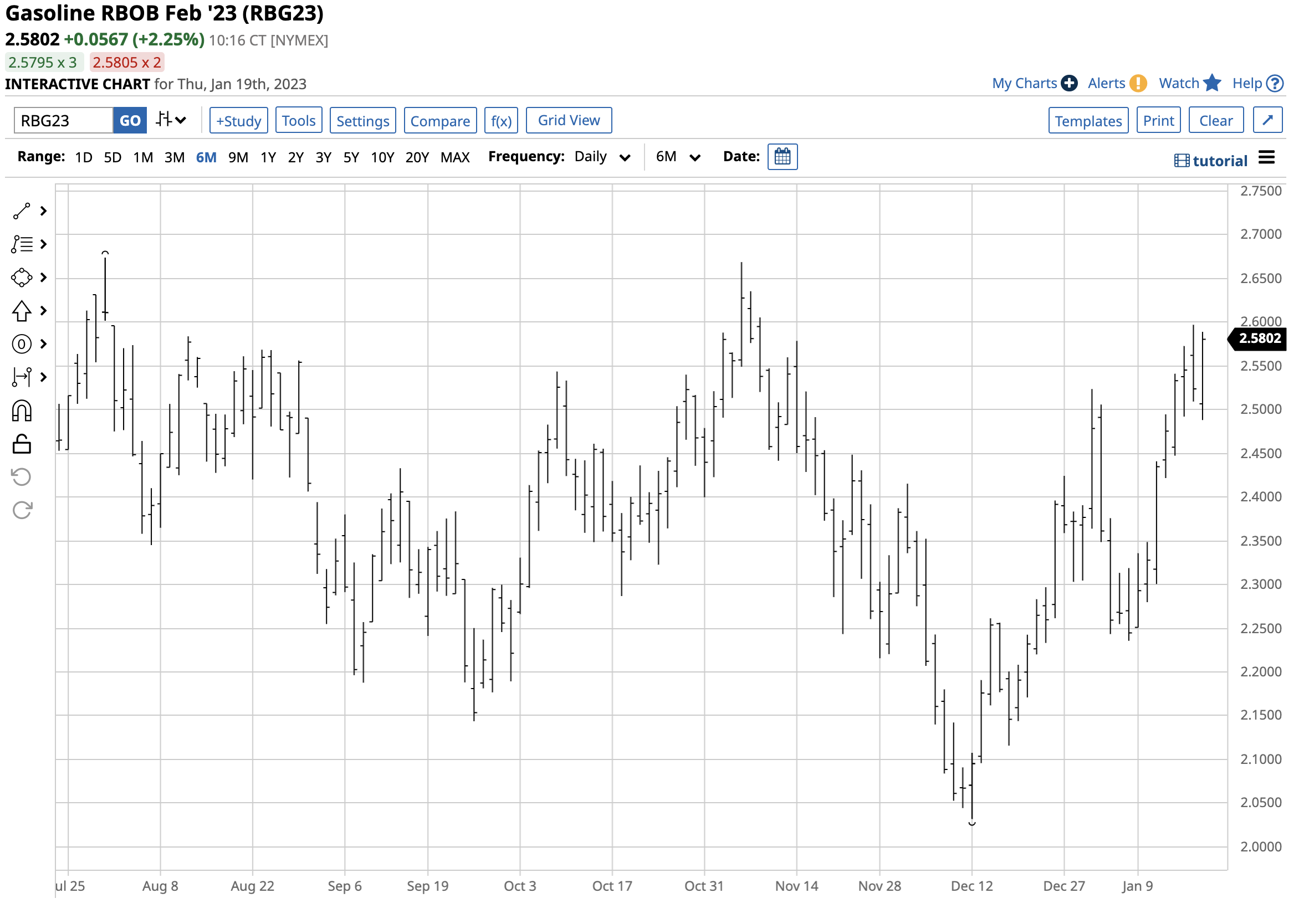
The chart shows the rise of gasoline for February delivery from $2.0321 on December 12, 2022, to over the $2.58 per gallon wholesale level on January 19, more than a 26% increase.
While the increase in gasoline prices does not bode well for the next CPI and PPI reports, the U.S. short-term Fed Funds Rate at a midpoint of 4.375% remains below even the core inflation rate, meaning real U.S. interest rates remain negative.
The CPI decline and increasing worries about layoffs and recessionary pressures could cause the Fed to curb its enthusiasm for rate hikes, but a 25 or 50-basis point increase is on the horizon for the next FOMC meeting. Moreover, any rate cuts are likely off the table for 2023. The Fed will remain hawkish to battle inflation, but the trajectory of rate hikes in 2023 will be much lower than in 2022.
QT will continue, and it is unprecedented
While markets concentrate on the short-term Fed Funds Rate, the U.S. central banks leading monetary policy tool, reducing the Fed’s swollen balance sheet, continues at an unprecedented pace. Each month, the balance sheet declines by $95 billion, putting upward pressure on interest rates further out along the yield curve. Mortgage, car, and personal loans, credit card rates, and business financing rates remain on an upward trajectory and will, at best, stay at current levels throughout 2023. The era of artificially low rates is over in 2023, and the Fed’s commitment to fighting inflation remains undeterred if recessionary pressures remain under control.
Critical commodity prices are moving higher again
While the Federal Reserve significantly impact demand-side inflationary pressures, the worldwide economy’s supply side is above the central bank’s pay grade. Political changes can only address the geopolitical tensions creating price dislocations in the raw material markets.
I pointed out the increase in gasoline prices since mid-December 2022, but other commodities, including crude oil, copper, gold, lumber, and others, have rallied over the past weeks. The rise in commodity prices is a warning sign for the future consumer and producer price index data and inflationary pressures beyond the Fed’s control. Moreover, while layoffs are increasing, the U.S. jobs market remains tight, with rising wages feeding the inflationary beast.
The bonds have recovered- Another selling opportunity
The long-term U.S. 30-Year Government Treasury bond is a bellwether for inflation. Last year, the long bond futures dropped off a bearish cliff.

The chart shows a decline from 160-14 on December 31, 2021, to 125-11 at the end of 2022. The around 22% drop resulted from rising inflationary pressures and the Fed’s commitment to fighting the economic condition with short-term interest rate hikes and quantitative tightening. In early 2023, the long bond futures recovered to 132, but the trend, which is always your best friend, remains bearish. The long bond’s technical resistance level that could end the bearish path of least resistance stands at the August 2022 145-31 high. Tight monetary policy and rising commodity prices could make recovery rallies in the long bond futures a selling opportunity in 2023.
Expect more volatility as the geopolitical landscape remains uncertain
Markets reflect the economic and political landscapes, which remain highly fluid and uncertain in early 2023. While the war in Ukraine continues to create dislocations in food and energy markets, the bifurcation between the world’s nuclear powers remains a clear and present danger to peace. The Fed continues to battle inflation and seems prepared to suffer through a recession to push prices lower. However, the underlying reasons for rising raw material prices may be immune to rising interest rates, creating a dilemma for the Fed and other central banks. Meanwhile, a hot geopolitical landscape with China, Russia, and their allies on one side and the U.S., Europe, Japan, and their allies on the other, continues to interfere with trade and causes fear of conflicts to increase.
The bottom line is all the issues that caused market volatility in 2022 remain clear and present dangers in 2023. Moreover, unless world peace breaks out, which is highly unlikely, we should expect a continuation of high price variance and periods where fear and uncertainty cause sudden price spikes in markets across all asset classes.
The U.S. 30-Year Treasury Bond futures is a benchmark that tends to be a safe harbor during market storms but remains in a long-term bearish trend. Rising U.S. short-term interest rates and QT will keep upside pressure on interest rates and downside pressure on the long bond. Until the landscape changes, rallies in the long bond futures market could continue to be selling opportunities.
More Interest Rate News from Barchart
- Economic Concerns and Debt Ceiling Risk Weigh on Stocks
- Stocks Retreat as Weak Economic Reports Spark Recession Fears
- Stocks Give Up Early Gains as Economic Growth Slows
- Stocks See Downard Pressure from Mixed Corporate Earnings Results
On the date of publication, Andrew Hecht did not have (either directly or indirectly) positions in any of the securities mentioned in this article. All information and data in this article is solely for informational purposes. For more information please view the Barchart Disclosure Policy here.



/A%20photo%20of%20a%20Sandisk%20Solid%20State%20Drive%20by%20Top%20Popular%20Vector%20by%20Shutterstock.jpg)