




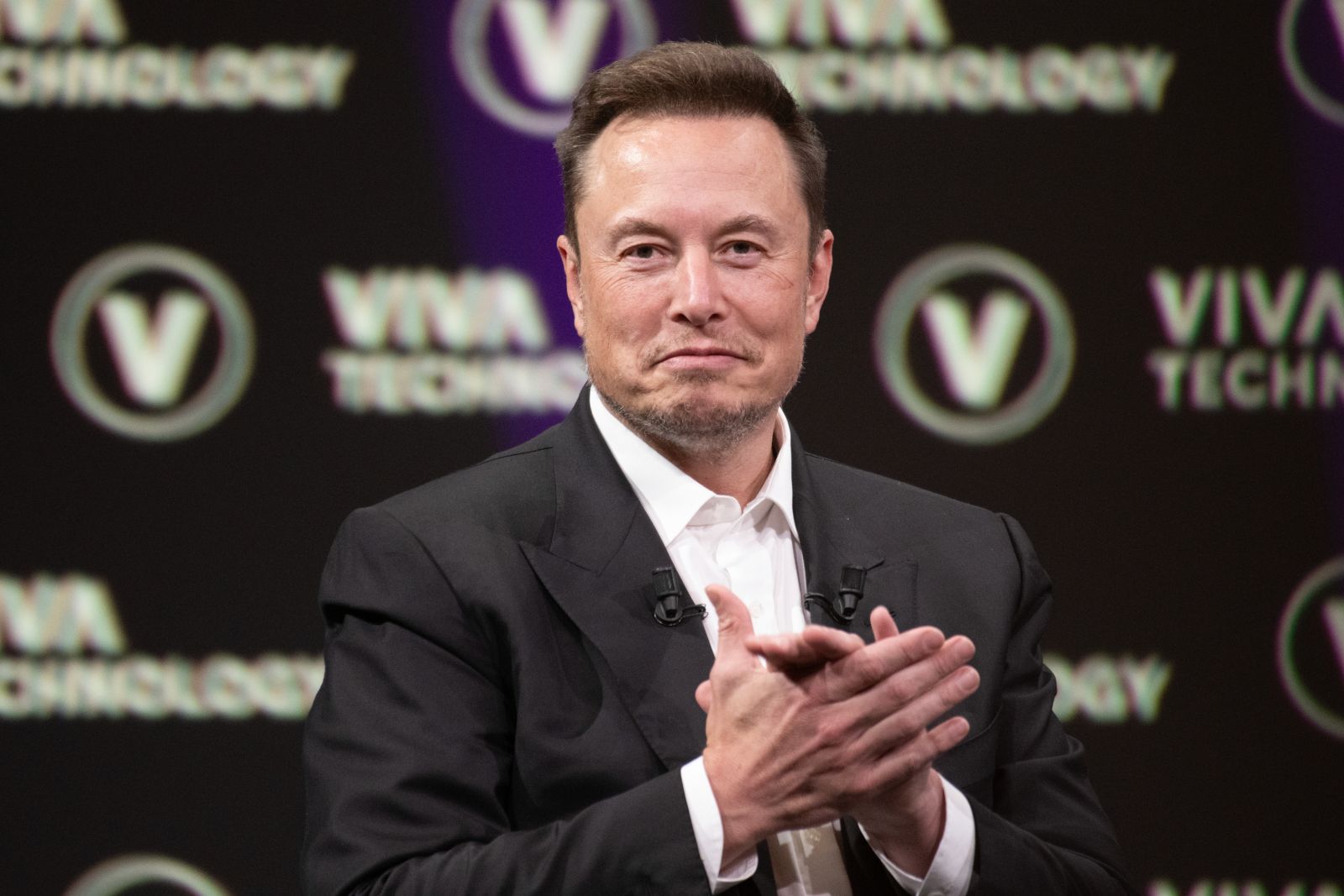
LVMH (LVMUY) CEO Bernard Arnault became the world's wealthiest person on Tuesday, passing Elon Musk in the process. According to the Bloomberg Billionaires Index, Arnault, the driving force behind the luxury conglomerate’s growth over the past 40 years, is now worth $171 billion, $7 billion more than Tesla (TSLA) CEO Elon Musk.
While Musk continues to fritter away his wealth with an ill-advised move to buy Twitter for $44 billion, Arnault merely stays out of the limelight, continuing to build LVMH’s business to deliver superior shareholder returns.
In April, I wrote a Barchart opinion piece, Why LVMH Is The Best Over-The-Counter Stock You Can Buy, explaining why LVMH is one of the world’s best-run businesses. Up 20% since then -- S&P 500 is down nearly 4% over the same period -- my opinion of LVMUY hasn’t changed.
It remains one of, if not the best, over-the-counter stocks available.
Here’s why.
Arnault’s Story Would Make a Good Book
His detractors will say that he came from money -- he moved up the ranks at the family-owned construction company, Ferret-Savinel, becoming chairman in 1978 -- but the moves he made after that are what’s made him the world’s wealthiest person.
In 1984, after living in the U.S. for three years, Arnault moved back to Paris to rescue Boussac, a failing conglomerate that just happened to own Dior, his mom’s favorite obsession.
Arnault took $15 million from the family coffers, managed to obtain $45 million from Lazard Frères, and acquired the bankrupt conglomerate, selling off virtually everything Boussac owned.
“Arnault had pushed [the company] into the black, laying off 9,000 workers and selling off [its] disposable-diaper division and most of its textile operations for $500 million,” wrote the New York Times in 1989.
He used the funds from the dispositions to take control of LVMH -- which was created through the 1987 merger of Moët et Chandon and Hennessy and Louis Vuitton -- adding pieces to the puzzles over the years, including, Berluti, Guerlain, Marc Jacobs, Tag Heuer, Gucci, and most recently, Tiffany & Co., which it acquired in 2020 for $15.8 billion.
Today, it has 75 prestigious brands, generates revenue of more than 64.2 billion Euros ($68.3 billion), and operates more than 5,500 stores worldwide.
It’s a force to be reckoned with.
Ignore At Your Peril
Because LVMH operates in the luxury space, it tends to generate considerable negative press from people opposed to its luxury.
On Tuesday, Yahoo Finance produced a video discussing Arnault passing Musk as the world’s wealthiest person. The first comment after the story stated, “That just tells me their handbags are way overpriced.”
While there is no question that most of the company’s products aren’t cheap, the comment neglects to consider the jobs created by LVMH over the years. In 2021, it had 175,647 employees worldwide, including nearly 35,000 in the U.S. In 2011, it had 97,559 employees worldwide, a compound annual growth rate of 6.1%.
That might not seem like massive job growth, but outside the tech industry, it sure is. It’s on par with Nike (NKE), one of the more prominent consumer discretionary growth stories over the past decade.
Over the past five years, LVMH’s annualized total return was 22.5%, almost double Nike’s performance over the same period. Also, LVMUY has a dividend yield of 1.6%, 40 basis points higher than Nike.
In my April piece, I discussed the speculation surrounding LVMH acquiring Ralph Lauren (RL). Nothing came of the rumors.
However, if I had to speculate about a brand that could use LVMH’s powerful reach in an industry that it hasn’t entered yet, it would be RH (RH). The luxury lifestyle brand is expanding into the overnight hospitality business with an RH Guesthouse in New York. LVMH could take it further, faster.
Just a thought.
The Big Picture
In July, Bloomberg reported on Arnault’s moves to ensure his family continues to control the luxury conglomerate long after he’s gone. Currently, 73, LVMH shareholders approved raising the age of its CEO by five years to 80. That gives the billionaire seven years to complete his succession, assuming he has no health issues.
As part of the reorganization, Financière Agache became a joint-stock partnership, with all five of his children -- they all work in LVMH-- owning an equal piece of the holding company with the senior Arnault acting as managing general partner.
Agache holds 97.5% of the shares of Christian Dior, which in turn owns 41% of LVMH’s equity and 56% of the votes.
If you don’t like family-controlled businesses, LVMH isn’t for you. However, if you don’t have a problem with this kind of setup, LVMH is not only the best over-the-counter stock you can own, it’s one of the best stocks you can own, period.
Arnault’s the world’s wealthiest person for a reason.
More Stock Market News from Barchart
- Sally Beauty (SBH) Is a Clear Sell Except for One Small Detail
- Markets Today: Stock Higher Ahead of FOMC Results
- Pre-Market Brief: Stocks Mixed Ahead Of Fed Rate Decision
- Long Call Butterfly Screener Results For December 14th
On the date of publication, Will Ashworth did not have (either directly or indirectly) positions in any of the securities mentioned in this article. All information and data in this article is solely for informational purposes.


/NVIDIA%20Corp%20logo%20outside%20building-by%20BING-JHEN_HONG%20via%20iStock.jpg)
/Elon%20Musk%2C%20founder%2C%20CEO%2C%20and%20chief%20engineer%20of%20SpaceX%2C%20CEO%20of%20Tesla%20by%20Frederic%20Legrand%20-%20COMEO%20via%20Shutterstock.jpg)
/Super%20Micro%20Computer%20Inc%20logo%20on%20building-by%20Poetra_RH%20via%20Shutterstock.jpg)