




The popular ETF that tracks the energy sector, The Energy Select Sector SPDR ETF (NYSEARCA: XLE), hit a peak in late March, corrected in early April and may struggle to advance. The conspicuously large candle formed by the ETF price action is echoed in the underlying stocks, suggesting higher prices will be hard to come by. The candle, which is primarily a large black body, formed a Dark Cloud Cover, typically signaling the end of a trend. However, it is unlikely this trend has ended.
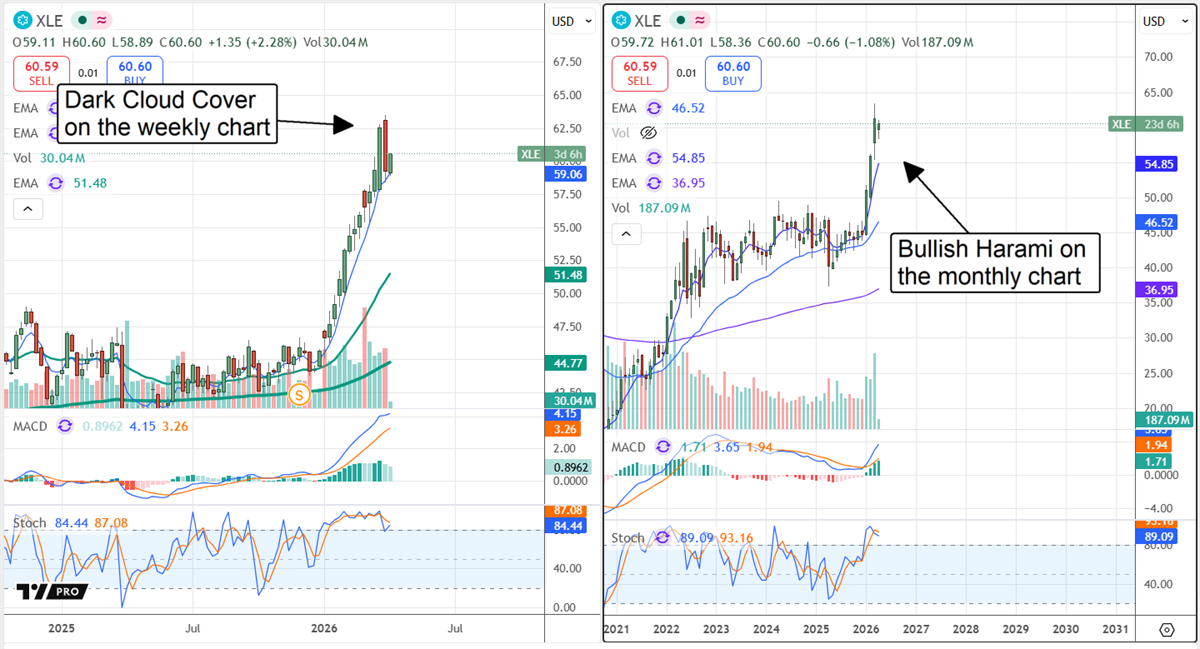
While oil prices may struggle to climb much higher, the impact of higher oil prices will be felt for a long time. Not only will it take time for WTI and Brent prices to correct (assuming an end to the conflict), but any correction will be offset by damage to oil infrastructure. Numerous sites across the Middle East, ranging from production to collection and processing, have been damaged, and it will take time to bring them back online. In the meantime, oil producers and refiners benefit from underlying energy demand and higher margins.
Margins are a critical element in this equation, as they determine earnings leverage and cash flow. Energy companies are notorious for returning capital through dividends and share buybacks, so cash flow is a significant driver of price action, and margins are expected to improve significantly in 2026. Producers benefit from higher selling prices, while refiners see wider crack spreads. With numerous energy leaders reducing or suspending buybacks over the trailing 12- and 24-month periods, the stage is set for an acceleration in capital returns in 2026.
Ominous as the Dark Cloud Cover is, the long-term monthly chart reflects it as a passing shower for the energy sector. The monthly chart shows a Bullish Harami, a signal that selling pressure is fading and buyers may be stepping in, often preceding a trend reversal to higher prices. The takeaway is that March's peak and April's pullback are likely to be a short-term pause and buying opportunity before this ETF and sector rally to fresh highs.
An Accelerating Earnings Growth Outlook Underpins XLE Rally
The energy sector is expected to see earnings recover in 2026, with sequential acceleration throughout the year, and forecasts are rising. The consensus for Q1 2026 assumes 9% earnings growth as of early Q2, up approximately 850 basis points compared to the quarter’s start, and the full-year forecast is more robust.
The consensus for full-year energy sector earnings growth tops 25%, up more than 2,200 basis points since the year’s start, and it will likely continue rising as the quarter progresses. In this scenario, the XLE index and underlying stocks have a triple tailwind in growth, acceleration, and improving forecasts.
The top holdings in the XLE are Exxon Mobil (NYSE: XOM) and Chevron (NYSE: CVX), at approximately 24% and 17% of the index, so they will be particularly important to track. These companies are forecasted to grow their revenue, but the outlooks are mixed. Exxon is expected to lead, growing revenue by just over 1% while widening its margin. Chevron, on the other hand, is expected to grow revenue at a faster pace but to see its margin contract. The likely outcome is that both will outperform on the top and bottom lines and issue favorable guidance.
Dividend Is Reliable, Attractive, and on Track to Be Increased
XLE ETF’s dividend yield is attractive at approximately 2.6%. The 2.6% yield is despite near-record share prices, and may not remain as robust, given the earnings and capital return outlook, which underpin the stock price advance. Even so, the payout is reliable, with a payout ratio in the 50% to 60% range and an earnings growth forecast.
The opportunity for investors is that the trend of annual increases will continue, potentially accelerate, and be compounded by share buybacks. Between them, the top three XLE holdings, including Conoco-Phillips (NYSE: COP), plan to return over $60 billion in capital over the next year, equal to approximately 15% of their combined market cap.
Analysts and Institutions Drive Price Action in Energy Stock Markets
Analysts and institutions are in the mix, with analysts raising price targets and driving new highs for underlying stocks while institutions accumulate. Analysts' trends reflect strong Moderate Buy ratings, positive coverage, sentiment, and price-target trends, with consensus estimates providing support and high-end targets forecasting fresh highs. Institutions, which own an average 65% of the top two holdings, are aggressively accumulating these stocks, having bought them at a nearly 2-to-1 pace in Q1.
Where Should You Invest $1,000 Right Now?
Before you make your next trade, you'll want to hear this.
MarketBeat keeps track of Wall Street's top-rated and best performing research analysts and the stocks they recommend to their clients on a daily basis.
Our team has identified the five stocks that top analysts are quietly whispering to their clients to buy now before the broader market catches on... and none of the big name stocks were on the list.
They believe these five stocks are the five best companies for investors to buy now...
The article "Why the Energy Sector's April Pullback Could Be a Major Buying Opportunity" first appeared on MarketBeat.


/Micron%20Technology%20Inc_logo%20and%20website-by%20Mojahid%20Mottakin%20via%20Shutterstock.jpg)

/Super%20Micro%20Computer%20Inc%20HQ%20photo-by%20Tada%20Images%20via%20Shutterstock.jpg)