



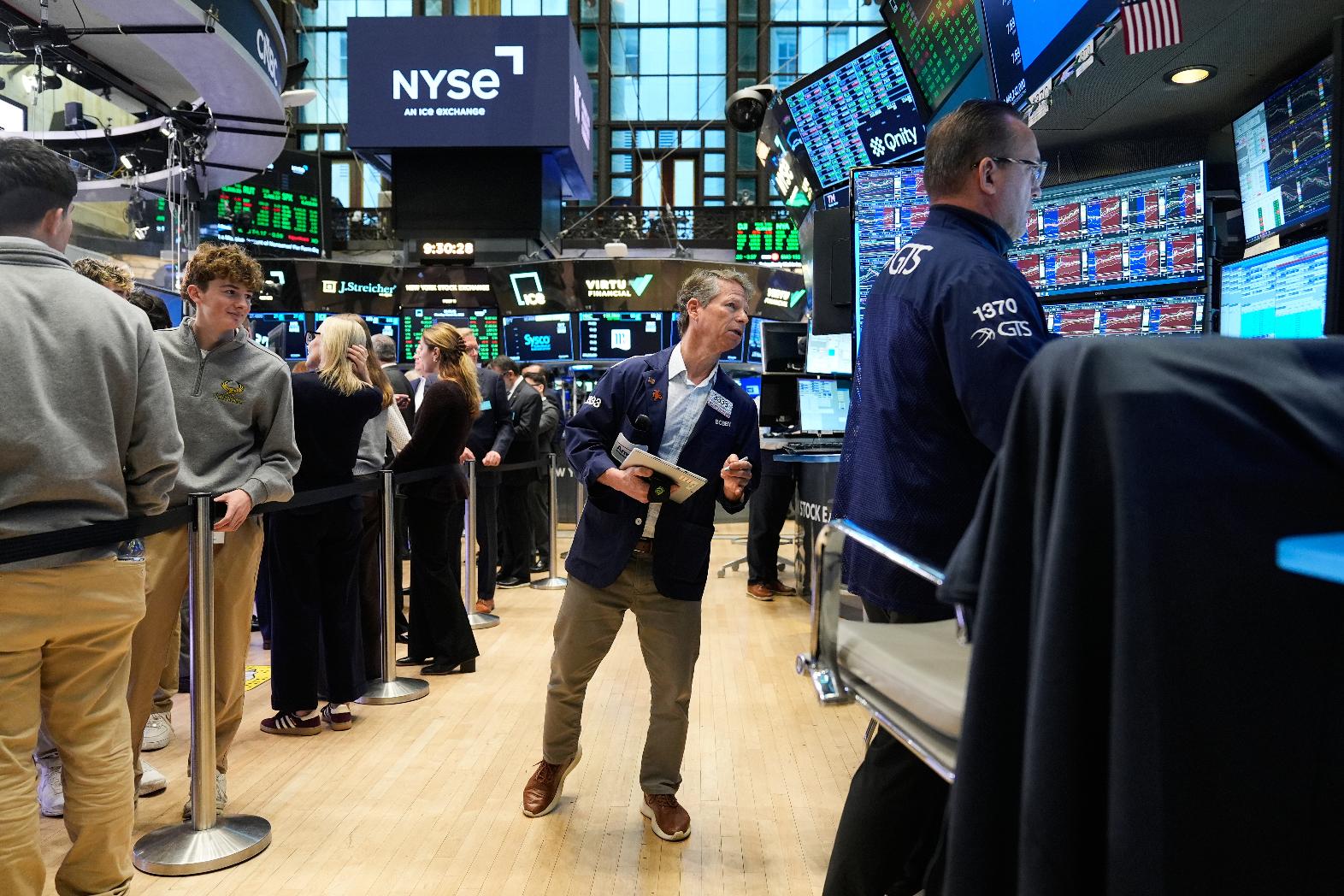
NEW YORK (AP) — U.S. stocks are jolting higher Tuesday as the spike for oil prices because of the war with Iran slows.
The S&P 500 leaped 1.6% and is heading toward its best day since the war, a day after it fell more than 9% below its all-time high set early this year. The Dow Jones Industrial Average was up 601 points, or 1.3%, as of 10:05 a.m. Eastern time, and the Nasdaq composite was 2% higher.
The rebound came as steadying oil prices took some pressure off Wall Street. The price for a barrel of Brent crude oil, the international standard, fell 0.6% to $106.73. Benchmark U.S. crude slipped 0.1%.
Oil prices have been dictating the U.S. stock market’s sharp swings since the war began, with Brent shooting from roughly $70 per barrel to as high as $119 at times. The worry is that the war may last a long time and keep oil and natural gas from the Persian Gulf out of global markets, which could create a brutal blast of inflation.
Analysts said optimism entered markets overnight following a report from The Wall Street Journal saying President Donald Trump told aides he’s willing to end the U.S. military campaign against Iran even if the Strait of Hormuz remains largely closed. The strait is a narrow waterway connecting the Persian Gulf to the open ocean, and a fifth of the world’s oil sails through it on a typical day.
To get the strait open, Trump could try diplomatic talks with Iran and then push allies in Europe and the Gulf to take the lead, according to the report.
On his social media network, Trump on Tuesday morning urged the United Kingdom and other countries to “build up some delayed courage, go to the Strait, and just TAKE IT.”
Trump’s own words have become less impactful for financial markets, after he touted what he called productive talks over the last week, only to turn around and threaten the “obliteration” of Iranian power plants.
Oil prices have already shot high enough that inflation in Europe accelerated to 2.5% in March, up from February’s 1.9%.
In the United States, the price for a gallon of gasoline topped $4 per gallon for the first time since 2022. That’s squeezing budgets for U.S. households and preventing them from spending on other things. More expensive oil could also result in higher prices set by companies that use any ships, trucks or planes to move their products.
Tuesday’s slowdown for oil prices helped boost stocks of companies that have big fuel bills. Norwegian Cruise Line Holding steamed 4.1% higher, and Delta Air Lines climbed 2.2%.
Tech stocks, meanwhile, were the strongest forces lifting the market in a widespread rally where nearly four out of every five stocks within the S&P 500 rose.
Marvell Technology climbed 6.9% after Nvidia invested $2 billion in the company and announced a partnership with it. Nvidia rose 2.7% and was the single strongest force lifting the S&P 500.
They helped offset a 5.6% drop for McCormick. The spice company is buying most of Unilever’s food business, including such brands as Hellmann’s, for cash and stock valuing it at $44.8 billion.
In the bond market, Treasury yields eased again. The yield on the 10-year Treasury fell to 4.31% from 4.35% late Monday and from 4.44% at the end of last week. That’s a significant move for the bond market.
Lower yields should pull downward on rates for mortgages and other loans for U.S. households and businesses, which have been screaming higher since the war began.
The yield on the 10-year Treasury was at just 3.97% in late February, before worries about high oil prices forced traders to erase bets for a possible cut to interest rates by the Federal Reserve this year.
Yields remained lower following a couple reports Tuesday on the U.S. economy that came in better than economists expected. One said confidence among U.S. consumers unexpectedly improved. The other said U.S. employers were advertising more job openings at the end of February than expected, though fewer than the month before.
In stock markets abroad, indexes rose in Europe following a tougher finish in Asia. South Korea’s Kospi fell 4.3%, and Japan’s Nikkei 225 lost 1.6% for two of the bigger moves.
___
AP Business Writers Chan Ho-him and Matt Ott contributed.


/Micron%20Technology%20Inc_billboard-by%20Poetra_RH%20via%20Shutterstock.jpg)
/Boeing%20Co_%20plane-by%20Wirestock%20via%20iStock.jpg)