



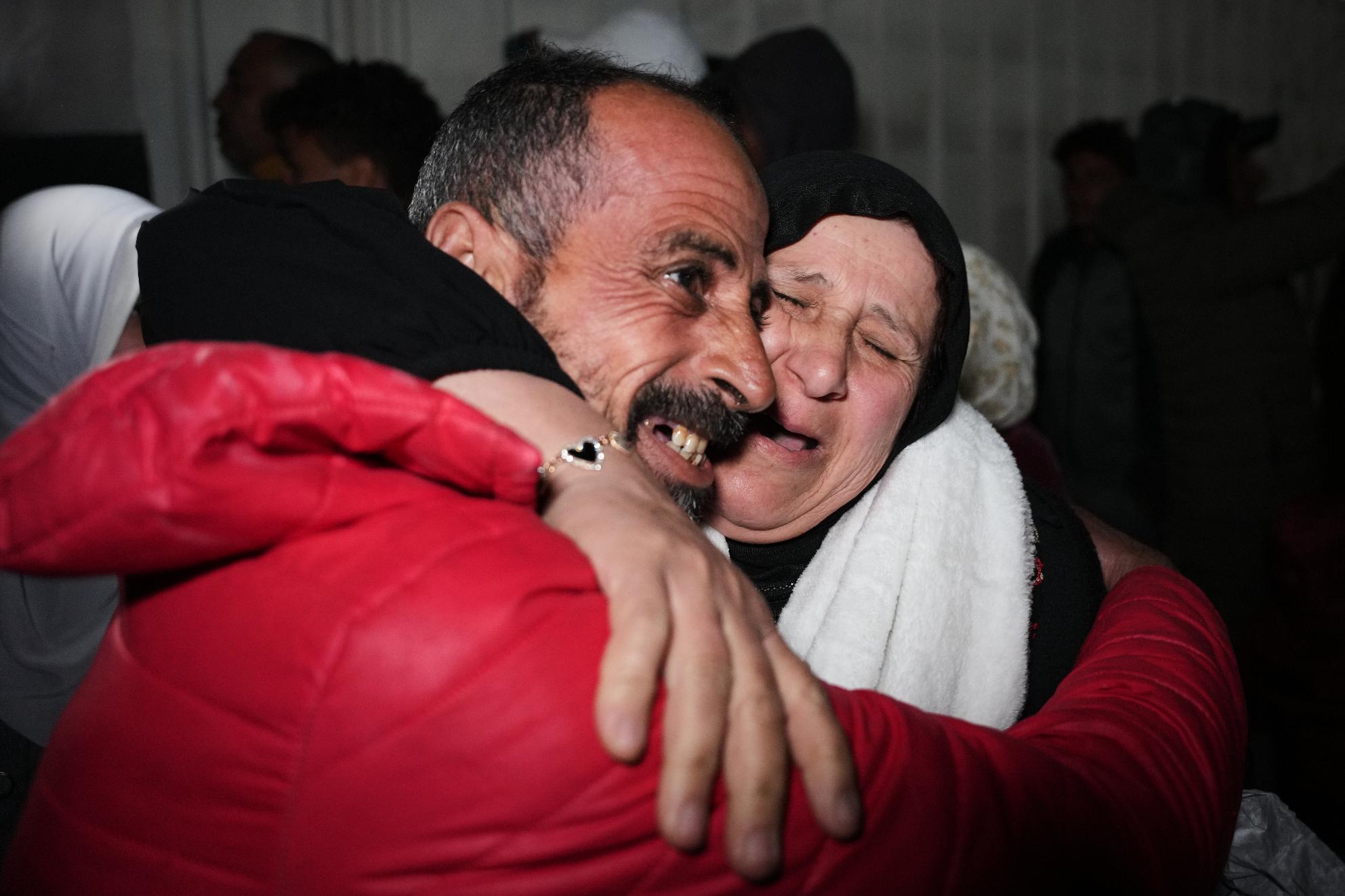
CAIRO (AP) — A limited number of Palestinians traveled between Gaza and Egypt on Sunday as the Rafah crossing reopened after a two-day closure, Egyptian state media reported.
The vital border point opened last week for the first time since mid-2024, one of the main requirements for the U.S.-backed ceasefire between Israel and Hamas. The crossing was closed Friday and Saturday because of confusion around operations.
The Palestinian Red Crescent said 17 medical evacuees and 27 companions had begun the crossing into Egypt. The same number was expected to head into Gaza. Israel didn’t immediately confirm it.
Meanwhile, Israeli Prime Minister Benjamin Netanyahu is expected to meet with U.S. President Donald Trump in Washington on Wednesday, though the major subject of discussion will be Iran, his office said.
Over the first four days of the crossing's opening, just 36 Palestinians requiring medical care were allowed to leave for Egypt, plus 62 companions, according to U.N. data. Rafah's reopening came after Israel retrieved the remains of the last hostage in Gaza and U.S. officials visited Israel to apply pressure.
Palestinian officials say nearly 20,000 people in Gaza seek to leave for medical care that isn't available in the war-shattered territory.
A group of Palestinian patients gathered Sunday in the courtyard of a Red Crescent hospital in Gaza’s southern city of Khan Younis before making their way to the crossing for treatment abroad, family members told The Associated Press.
Amjad Abu Jedian, injured in the war, had been scheduled to leave for medical treatment on the first day of the crossing’s reopening, but only five patients were allowed to travel, said his mother, Raja Abu Jedian. He was shot by an Israeli sniper while doing building work in the central Bureij refugee camp in July 2024, she said.
On Saturday, his family received a call from the World Health Organization about traveling on Sunday, she said.
“We want them to take care of the patients (during their evacuation),” she said. “We want the Israeli military not to burden them.”
A group of Palestinians arrived Sunday at the Egyptian side of the Rafah crossing to return to Gaza, Egypt’s state-run Al-Qahera News satellite television reported.
Palestinians who returned to Gaza in the first few days of the crossing's operation described hours of delays and invasive searches by Israeli authorities and an Israeli-backed Palestinian armed group, Abu Shabab. Israel has denied mistreatment.
A European Union mission and Palestinian officials run the border crossing, and Israel has its screening facility some distance away.
The Rafah crossing, a lifeline for Gaza, was the only one not controlled by Israel before the war. Israel seized the Palestinian side in May 2024, though traffic through the crossing was heavily restricted even before that.
Restrictions negotiated by Israeli, Egyptian, Palestinian and international officials mean that only 50 people will be allowed to return to Gaza each day and 50 medical patients — with two companions for each — will be allowed to leave, but far fewer people have crossed so far.
A senior Hamas official, Khaled Mashaal, said the militant group is open to discuss the future of its weapons as part of a “balanced approach” that includes the reconstruction of Gaza and protecting the Palestinian enclave from Israel. Such issues are central in the ceasefire’s second phase.
Mashaal said the group has offered multiple options, including a long-term truce, as part of ongoing negotiations with Egyptian, Qatari and Turkish mediators.
Hamas plans to agree to a number of “guarantees,” including a 10-year period of disarmament and an international peacekeeping force on Gaza's borders, “to maintain peace and prevent any clashes" between the militants and Israel, Mashaal said at a forum in Qatar.
Israel has repeatedly demanded the complete disarmament and dismantling of Hamas and its infrastructure, both military and civil.
Mashaal accused Israel of financing and arming militias, like the Abu Shabab group which operates in Israeli military-controlled areas in Gaza, “to create chaos."
Mashaal was asked about Hamas’ position on the new Board of Peace, a Trump-led group of world leaders that is expected to meet for the first time Feb. 19 to raise money for Gaza's reconstruction. He didn’t offer a specific answer but said the group won’t accept “foreign intervention” in Palestinian affairs.
“Gaza is for the people of Gaza. Palestinians are for the people of Palestine,” he said. “We will not accept foreign rule.”
___
Lidman reported from Tel Aviv, Israel.
___
Find more of AP’s coverage at https://apnews.com/hub/israel-hamas-war



/Starbucks%20Corp_%20logo%20by-%20eyewave%20via%20iStock.jpg)

/The%20sign%20for%20Marvell%20Technology%20out%20front%20of%20a%20corporate%20office%20by%20Valeriya%20Zankovych%20via%20Shutterstock.jpg)