




Silver is more volatile than gold for two reasons. The nominal price is a fraction of gold’s, increasing the speculative attraction as the precious metal tends to outperform gold on a percentage basis during bullish trends and underperform when trends turn bearish. The second factor is that gold and silver have had long histories as financial assets and means of exchange, backing currencies. Over the past decades, silver’s volatility caused its role in the global financial system to decline, while central banks, governments, and monetary authorities still hold gold as an integral part of foreign currency reserves. Silver’s departure from the worldwide financial arena has increased its price variance. Governments no longer manage the price as they often appear to do in the gold market by buying or selling gold reserves.
Silver and gold futures trade on the CME’s COMEX division. Since early March 2022, when gold reached a new record high and silver moved to the highest price in 2022, selling has pushed the prices lower, and silver has underperformed its precious cousin. The price action in silver has been ugly, but that could be an opportunity for investors, traders, and speculators with strong stomachs that can weather a volatile storm.
Silver falls to the lowest level in 2022
In September 2021, nearby COMEX silver futures fell to the lowest price for the year at $21.459 per ounce.
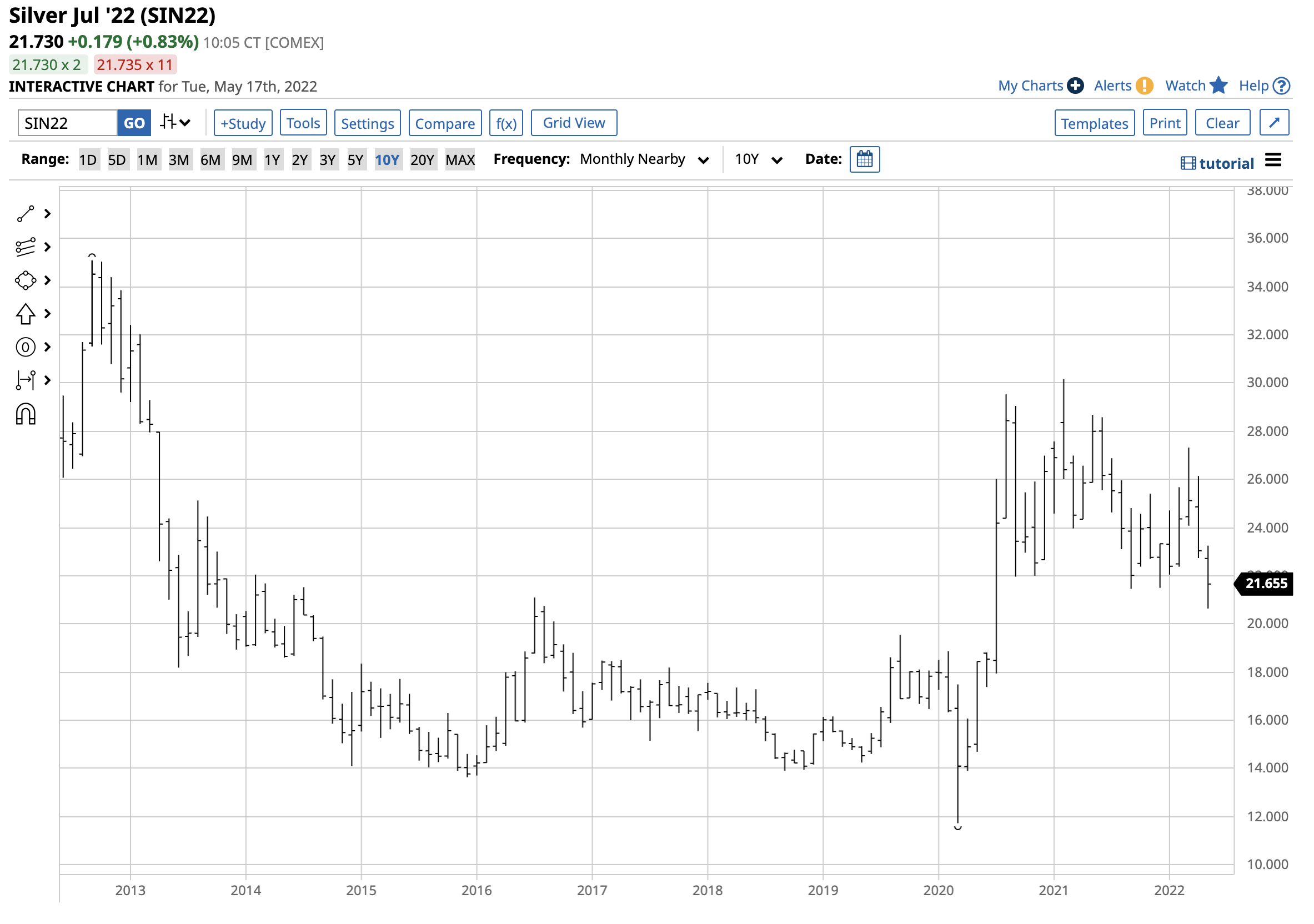
The chart shows silver futures fell marginally below the September 2021 to the lowest price since July 2020, when the July contract traded at $20.42 on May 13.
While the most to the lowest price in ten months was a technical breakdown, silver routinely violates technical levels.
Violation of technical levels- A lesson from 2020
In March 2020, when the global pandemic gripped markets across all asset classes, silver violated its technical support level at the December 2015 $13.635 low.

The long-term chart highlights the downside spike that took the precious metal to $11.735, the lowest price since January 2009. Four months later, silver broke out to the upside, reaching over $29 in August 2020 and rising to over $30 in February 2021. Since the early 2021 high, silver has made lower highs and lower lows, with the most recent low coming in mid-May 2022. July futures were at the $21.725 level on May 17.
Silver demand is rising
Worldwide silver demand reached a record level in 2021 as industrial applications rose 9% to an all-time high of 508.2 million ounces.
Photovoltaics converting sunlight into electricity and consumer electronics account for the growing demand. Moreover, the Silver Institute reported that investment demand increased by 36% to 278.7 million ounces, the highest level since 2015. Investment, industrial, and jewelry demand totaled 1.05 billion ounces was 19% higher in 2021 than in 2020. The Silver Institute expects the demand to increase by 5% in 2022 to the 1.10 billion ounces.
Investment and speculative demand are the most significant factors for the path of least resistance of silver prices.
Expect the unexpected in silver- Approach the market with a plan
Silver is a metal that looks like the price is going to the moon during rallies and like it is falling into a bearish abyss when it falls. Silver is a highly volatile asset that routinely violates technical support and resistance levels.
Fundamentals continue to favor the upside. Aside from increasing physical demand, inflation at the highest levels in over four decades is bullish for the precious metal. On the bearish side, rising interest rates increase the cost of carrying silver inventories and make rising yields from fixed-income investments more attractive for capital. The US dollar has risen to the highest level since 2002. Since the dollar is the worldwide pricing mechanism for the silver market, a rising US currency pushes silver and other commodity prices higher in other foreign exchange terms, encouraging selling and inhibiting buying.
The volatile silver market faces bullish and bearish factors in the current environment, only exacerbating price variance in the silver futures arena.
A risk position in silver requires a plan. Following trends tends to be the optimal approach to silver as a herd of speculators tends to move into the silver market when the path of least resistance is lower or higher.
Levels to watch- Levels can be deceiving
Investing in physical silver is a long-term exercise as bars and coins offer less liquidity than futures, ETF/ETN products, and silver mining shares. Market participants trading or trend following in the silver market should balance the risk with the potential rewards. While buying dips in silver is appropriate for long-term investors, it may not be the optimal approach for short to medium-term trading as it requires going against the trend.
I favor following the trend and investing any short-side profits in the physical silver market during bear market periods.
Long-term technical support stands at the March 2020 $13.735 low, with technical resistance at the February 2021 $30.16 high. A break of those levels could lead to significant follow-through price action. Meanwhile, since silver often disrespects technical levels, head fake moves are possible. Risk-reward dynamics and a plan are critical when approaching the silver market. The market price is always the correct price because it is the level where buyers and sellers meet in a transparent environment. Moreover, with any risk position, never forget that your risk position is long or short at the last price, not the execution level. Readjust risk-reward to reflect the current market price.
I am bullish on silver but realize that a volatile period could lead to downside spikes. Respect the trend in silver as it tends to be your best friend because it is a real-time indicator of the market’s sentiment.



/Super%20Micro%20Computer%20Inc%20HQ%20photo-by%20Tada%20Images%20via%20Shutterstock.jpg)
/Micron%20Technology%20Inc_logo%20and%20website-by%20Mojahid%20Mottakin%20via%20Shutterstock.jpg)