



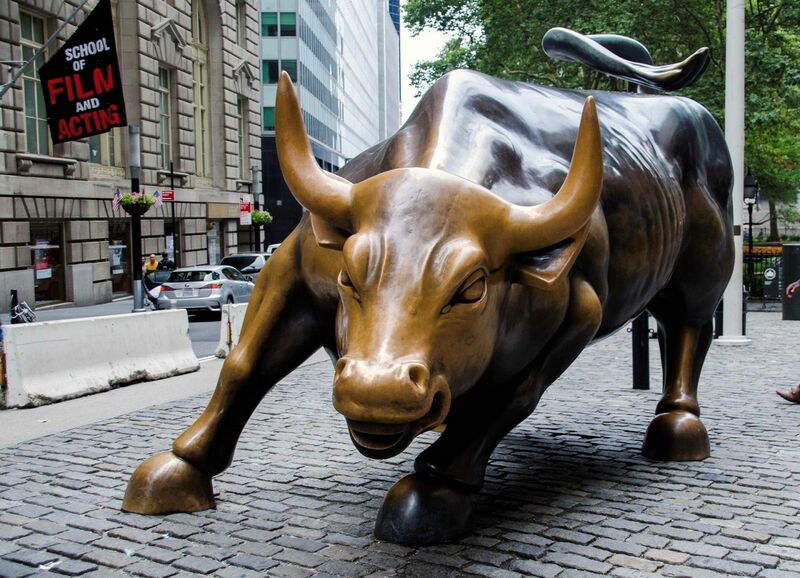
U.S. Stock markets are up modestly this morning after the Dow, snapped a 5-day winning streak. While the losses were modest, they came following Fed Chair Jerome Powell's remarks about potentially rising rates - faster than anticipated. Indeed, investors ponder their next move while digesting Powell’s comments "inflation is just too high."
The Dow Jones Industrial is up 240.15 or 0.7%, while the S&P 500 is up 29.35 or 0.66% and the Nasdaq is up 102.17 or 0.74%.
Crude Oil (WTI) prices are also muted following a spectacular run in the previous weeks' thanks to the crisis in Ukraine. No doubt, the higher prices won’t help lower inflation in the short term.
Notable stocks moving up at the open:
The best investors know where to find value. And for every person selling equity, or commodities for one reason or another, there’s another who believes the stock will rise. Here are some notable companies that investors are scooping up today.
Altria (MO)
Altria was formerly Philip Moris and, in 1985, changed its name to “switch its image from bad people who sell addictive carcinogens to a place or state marked by altruism and other lofty values.”
The parent company of Philip Morris USA, Altria Group is responsible for some very well-known brands such as Marlboro and Copenhagen. They also own the Ste Michelle Wine Estates in partnership with Black & Mild tobacco products among others that make up their vast portfolio.
Altria up 2.58% at the open following Goldman upgrading to buy from neutral.
Shareholders are currently raking in an impressive 6.97% dividend yield. While this amount might seem high, at the time of the latest earnings release, management reported a dividend payout ratio of 78%. However, should they need additional cash, Altria has said they can raise about $11 billion (before taxes) by selling their stake in Anheuser Bush InBev.
And, with declining smoking rates, many investors would be forgiven if they asked how could a tobacco company grow? But, these companies aren’t growing through tobacco. They are diversifying their portfolio by using their cash to fund future acquisitions.
Alibaba (BABA)
Alibaba is one of the largest and most well-known Chinese tech companies and one of the most popular stocks among foreign investors as a way to get exposure to the Chinese economy. The company started out as an online marketplace but has since expanded into other areas, such as cloud computing and artificial intelligence. In fact, is often seen as a bellwether for the Chinese economy.
The last 7 days have been good for Alibaba shareholders. The company’s shares soared last week thanks to a recent report from China’s financial stability and development committee promising to keep their stock markets stable, implement measures to boost the economy, and actively introduce market-friendly policies.
Today the company is up a whopping 11.92% at the open, following a report they are increasing share buybacks by $25 Billion a year.
Nike (NKE)
Headquartered in Oregon, Nike is the world's leading designer, marketer, and distributor of authentic athletic footwear, apparel, equipment, and accessories for a wide variety of sports and fitness activities. Wholly-owned NIKE, Inc. subsidiary brands include Converse, which designs, markets, and distributes athletic lifestyle footwear, apparel and accessories; and Hurley, which designs, markets, and distributes surf and youth lifestyle footwear, apparel, and accessories.
Nike reported a quarterly profit of 87 cents a share - comfortably above expectations. Revenue increased 6.3% due to the company's digital marketing campaigns and overall ability to deliver goods despite the s
Nike is up 5.28% at the open.
Final Thoughts
I wouldn’t blame investors thinking to add to their positions, or starting new ones. However, the same could be said about those sitting on the sidelines. While some might feel that the mix of our current geopolitical and economic times are risky, it reminds me of a letter that Sir John Templeton wrote in 1954 discussing the recession at the time. Templeton wrote, “This time it’s different”- and these could very well be the four most dangerous words in investing. In recent history, one needs only to look back at the Iraq war in 1991 and 2003, the dot-com bubble of 2000, the financial crisis in 2008/9, Brexit in 2016, COVID-19 in 2020, etc. Investors who bought at the bottom of any of these emergencies would likely be very happy with their purchases.

/Advanced%20Micro%20Devices%20Inc_%20office%20sign-by%20Poetra_RH%20via%20Shutterstock.jpg)
/Alphabet%20(Google)%20Image%20by%20Markus%20Mainka%20via%20Shutterstock.jpg)

/Tesla%20Inc%20logo%20by-%20baileystock%20via%20iStock.jpg)