



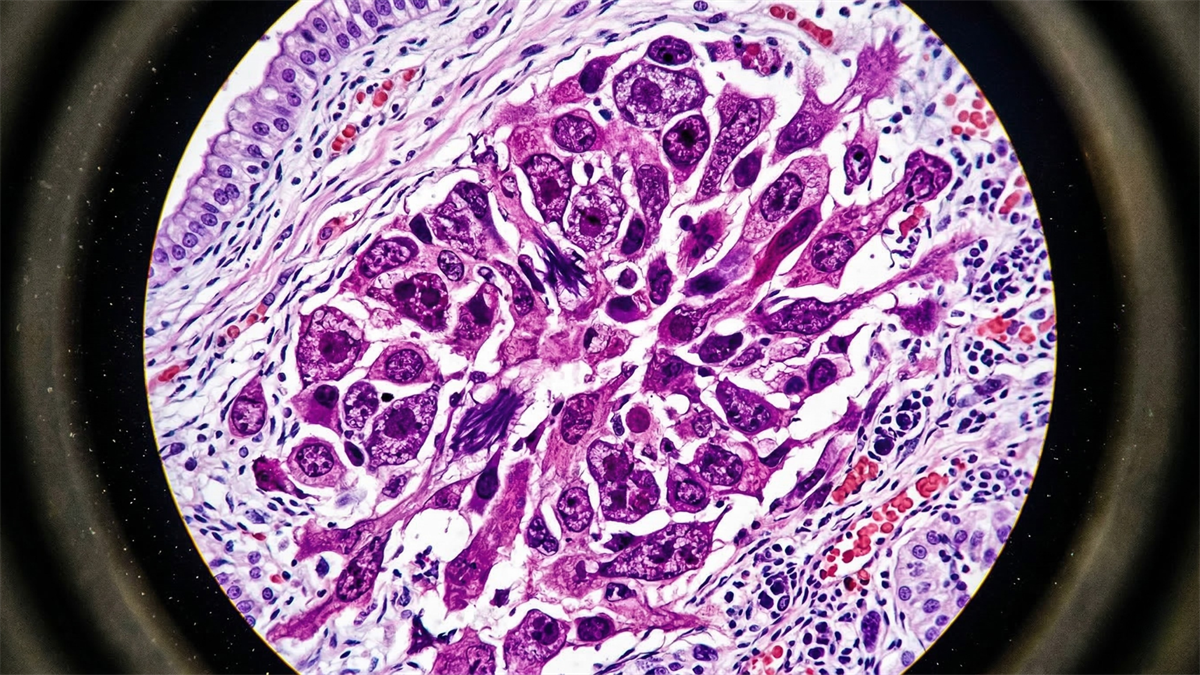
Cancer remains one of the greatest medical challenges for biotechnology firms, even as the oncology medicine market is expected to surge to $366 billion in the next eight years. Companies often take a niche approach, developing medicines aiming to address a specific type of cancer with particular dedicated mechanisms. Fortunately, a number of promising treatments have shown incredible potential—and with that comes the possibility of significant sales.
Two smaller biotech companies are experiencing significant share price growth momentum thanks to their leading oncology medicines. Besides offering powerful treatment potential, these drugs may be able to help the firms grow toward stability beyond penny stock (or otherwise unstable) status and even to long-term profitability. In both cases, challenges remain, making these typical biotech investments in many ways—high-risk ventures that also have the possibility of generating outsized rewards for investors willing to take a chance on them.
Iovance's Powerful Cancer Drug Is Growing, But Production Challenges Are a Hurdle
Iovance Biotherapeutics Inc. (NASDAQ: IOVA) defied market trends in early March, surging by nearly 37% in a week in which the S&P 500 teetered and dropped by about 1%. This added to IOVA's year-to-date (YTD) performance, which has seen shares more than double. Still, with a consensus price target of $8.88, Wall Street expects more from IOVA shares—that target suggests another 71% in gains could still be to come.
The big catalyst for Iovance's price movement is its major drug offering, Amtagvi, a T-cell immunotherapy for certain types of melanoma.
Amtagvi has been approved as a melanoma drug in the United States since 2024 and has momentum—both in terms of sales and with additional approvals likely in the E.U., U.K., and elsewhere. When administered with Proleukin, the company's IL-2 immunotherapy, management believes Amtagvi has the potential to reach more than $1 billion in U.S. sales at its peak.
Amtagvi's real potential may lie outside the melanoma space, as the drug also received Fast Track Designation from the FDA for the treatment of non-small cell lung cancer and may be effective against multiple additional cancers.
Some of Iovance's outperformance this year can also be attributed to its Q4 2025 earnings report, issued in late February, in which the company posted better-than-expected losses per share and a $5-million revenue win. For the full year, revenue climbed by about 30% year-over-year (YOY).
Iovance is a penny stock and a small (about $2-billion) biotech name, and despite the massive rally this year, analysts are still somewhat cautious, with half of its dozen ratings being either a Hold or a Sell. Risks remain high: besides the usual caveats surrounding smaller biotech firms, Iovance's manufacturing process for Amtagvi also leaves it vulnerable. The drug is personalized, costly, and complicated to manufacture, and this could hold Iovance back from generating profit even as the popularity of the drug increases.
Massive Sales Growth for ImmunityBio's Bladder Cancer Drug
While ImmunityBio Inc. (NASDAQ: IBRX) has actually fallen by about 20% in March, but in contrast to IOVA above, its YTD performance dwarfs its rival. IBRX shares are up nearly 300% in 2026 alone, and this could be just the beginning. Analysts have called for a price target of $13.60, which is 70% higher than the stock's price even after this major uptick.
ImmunityBio's leading product and primary growth driver is Anktiva, a treatment for specific types of bladder cancers. In February, shares spiked after the E.U.'s regulator granted the drug conditional marketing authorization, the latest in a series of approvals worldwide.
Anktiva's popularity is growing as well, as the drug drives the firm's revenue performance with $113 million in sales last year (a 700% YOY improvement).
Like Amtagvi above, Anktiva may hold potential as a treatment for additional types of cancers as well, with ImmunityBio actively exploring alternative designations.
Despite their massive surge over the last several quarters, IBRX shares remain a speculative and risky venture.
IBRX posted a sizable full-year net loss of $351 million for 2025 as R&D expenses continue to mount. Analysts across Wall Street may be slightly more bullish on this company than Iovance, however, with six out of seven calling shares a Buy or equivalent.
Where Should You Invest $1,000 Right Now?
Before you make your next trade, you'll want to hear this.
MarketBeat keeps track of Wall Street's top-rated and best performing research analysts and the stocks they recommend to their clients on a daily basis.
Our team has identified the five stocks that top analysts are quietly whispering to their clients to buy now before the broader market catches on... and none of the big name stocks were on the list.
They believe these five stocks are the five best companies for investors to buy now...
The article "Why 2 Small Biotechs May Hold the Key to New Cancer Treatments" first appeared on MarketBeat.



/Super%20Micro%20Computer%20Inc%20HQ%20photo-by%20Tada%20Images%20via%20Shutterstock.jpg)
/Micron%20Technology%20Inc_logo%20and%20website-by%20Mojahid%20Mottakin%20via%20Shutterstock.jpg)