

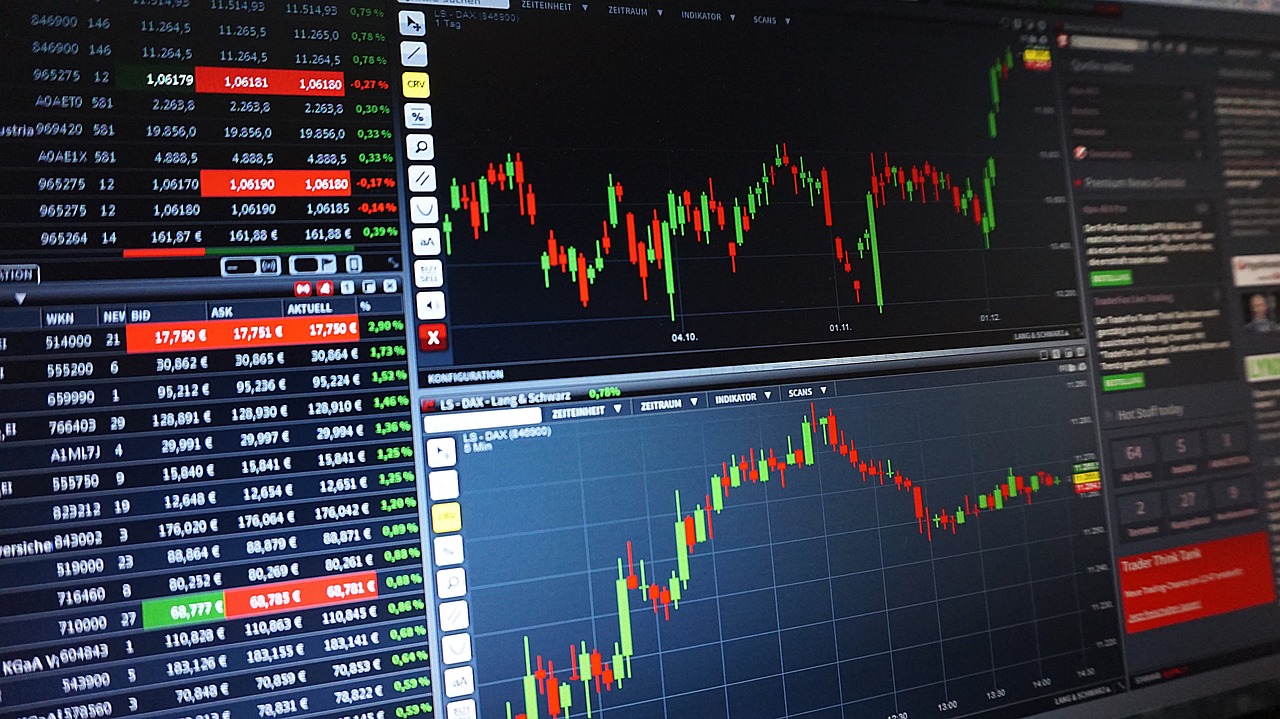
From the market's perspective, calling it “not bad” would be an understatement. A more accurate word would be “solid,” especially for U.S. equities. The S&P 500 gained more than 17%, while the Nasdaq jumped over 21%, all despite ongoing concerns that the AI boom might turn out to be just another bubble waiting to burst.
That said, even with the overall risk appetite intact, the year was not exactly smooth sailing. In fact, it began on a rather unsettling note: Donald Trump's return to center stage once again highlighted U.S. protectionist policies, with tariffs once again taking center stage, triggering a major sell-off for the first time in April.
What ultimately stabilized markets wasn’t messaging about long-term benefits, but the so-called “TACO” dynamic: aggressive rhetoric followed by delays and softening of actual measures. Every time tariffs threatened to escalate, their implementation was postponed. Markets learned the pattern and priced it in.
As for AI stocks, they ended the year on a high note, but not without stress. The first real test came with the emergence of DeepSeek, which forced investors to question whether the huge capital expenditures on AI were really justified. Nvidia alone lost nearly $600 billion in market capitalization in a single session.
In the end, though, it didn’t really change the bigger picture. In particular, Nvidia continues to deliver strong results: in the third quarter, revenue rose 62% to $57.01 billion, operating income increased 65% to $36.01 billion, net income climbed 65% to $31.91 billion, and EPS grew 67% to $1.30.
That said, concentration risk is growing.
If estimates are correct that AI contributed close to 90% of total U.S. GDP growth this year, any serious loss of confidence in the sector could tip the economy toward recession, given that industrial production and construction have been stagnating under the pressure of high interest rates.
Speaking of the latter, although the Fed cut rates three times this year, the outlook for next year remains unclear. The Fed is projecting one cut, while the market is pricing in two. Who will be right is hard to say, as data gaps caused by the record shutdown make it difficult to draw firm conclusions at this point.
Geopolitics could be another source of risk. Beyond the potential escalation of the conflict between Russia and Ukraine and the resumption of Israeli operations in Gaza — which, so far, have had a limited impact on U.S. markets, except for certain stocks — rising tensions in Latin America, particularly around Venezuela, add another layer of uncertainty. In early 2026, the United States mounted a military operation in Venezuela — a move that has sharply increased tensions in the region, drawn widespread international criticism, and injected new volatility into oil markets and risk sentiment. Oil prices initially fell on the news of the intervention, but analysts warn that uncertainty around Venezuelan production and potential regional spillovers could heighten commodity volatility going forward.
Overall, while major investment banks are projecting an optimistic 2026, it would be unwise to ignore the risks, just as it would be a mistake to obsess over them. If at any point in 2026 the market faces serious imbalances, the key will be to remain calm. Any correction may well turn out to be temporary.


/Apple%20products%20on%20desk%20by%20Ake%20Ngiamsanguan%20via%20iStock.jpg)
/Salesforce%20Inc%20HQ%20building-by%20JHVEPhoto%20via%20Shutterstock.jpg)

/A%20Palantir%20sign%20displayed%20on%20an%20office%20building%20by%20Poetra_RH%20via%20Shutterstock.jpg)