



SAN JUAN, Puerto Rico (AP) — Nearly 200 organizations are urging the Trump administration and Puerto Rico’s governor to restore $350 million in federal funding that was meant to finance the installation of rooftop solar and battery systems for 12,000 low-income families across the U.S. territory.
Many of the families have disabilities or medical conditions that require electricity. Concern is growing that the U.S. will abandon them as chronic power outages persist and the Atlantic hurricane season officially nears — it runs from June 1-Nov. 30.
“For them in particular, whether they get a (solar) system or not is something that is really life or death,” Charlotte Gossett Navarro, Puerto Rico chief director for the Hispanic Federation, said in a phone interview.
The nonprofit group is among the organizations that signed a letter released Wednesday to Puerto Rico Gov. Jenniffer González and U.S. Energy Secretary Chris Wright.
The Hispanic Federation is one of seven organizations that were going to help install the solar systems and educate families about their use. Some of those groups are now formally objecting to the cancellation of the funds or negotiating with the U.S. Department of Energy.
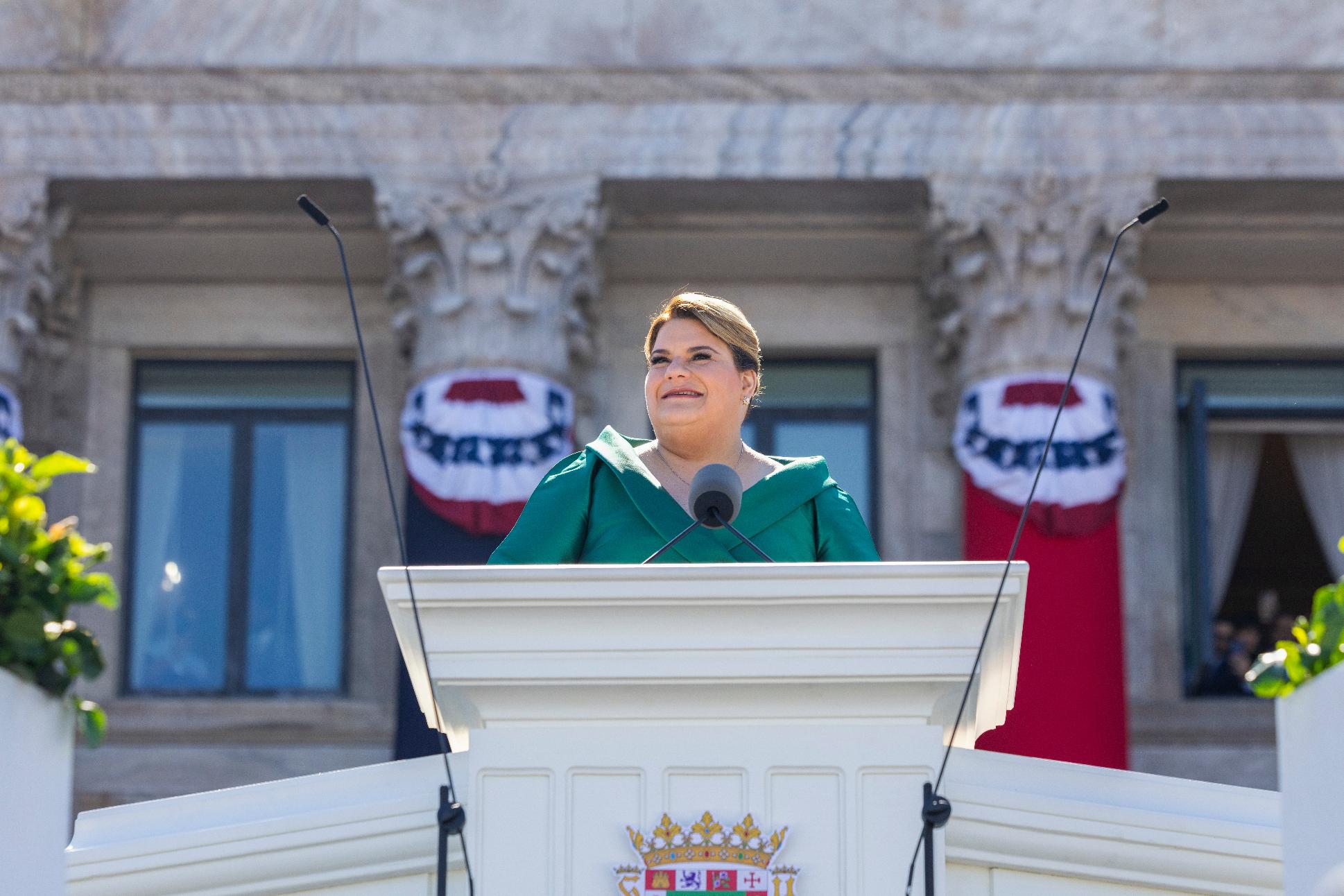
González has said that her administration “had no choice,” because the federal government decided it wouldn't give Puerto Rico those funds. The money is expected to now be invested in the island's crumbling power grid, which was razed by Hurricane Maria in 2017 but was already deteriorated given a lack of investment and maintenance.
Installations of rooftop solar panels have grown in the past three years across Puerto Rico, with an average of 3,850 systems installed per month in 2025, for an overall total of nearly 192,000 by year's end, according to the U.S. Energy Information Administration. Meanwhile, more than 171,000 households and businesses have distributed battery storage systems.
But not everyone can afford such systems on the Caribbean island of around 3.2 million people with a more than 40% poverty rate.
Gossett Navarro said that they haven’t received any answers to pending questions about the funding as a May 9 deadline approaches, marking the end of the program that for some hasn’t even started.
Crews had already installed solar systems in more than 6,000 households as part of the program, but another 12,000 families now remain in limbo.
Yvette Rodríguez, 61, is among them. She needs a sleep apnea machine, and her husband, Luis Soler, a 67-year-old veteran and double amputee, relies on an electric adjustable bed.
“There’s a big need for those solar panels,” said Rodríguez, who resides on the small Puerto Rican island of Culebra with her husband. He needs air conditioning because he has heart problems and lives in a region where heat warnings are common.
She also lamented that ongoing outages force them to throw out food.
“We’re affected economically in a big way because we have to spend what little money we have so that we can eat,” she said.
María Pérez, 80, and her 88-year-old husband, have also been hit by the cut in federal funding. She has high blood pressure and heart problems that have led to several hospitalizations. She also has eyedrops for her cataracts that required refrigeration.
“I put them on ice, but it’s not the same,” she said. “They have us suffering with that money that they took away from us. It’s not fair.”
Pérez gets $364 a month via a Social Security check, but like many Puerto Ricans, her power bill is often the same amount.
Gabriela Joglar Burrowes, executive director of Puerto Rico’s Statewide Independent Living Council, was among those who signed the letter to the governor and Wright.
She said that having solar panels not only would have provided constant electricity, but also peace of mind.
“If you’re a person who depends on equipment like a ventilator, a dialysis machine or medicine that requires refrigeration, the lack of consistent energy represents a risk that could lead to even death,” she said.
Joglar Burrowes, who is disabled, said that thousands of families had been waiting a long time for the solar systems and shouldn’t be forgotten.
“It seems like sometimes we’re disposable, and we’re not,” she said.
Some of the 12,000 families have received the initial eligibility screening, while others have already received a home visit or started repairing their roofs in preparation for a solar system.
Most families live in rural communities, including mountainous towns like Adjuntas, Jayuya and Orocovis.
“It’s even more concerning,” Gossett Navarro said. “It’s hard to get out of the mountains when there’s a disaster.”
The U.S. Department of Energy states on its website that some people will get a system, but officials haven’t said who or when.


/A%20Palantir%20sign%20displayed%20on%20an%20office%20building%20by%20Poetra_RH%20via%20Shutterstock.jpg)

/Lululemon%20Athletica%20inc_%20phone%20and%20website%20by-%20T_Schneider%20via%20Shutterstock.jpg)
/Quantum%20Computing/Image%20by%20Funtap%20via%20Shutterstock.jpg)