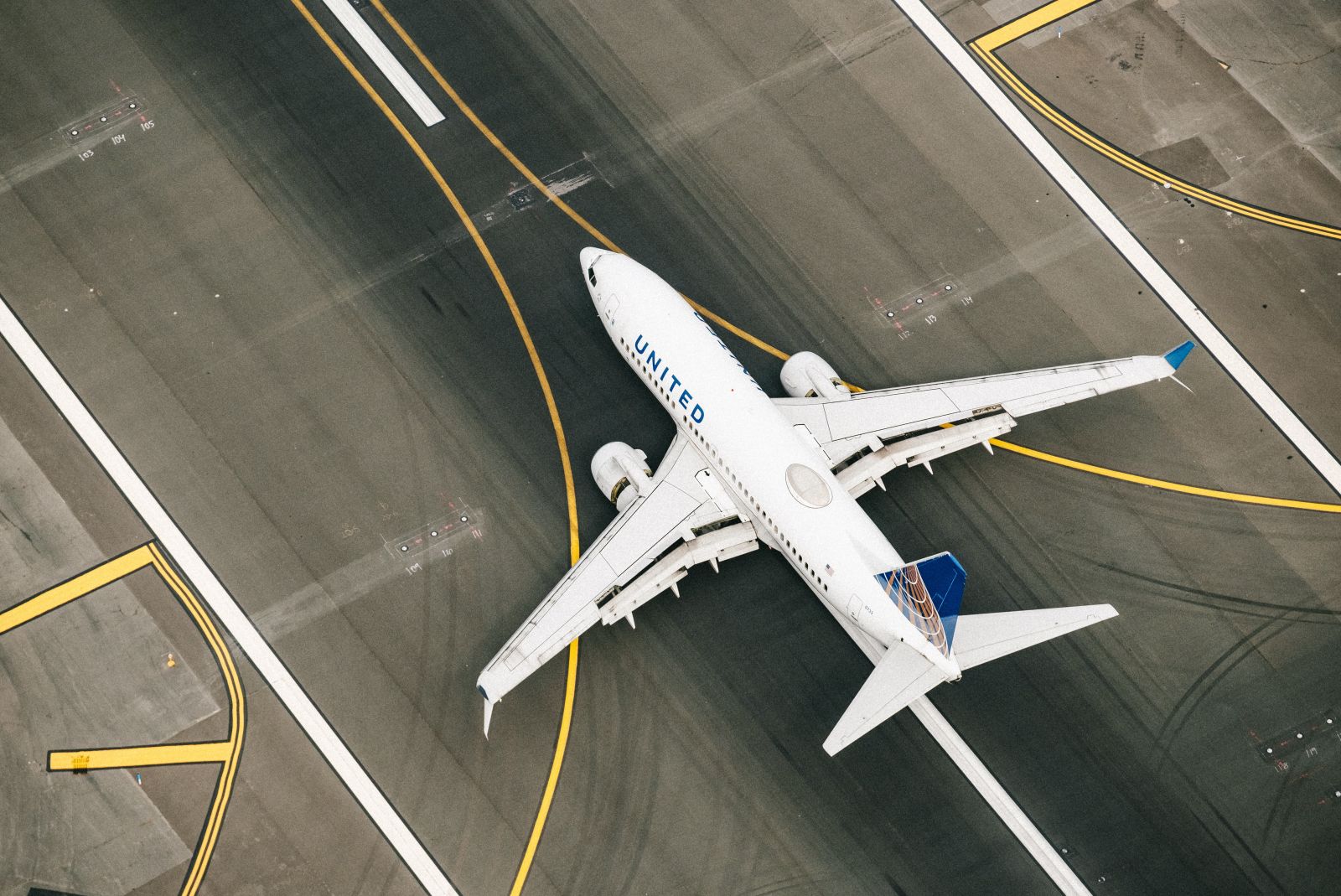
When the big winter storm hit last week, all the airlines canceled flights across the country, throwing holiday traveling into a tailspin. Since last Wednesday, 17,000 flights have been scrubbed due to weather.
However, nobody has been more guilty than Southwest Airlines (LUV). On Monday, it canceled 70% of its flights. As a result, it expects to run about one-third of its schedule for the next few days while its competitors have, for the most part, got back on their feet. On Monday, by comparison, Delta Air Lines (DAL), United Airlines (UAL), and American Airlines (AAL) canceled just 9%, 5%, and 1%, respectively.
This ought to be a big red flag if you own LUV stock. Here’s why.
Terrible Capital Allocation
The company was forced to eliminate share repurchases and dividends during the pandemic as part of its agreement to accept Payroll Support from the federal government. Those restrictions came off as of Sept. 30.
In the airlines’ 2022 Investor Day Presentation on Dec. 7, Southwest laid out its four capital allocation priorities. The fourth priority was to enhance shareholder returns. As part of this goal, it reinstated its quarterly dividend of 18 cents a share. The annual rate of 72 cents yields 2.1%.
The only reason it has such a high yield is its stock’s fallen 45% over the past five years.
While it’s made no commitment to share repurchases, it has $899 million left on its share repurchase program. The company historically has been a big buyer of its stock. Between 2017 and 2019, it repurchased $5.6 billion of its stock, 5.7x the dividends it paid over the same three years.
Its modus operandi is to buy back stock ahead of dividends. The problem is it hasn’t done an excellent job.
In 2019, it bought back 36.75 million shares at an average price of $54.42. In 2018, it bought back 36.46 million shares at an average price of $54.85. In 2017, it bought back 26.7 million shares at an average price of $59.93.
Overall, between 2017 and 2019, it paid an average of $56.05 a share. Its return on investment from its $5.6 billion is -39%. Investing the funds in an S&P 500 Index fund would have been better.
The Other 3 Priorities
In addition to share repurchases and dividends, the airlines’ other three capital allocation priorities include maintaining adequate cash reserves, investing in the business and future growth, and reducing its debt and leverage.
The one priority where I see a problem is directly related to the company’s current cancellations fiasco.
The company said on Investor Day that its capital expenditures in 2023 would be $4.25 billion at the midpoint of its guidance. Between 2024 and 2026, it plans to invest $4 billion annually in its business. It will use these funds to restore the route network, scale for future growth, and replace its Boeing 737 fleet.
Southwest’s most profitable year in its history was 2015, when it generated $3.96 billion in operating income from $19.65 billion in revenue. That’s considerably higher than the $1.63 billion operating profit from $22.69 billion in revenue in the trailing 12 months ended Sept. 30.
It’s been seven years since Southwest generated these record profits. But, unfortunately, it’s going to take a couple of good years to get close. With a potential recession in 2023, that doesn’t look very likely.
Also, when you consider that Southwest has never spent more than $2.77 billion on capital expenditures -- the amount spent in the trailing 12 months ended Sept. 30 -- something is going to have to give from its other three priorities if it wants to meet its goals for growing the business.
The Flaws in Southwest’s Business Model
The flight cancellation fiasco has highlighted two big problems in Southwest’s business model.
First, the airline’s point-to-point model -- where each flight is a single non-stop flight requiring passengers to collect and recheck their baggage should they need a second flight on their journey -- saves the company considerable time and money, which it can then reinvest in customer benefits such as two free checked-in bags, free in-flight entertainment, etc.
However, in the case of a winter storm, as experienced this past week, pilots and crew are getting caught out of position due to the point-to-point model, unable to get to their next flights.
In a hub-and-spoke model, Atlanta is the primary hub for Delta, Chicago is the primary hub for United, and Dallas/Fort Worth is the primary hub for American. Those airlines had far fewer crews and planes out of position after their cancellations last week, allowing them to get back to a virtually regular schedule by Monday.
“As the storm continued to sweep across the country, it continued to impact many of our larger stations and so the cancellations just compiled one after another to 100 to 150 to 1,000,” Jay McVay said at a news conference at Houston's William P. Hobby Airport on Monday night.
“With those cancellations and as a result, we end up with flight crews and airplanes that are out of place and not in the cities that they need to be in to continue to run our operations.”
A veteran pilot with Southwest -- his name escapes me, but his interview made me write this article -- appeared on CNN this morning, suggesting that the company’s failure over the years to invest in proper scheduling software despite repeated reminders by the unions representing pilots and crew of this significant flaw in its system, is a major reason for the airline’s terrible performance relative to other airlines.
It’s not surprising that Southwest CEO Bob Jordan said about the situation, “Part of what we're suffering is a lack of tools. We've talked an awful lot about modernizing the operation, and the need to do that,” Jordan stated in a message to employees.
The Bottom Line
Over the past 15 years, a $10,000 investment in Southwest stock generated an annualized total return of 7.88%, 80 basis points less than the Morningstar US Market Total Return Index.
As airlines go, Southwest has been one of the best performers over this period. However, the latest fiasco suggests the next 15 years won’t be nearly as profitable for buy-and-hold investors because the airline has woefully underinvested in its business, opting to reward shareholders instead.
Now it has to play catch up with no guarantee of success.
Buyer beware.
On the date of publication, Will Ashworth did not have (either directly or indirectly) positions in any of the securities mentioned in this article. All information and data in this article is solely for informational purposes.


/AI%20(artificial%20intelligence)/Ai%20chip%20by%20Quality%20Stock%20Arts%20via%20Shutterstock.jpg)

/A%20close-up%20of%20the%20Broadcom%20logo%20on%20a%20smartphone%20by%20Timon%20via%20Adobe%20Stock.jpeg)