



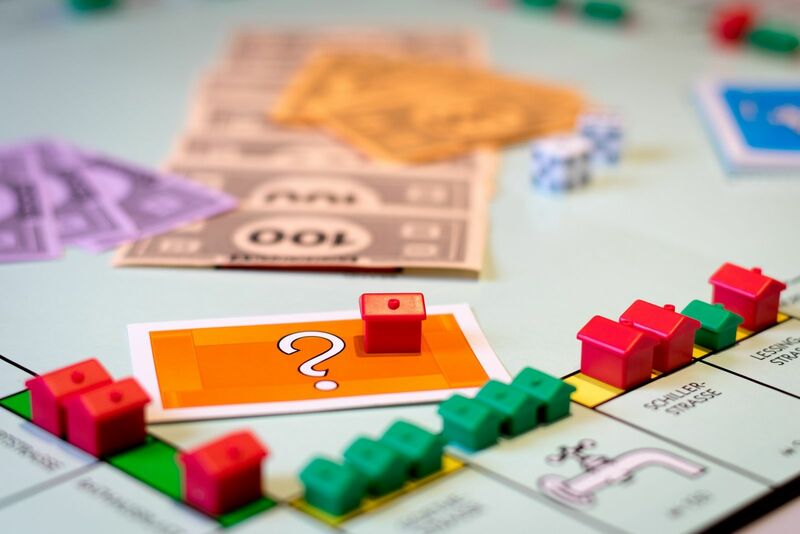
Based on cursory level fundamentals, the overall framework for homebuilding giant D.R. Horton (DHI) appears incredibly positive for patient investors. Due to the unique dynamics of the COVID-19 crisis, demand for housing surged, seemingly exacerbating a shortage in residential real estate. Cynically, then, DHI stock should represent a solid long-term discount. Still, that’s not exactly what some options traders believe.
Fundamentally, the Federal Reserve completely shifted the paradigm of real estate, posing serious concerns for DHI stock. Responding to skyrocketing inflation, the central bank began aggressively hiking the benchmark interest rate. Eventually, the Fed succeeded in arresting the rapidly deteriorating purchasing power of the U.S. dollar. Should it continue pressing on the gas pedal, the relative value of the greenback may rise.
While that might sound great for consumers, would-be home sellers are singing a different tune. Already, many folks find themselves priced out of the housing market. Those that are in a reasonably strong position to qualify for mortgages may also dubiously join the ranks of the housing incapacitated should rate increase get out of control. Under this circumstance, DHI stock seems a poor bet.
What’s more, the homebuilder’s latest results for its fiscal fourth quarter suggests that investors should adopt a cautious take not only on DHI stock but also other housing-related investments. D.R. Horton generated earnings of $4.67 a share, missing the Zacks Consensus Estimate of $5.06 a share.
Also, on the revenue front, the company posted $9.64 billion, which compared favorably to the $8.11 billion that was rung up for the year-ago period. However, this sales tally missed the consensus target by just under 4%.
Despite the miss, DHI stock jumped higher, gaining 12.5% in the trailing five days, likely on lighter-than-expected inflation data that implies the Fed may cool its hawkish monetary policy. Still, some traders apparently see a “negative” opportunity in D.R. Horton.
DHI Stock Makes an Entry for Unusual Options Activity
Following the closing bell to cement the results of the Nov. 11 session, several other market ideas captured the spotlight of unusual options activity. Still, buried among the odd trading dynamics for the Friday session was DHI stock. Specifically, traders targeted the $60 puts with an expiration date of May 19, 2023, or 188 days to expiration since the placement of the order.
Volume for the transaction reached 3,928 contracts against an open interest reading of 291. The bid-ask spread as represented by the midpoint price ($2.10) came out to 9.52%. That’s a rather higher figure, reflecting lower liquidity relative to other trades in the options market.
Not surprisingly based on core fundamentals, data from Barchart.com reveals that the current sentiment in the derivatives market for DHI stock is bearish, with a put/call open interest ratio of 1.31. Usually, the delineation between optimism and pessimism is 0.70, with figures higher than this threshold indicating that more traders are purchasing puts than calls.
To be fair, analysts maintain a bullish outlook on DHI stock. Three months ago, Wall Street experts pegged D.R. Horton as a consensus “strong buy,” broken down as 10 strong buys and three holds. In the current month, the consensus remains unchanged. However, the breakdown did touch a bit to the pensive side, with nine strong buys, one moderate buy and three holds.
Housing Shortage Mirage
When dissecting the narrative for real estate investments like DHI stock, market observers almost inevitably come across the housing shortage argument. That is, with homebuilders not building enough homes – partly from the devastation stemming from the last housing crash and the Great Recession – the sector cannot accommodate prospective homebuyers.
However, this argument could be a myth or at least a misleading statistic. Primarily, if you compare the number of housing units in the U.S. with the demographic most likely to buy homes (i.e. married couples), the ratio between the two metrics has remained stable since around 2012. In other words, there was no reason for homebuilders to build more homes because its total addressable market remained largely unchanged percentagewise.
Moving forward, the likely trajectory for DHI stock and its ilk may be down, mostly because of the Fed. With borrowing costs going through the roof, home sellers that actually want to sell must adapt to new realities. In other words, the real estate market can have high rates or high prices, but they can’t have both at the same time.
Therefore, against the bigger picture, the pessimism toward DHI stock makes logical sense. Rising interest rates don’t just hurt the addressable market for the real estate sector; it can also negatively impact the broader economy, heaping pressure upon pressure.
More Options News from Barchart
- These 2 All-Cap Winners From the Past Week Had Unusual Options Activity
- Spotify Stock Spiked 9.9% Yesterday, But Its Call Options Still Look Cheap
- Bull Call Spread Screener Results For November 11th
- Unusual Options Activity: Buy These 3 Calls As Early Christmas Presents

/An%20Intel%20sign%20out%20front%20of%20a%20corporate%20office%20by%20wolterke%20via%20Adobe%20Stock.jpeg)
/A%20close-up%20of%20a%20SpaceX%20sign%20by%20Sundry%20Photography%20via%20Adobe%20Stock.jpeg)


/A%20close-up%20of%20the%20Broadcom%20logo%20on%20a%20smartphone%20by%20Timon%20via%20Adobe%20Stock.jpeg)