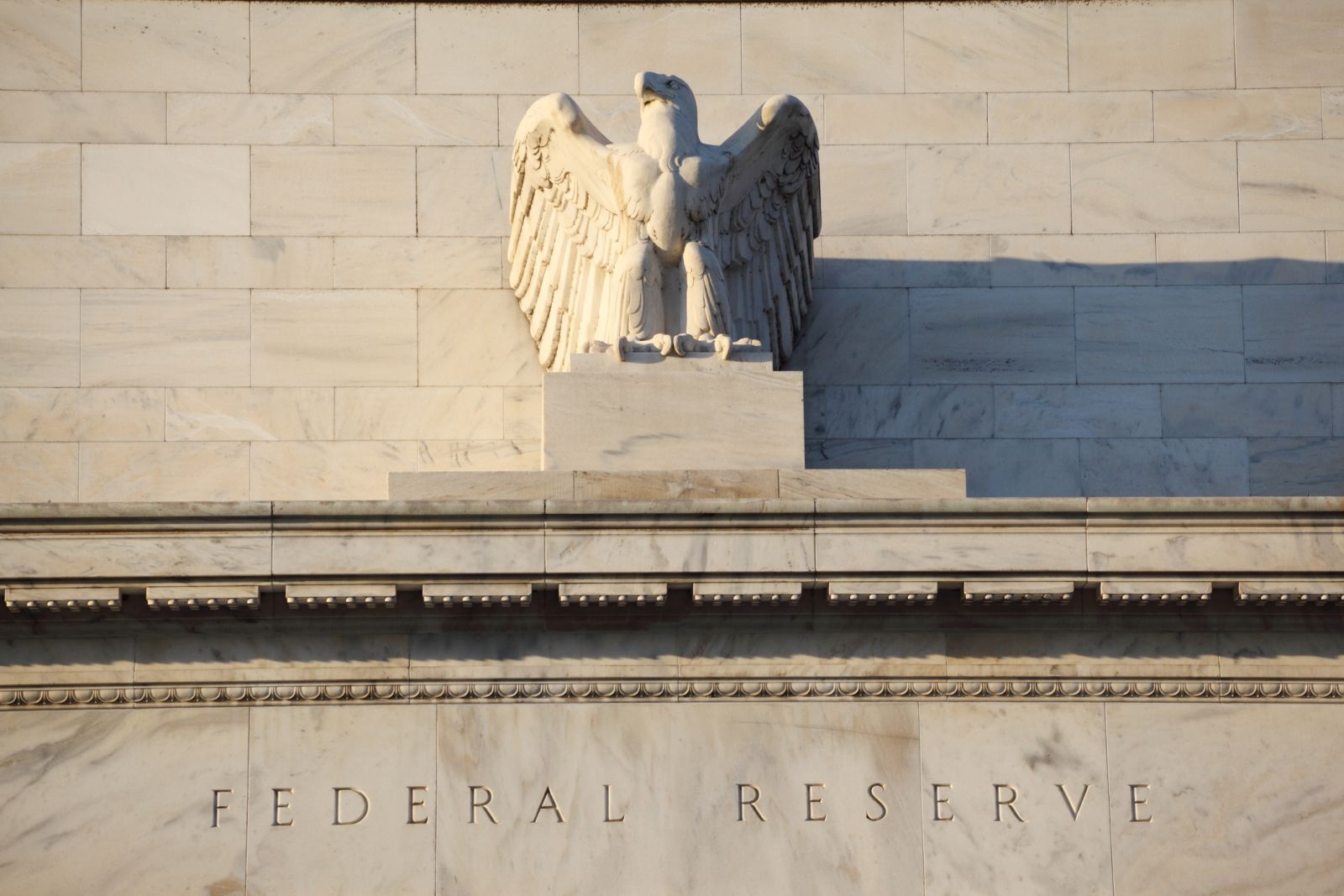
The markets are discounting a 100% chance that the U.S. Federal Open Market Committee (FOMC) at next week’s meeting on Tuesday and Wednesday will raise its federal funds target range by another +75 bp to 3.75%/4.00% from the current range of 3.00%/3.25%, according to the federal funds futures curve (ZQZ22).
The question then becomes whether next week’s +75 bp rate hike will be the last and whether the FOMC will instead revert to smaller rate hikes to provide time to assess whether the Fed’s rate-hike regime will cause a major U.S. recession.
Monetary policy acts with long and variable lags, as stated by iconic economist Milton Friedman. That means it will be a matter of months, or even quarters, before the Fed can fully assess the fall-out from the interest rate hikes and the balance sheet drawdown that it is implementing now.
After next week’s +75 bp rate hike, the markets are discounting a 100% chance of a +50 bp rate hike at the following meeting on December 13-14 and a 29% chance of a +75 bp rate hike at that meeting, according to the federal funds futures markets. That means the consensus view is that next week’s expected +75 bp rate hike will be the last, and the Fed will revert to a +50 bp rate hike in December.
Next week’s expected +75 bp rate hike would push the effective federal funds rate up to about 3.83% from the current level of 3.08%. The federal funds futures curve is showing an expected peak of 4.81% in federal funds rate by May 2023, which would be up by about 100 bp from next week’s expected post-meeting level.
That means that after next week’s expected +75 bp rate hike, the markets are expecting a total of another 100 bp of rate hikes, spread out in some fashion among the December meeting and the following two meetings in early 2023 on Jan 31/Feb 1 and March 21-22. For example, the Fed might raise rates by +50 bp in December, and then by another +25 bp on Feb 1 and again on March 22. Alternatively, the Fed could raise rates by +50 bp in December and then again on February 1, completing its rate hike regime, according to current market expectations.
Time will tell whether the +175 bp of total Fed rate hikes expected over the coming months will spark a U.S. recession next year. Using the technical definition of a recession of back-to-back quarterly GDP declines, the recession seen in the first half of 2022 is already over since GDP in Q3 rose by +2.6% (q/q annualized), snapping the back-to-back GDP declines of -1.6% in Q1 and -0.6% in Q2.
However, the market is already expecting very weak GDP growth in 2023, and the U.S. economy could easily slip into a new recession. The U.S. economy may be the most vulnerable in early 2023 since the market consensus is for very weak GDP growth of -0.1% (q/q annualized) in Q1-2023 and +0.2% in Q2-2023. The market consensus is for U.S. GDP growth of only +0.4% for all of 2023, down from +1.7% in 2022. The market is then expecting a modest improvement to +1.4% in 2024.
More Stock Market News from Barchart
- Stocks Boosted by Apple and U.S. Economic Reports
- Apple Wows Investors With Solid Earnings Making AAPL Stock Look Cheap
- Markets Today: Stocks Rally Despite Amazon’s Plunge
- 10 Stocks With Low Implied Volatility Percentile

/Micron%20Technology%20Inc_%20logo%20on%20building-by%20vzphotos%20vis%20iStock.jpg)
/A%20hand%20holding%20a%20phone%20with%20the%20Reddit%20logo_%20Mamun_Sheikh%20via%20Shutterstock_.jpg)
/Alphabet%20(Google)%20Image%20by%20Markus%20Mainka%20via%20Shutterstock.jpg)