



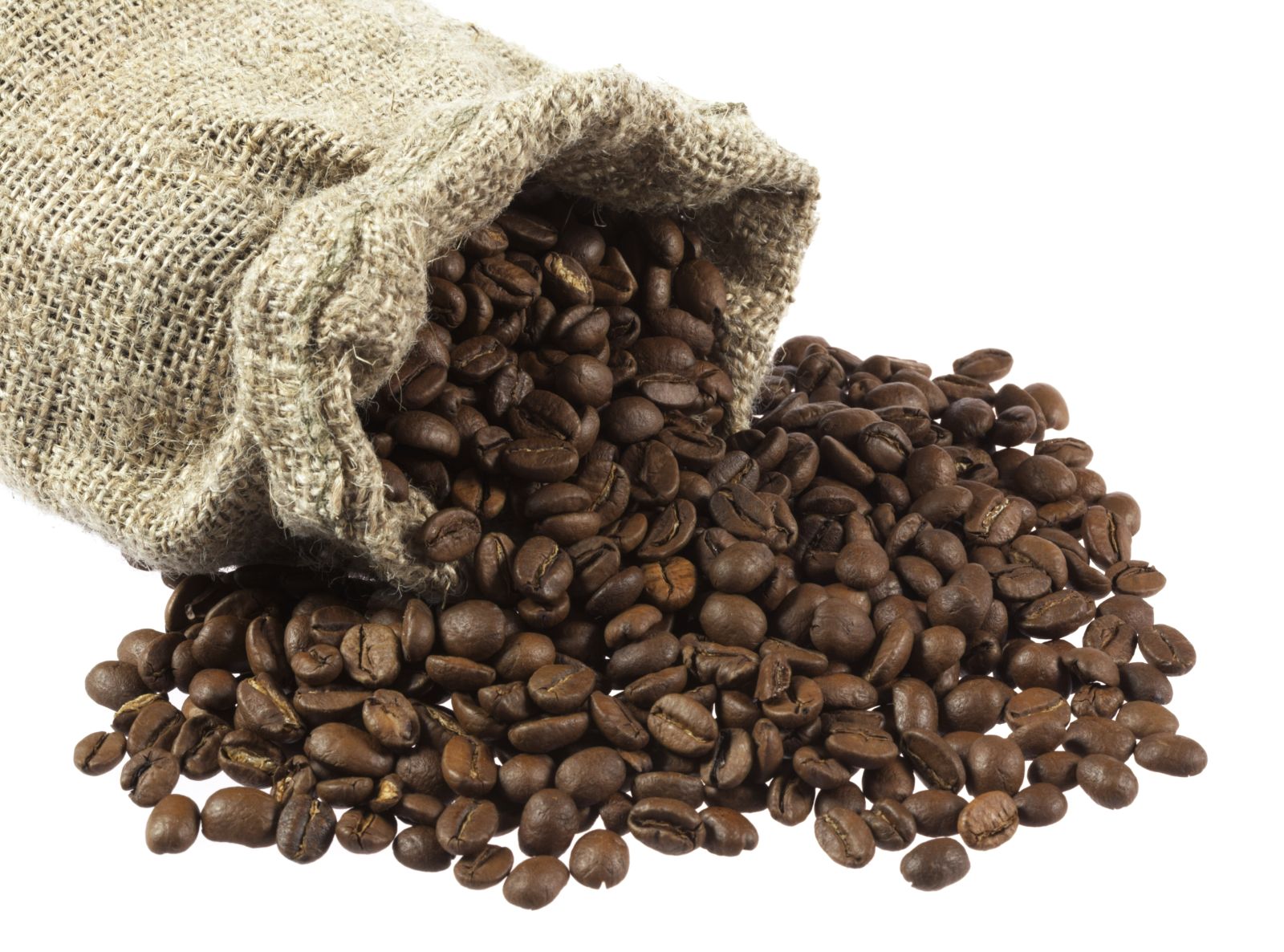
December arabica coffee (KCZ22) on Monday closed up +3.35 (+1.52%), and Nov ICE Robusta coffee (RMX22) closed down -28 (-1.25%).
Coffee prices Monday settled mixed, with arabica climbing to a 3-week high. Tight arabica supplies are bullish for prices after ICE-monitored arabica coffee inventories fell to a 23-year low of 460,387 bags Monday.
However, coffee prices fell back from their best levels Monday on weakness in the Brazilian real. The real (^USDBRL) Monday sank to a 2-month low against the dollar. A weaker real encourages export selling from Brazil's coffee producers.
Beneficial rain in Brazil may promote flowering for next year's coffee crop and is bearish for coffee prices. Somar Meteorologia reported Monday that Minas Gerais had 28.3 mm of rain last week, or 132% of the historical average. Minas Gerais accounts for about 30% of Brazil's arabica crop.
Coffee harvest pressures in Brazil are a near-term bearish factor for coffee prices. Cooxupe cooperative, one of Brazil's biggest coffee producers, reported last Wednesday that Brazil's coffee harvest was 99.4% completed as of Sep 16. Coffee producer sales typically increase during harvest time to make space for storing their newly-picked crops.
Abundant U.S. coffee supplies are also bearish for prices after the Green Coffee Association on Sep 15 reported that U.S. Aug green coffee inventories rose +3.6% m/m and +5.2% y/y to a 2-year high of 6,450,086 mln bags.
A supportive factor for coffee prices was the action last Tuesday from Brazil's crop agency Conab to cut its 2022 Brazil coffee production estimate to 50.4 mln bags from a May estimate of 53.4 mln bags as adverse weather curbed coffee yields. This year was supposed to be the higher-yielding year of Brazil's biennial coffee crop, but coffee output this year was slashed by drought.
Robusta coffee has support from smaller global supplies. Vietnam's General Department of Customs reported Sep 7 that Vietnam's coffee exports in Aug fell -1.2% m/m and -4.0% y/y to 112,531 tons. In the bigger picture, however, Vietnam's exports in the eight months through Aug rose +15.3% y/y to 1.25 million metric tons. Vietnam is the world's biggest producer of robusta coffee beans. The USDA June 7 revised its 2021-22 coffee production estimate for Vietnam upward to 31.58 million bags from 31.1 million bags but said 2022/23 production would fall by -2.2% y/y to 30.9 million bags.
A supportive factor for arabica is reduced coffee supplies from Colombia. The Colombia Coffee Growers Federation reported Sep 12 that Colombia's Aug coffee exports dropped -21% y/y to 872,000 bags. Also, Colombia's Jan-Aug coffee production is down -7% y/y at 7.3 mln bags. Colombia is the world's second-largest producer of arabica beans.
Smaller global coffee exports are supportive of coffee prices. The International Coffee Organization (ICO) on Aug 31 reported that global coffee exports in July fell -6.6% y/y to 10.12 mln bags, and total exports from Oct-July were down -0.3% y/y to 108.8 mln bags. Also, Cecafe Sep 12 reported that Brazil Aug coffee exports fell -2.5% y/y to 2.8 mln bags. In additioni, Honduras, the world's fourth largest producer of arabica beans, reported on Aug 1 that July coffee exports fell -by 38% y/y to 409,668 bags due to a poor crop.
In a bearish factor, the USDA, in its bi-annual report released on June 23, projected that 2022/23 global coffee production would climb +4.7% y/y to 174.95 mln bags, primarily due to Brazil's arabica crop entering the on-year of the biennial production cycle. The USDA projects that 2022/23 global coffee ending stocks will climb +6.3% y/y to 34.704 mln bags.
More Coffee News from Barchart


/Tesla%20dealership%20with%20cars%20in%20lot%20by%20Jetcityimage%20via%20iStock.jpg)
/Jen-Hsun%20Huan%20NVIDIA's%20Founder%2C%20President%20and%20CEO%20by%20jamesonwu1972%20via%20Shutterstock.jpg)

/A%20close-up%20of%20the%20Broadcom%20logo%20on%20a%20smartphone%20by%20Timon%20via%20Adobe%20Stock.jpeg)