





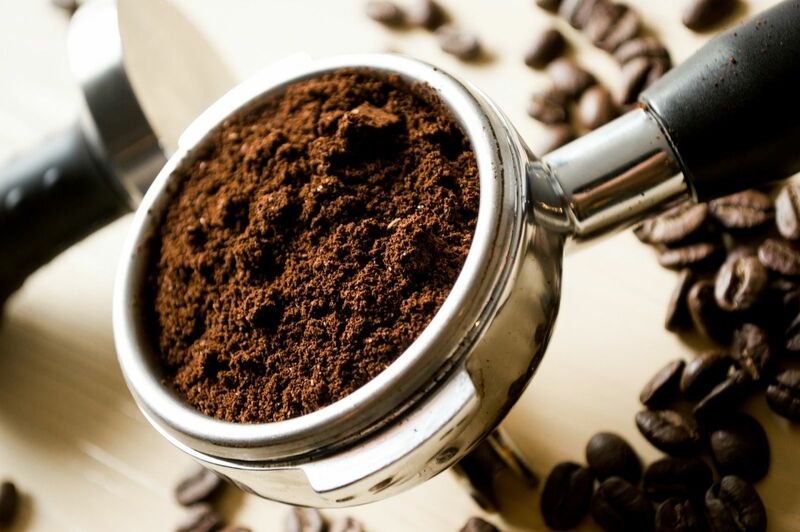
December arabica coffee (KCZ22) this morning is up +2.25 (+1.05%), and Nov ICE Robusta coffee (RMX22) is up +7 (+0.31%).
Coffee prices this morning are moderately higher on consolidation after this week's sharp losses. Arabica fell to a 3-week low on Wednesday as Brazil's harvest pressures weighed on coffee prices. Cooxupe cooperative, one of Brazil's biggest coffee producers, reported Wednesday that Brazil's coffee harvest was 98% completed as of Sep 9. Coffee producer sales typically increase during harvest time to make space for storing their newly-picked crops.
Coffee prices were undercut after Climatempo said today that the coffee-growing areas of Sao Paulo and Minas Gerais will get extensive and regular rainfall from the end of September into early October, which should boost soil moisture levels and promote flowering of coffee trees for the 2023/24 Brazil coffee crop.
Smaller Brazil coffee exports are bullish for prices after Cecafe Monday reported that Brazil Aug coffee exports fell -2.5% y/y to 2.8 mln bags.
Robusta coffee has support from smaller global supplies. Vietnam's General Department of Customs reported last Wednesday that Vietnam's coffee exports in Aug fell -1.2% m/m and -4.0% y/y to 112,531 tons. In the bigger picture, however, Vietnam's exports in the eight months through Aug rose +15.3% y/y to 1.25 million metric tons. Vietnam is the world's biggest producer of robusta coffee beans. The USDA June 7 revised its 2021-22 coffee production estimate for Vietnam upward to 31.58 million bags from 31.1 million bags but said 2022/23 production would fall by -2.2% y/y to 30.9 million bags.
Coffee prices also have support from concern that excessive dryness in Brazil will reduce coffee yields and curb global coffee supplies. Somar Meteorologia reported Monday that Minas Gerais had no measurable rain in the past week or 0% of the historical average. Minas Gerais accounts for about 30% of Brazil's arabica crop.
Forecaster Maxar Technologies recently said that La Nina weather conditions are likely to last through the end of the year, which suggests below-normal rain for Brazil through year-end. That would exacerbate drought conditions and further stress Brazil's coffee crops.
A supportive factor for arabica is reduced coffee supplies from Colombia. The Colombia Coffee Growers Federation reported last Monday that Colombia's Aug coffee exports dropped -21% y/y to 872,000 bags. Also, Colombia's Jan-Aug coffee production is down -7% y/y at 7.3 mln bags. Colombia is the world's second-largest producer of arabica beans.
In a bullish factor, Rabobank last Monday said the global 2022/23 coffee market would be in deficit by -1.3 mln bags, versus its earlier projection of a surplus of +1.7 mln bags. Rabobank also cut its 2022/23 global coffee production estimate to 169 MMT from its previous estimate of 172.3 MMT.
ICE-monitored arabica coffee inventories are tight and bullish for prices. ICE inventories on Aug 15 fell to a 23-year low of 571,580 bags.
Smaller global coffee exports are supportive of coffee prices. The International Coffee Organization (ICO) on Aug 31 reported that global coffee exports in July fell -6.6% y/y to 10.12 mln bags, and total exports from Oct-July were down -0.3% y/y to 108.8 mln bags. Also, Honduras, the world's fourth largest producer of arabica beans, reported on Aug 1 that July coffee exports fell -by 38% y/y to 409,668 bags due to a poor crop.
In a bearish factor, the USDA, in its bi-annual report released on June 23, projected that 2022/23 global coffee production would climb +4.7% y/y to 174.95 mln bags, primarily due to Brazil's arabica crop entering the on-year of the biennial production cycle. The USDA projects that 2022/23 global coffee ending stocks will climb +6.3% y/y to 34.704 mln bags.
More Coffee News from Barchart


/A%20close-up%20shot%20of%20a%20Broadcom%20chip%20by%20g0d4ather%20via%20Adobe%20Stock.jpeg)
/A%20close-up%20of%20a%20SpaceX%20sign%20by%20Sundry%20Photography%20via%20Adobe%20Stock.jpeg)

/Jen-Hsun%20Huan%20NVIDIA's%20Founder%2C%20President%20and%20CEO%20by%20jamesonwu1972%20via%20Shutterstock.jpg)