





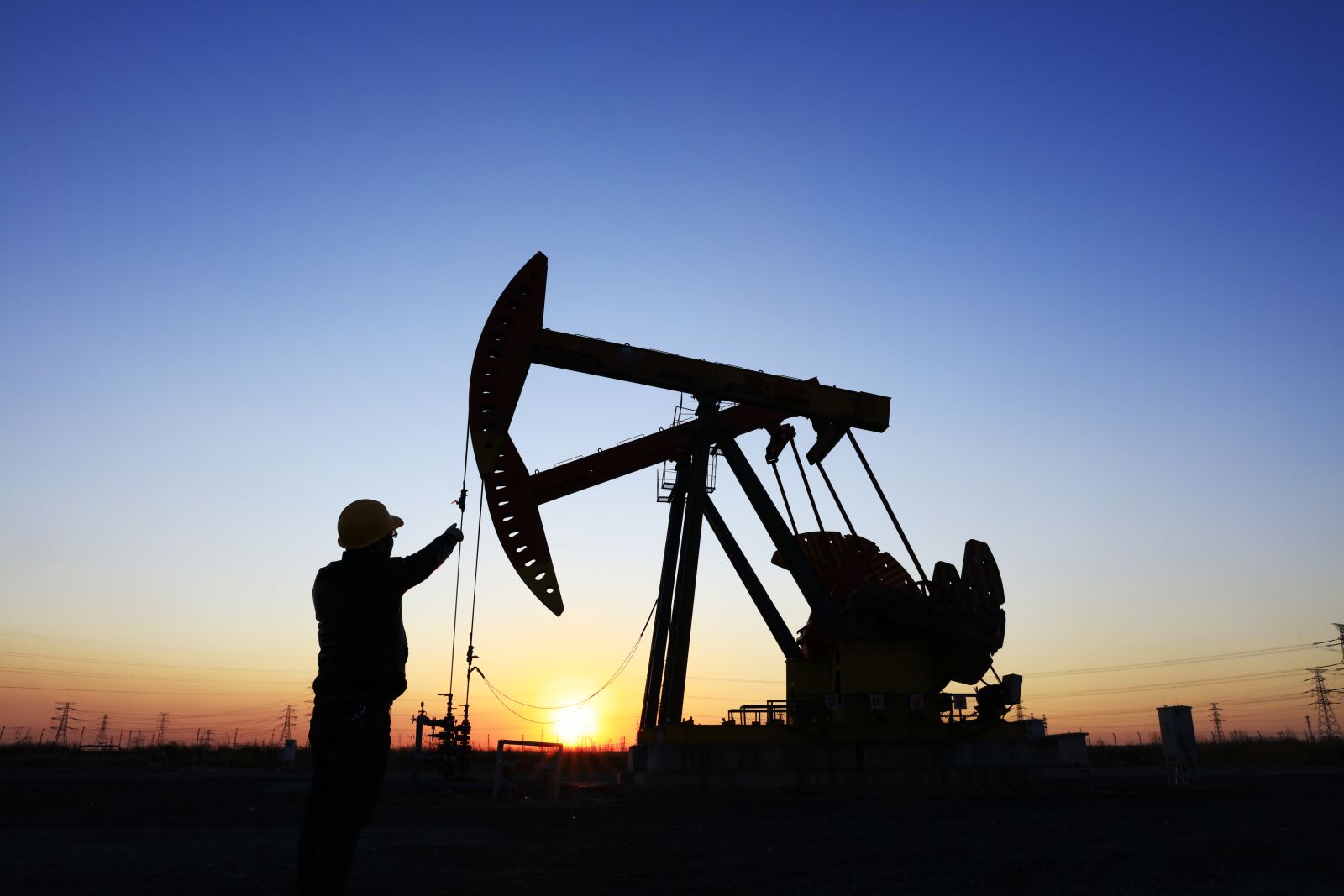
Oct WTI crude oil (CLV22) on Friday closed up +3.25 (+3.89%), and Oct RBOB gasoline (RBV22) closed up +8.70 (+3.71%).
Crude oil and gasoline prices Friday rallied sharply. Friday's decline in the dollar index (DXY00) to a 1-1/2 week low is bullish for energy prices. Also, Friday's rally in the S&P 500 to a 1-1/2 week high boosts confidence in the economic outlook that is positive for crude demand and prices.
Crude prices Thursday sank to a 7-3/4 month nearest-futures low on the outlook for reduced crude oil demand in China, the world's largest crude importer. About 65 million people across China are now subject to restrictions in their mobility due to pandemic lockdowns. Chinese authorities on Thursday extended a pandemic lockdown in Chengdu, a city of 21 million, through next Wednesday. On Wednesday, China imposed a lockdown on Guiyang, a city of 6.1 million people. Chinese refineries in July handled the least amount of oil since March 2020 as Covid lockdowns and refinery shutdowns for maintenance undercut crude demand. As a result, China's apparent oil demand in July fell -9.7% y/y to 12.16 million bpd, and China's Jan-July apparent oil demand is down -4.6% y/y to 12.74 million bpd.
Crude oil prices garnered support after OPEC+ on Monday agreed to cut its crude production level by 100,000 bpd in October, its first cut in production in more than a year. Saudi Arabian Energy Minister Prince Abdulaziz bin Salman said, "the simple tweak in production shows that OPEC+ will be attentive, preemptive and pro-active" in managing crude markets.
Reduced crude production in Libya is supportive of oil prices after Libya's state-run National Oil Corp said Tuesday that Libyan crude production had dropped more than -100,000 bbl to 1.1 million bpd, down from the 1.226 million bpd it produced last week.
Oil prices are seeing support from the dim prospects for a nuclear deal with Iran that would lift sanctions against Iran and allow its crude back onto the global markets. The European Union's chief negotiator said Monday that the chances of an imminent agreement between Iran and world powers on a nuclear deal have faded.
In a bullish factor, Vortexa reported Monday that the amount of crude stored on tankers that have been stationary for at least a week fell -1.5% w/w to 93.09 million bbls in the week ended September 2.
OPEC+ production in August rose by +590,000 bpd to a 2-1/4 year high of 29.640 million bpd, according to the IEA, but is still running more than 2 million bpd below quotas due to various supply disruptions and capacity constraints. Nigerian and Libyan crude output has fallen in recent months due to damaged pipelines in Nigeria and political unrest in Libya, undercutting the overall OPEC+ production level.
Thursday's EIA report showed that (1) U.S. crude oil inventories as of September 2 were -3.4% below the seasonal 5-year average, (2) gasoline inventories were -6.9% below the seasonal 5-year average, and (3) distillate inventories were -23.3% below the 5-year seasonal average. U.S. crude oil production in the week ended September 2 was unchanged at 12.1 million bpd, which is only -1.0 million bpd (-7.6%) below the Feb-2020 record-high of 13.1 million bpd.
Baker Hughes reported Friday that active U.S. oil rigs in the week ended September 9 fell by -5 rigs to 591 rigs from the 2-1/4 year high of 605 rigs posted in the week ended July 29. U.S. active oil rigs have more than tripled from the 17-year low of 172 rigs seen in Aug 2020, signaling an increase in U.S. crude oil production capacity.
More Energy News from Barchart



/AI%20(artificial%20intelligence)/Ai%20chip%20by%20Quality%20Stock%20Arts%20via%20Shutterstock.jpg)

/A%20close-up%20of%20the%20Broadcom%20logo%20on%20a%20smartphone%20by%20Timon%20via%20Adobe%20Stock.jpeg)