



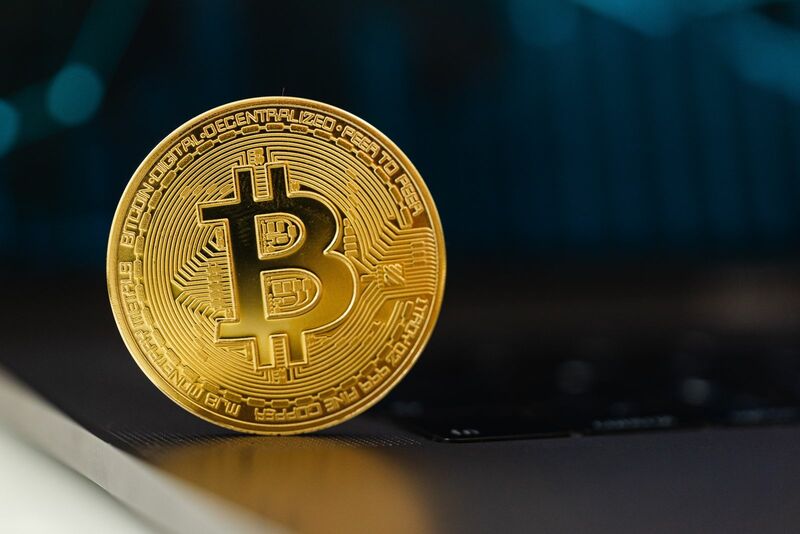
April has been a mostly terrible month for investors. But it’s been tough sledding for investors since December of 2021. And one of the takeaway’s of this current sell-off is how cryptocurrencies particularly the “big two” Bitcoin (BTCUSD) and Ethereum (ETHUSD) have been mirroring the price activities of equities.
As someone who has been a crypto skeptic, this has been an encouraging development. Bitcoin is still a relatively young asset class. And investors have never had to see how it would perform in a sustained correction, bear market, or recession. We may be close to finding out.
But early returns suggest that Bitcoin is behaving a lot like some of the popular tech stocks. And while that is not something that’s particularly a selling point at the moment, it could lead to more popular adoption. Keep in mind that a recent Pew Research survey disclosed that nearly 90% of U.S. adults know of crypto only 16% of those surveyed were actually investing in the token. That’s a huge addressable market, but it’s not one of my three reasons why I believe it could be time for risk-tolerant investors to buy Bitcoin.
Macroeconomic Reality is Setting In
Russia’s war on Ukraine, and the subsequent economic sanctions, is likely to catch the attention of the central banks of many nations. And that may create an environment in which these central banks become more open to accepting Bitcoin as payment. After all, right now the United States dollar is the world’s reserve currency.
But unless your country is the United States, being reliant on the U.S. dollar can become a major problem. Teeka Tiwari, the editor of the Palm Beach Daily e-newsletter made a thought-provoking statement, “Imagine if Russia was sitting on $600 billion in BTC instead of $600 billion in USD. It would have a lot more financial sovereignty than it does today.”
And that’s why it’s possible that central banks may start to add Bitcoin to their national balance sheets. In effect, Bitcoin could become a sort of independent global payment network. This may not happen tomorrow or even in the next year. But the nature of Bitcoin does mean it could.
The Partnership with Strike
In early April, Strike, a Bitcoin-based payments firm, announced that it will allow crypto payments to NCR point-of-sale terminals as well as Shopify and the Blackhawk network. Without going into the technical details, it means that some of the most popular consumer discretionary companies such as McDonalds (MCD), Starbucks (SBUX), and Home Depot (HD) can accept Bitcoin. As can Walmart (WMT).
Bitcoin detractors will say it’s hard to define exactly what Bitcoin is. Is it a store of value? Is it a medium of exchange? The Strike partnership moves the needle strongly to the side of using Bitcoin as a peer-to-peer payments tool.
The rebuttal from Bitcoin advocates is that the real answer is that Bitcoin is both. And the ability to use the token as a medium of exchange is one fact they use that distinguishes it from gold.
A Regulatory Framework is Being Created
One of the headwinds surrounding cryptocurrency in general has been the fear of regulation. In March 2022, President Biden signed an executive order that gives the government the authority to “examine the risks and benefits of cryptocurrencies.”
This raises concerns that the U.S. government seeks to ban crypto in all its forms. Of course, you can never say never, but that appears unlikely to happen. The reason for my belief is that many of the nation’s largest banks already have Bitcoin on their balance sheets. So I ask you, are they likely to want to see cryptocurrency banned? Is the U.S. government going to walk to walk away from the potential tax revenue it can derive from a more orderly, regulated cryptocurrency market?
What is more likely to happen, many experts believe is that a more defined regulatory framework will be created. This will have the likely effect of increasing adoption of cryptocurrency, not removing it. One reason is that a regulatory framework may create more interest from institutional investors.
What Could Go Wrong
It’s taken me a long time to warm up to cryptocurrency. And I suspect that may be the case for many of you as well. So it’s only fair to point out that there is some sentiment that Bitcoin may have further to fall in the next two months.
I’ll also admit that the creation of a dollar-denominated digital currency by the Federal Reserve (a central bank digital currency or CBDC) is not bullish for Bitcoin. But a digital currency is not the same thing as a cryptocurrency although they may share similar attributes. Essentially the key point to remember is that digital currencies are still centralized whereas the key appeal to cryptocurrency is its decentralized nature.
If you’re a risk-averse investor, Bitcoin may not be for you. However, if you continue to buy into the long-term case for Bitcoin, taking (or adding to) your position with Bitcoin under $40,000 may provide a strong return by the end of the year.

/Super%20Micro%20Computer%20Inc%20HQ%20photo-by%20Tada%20Images%20via%20Shutterstock.jpg)
/Microsoft%20logo%20on%20building%20by%20franz12%20via%20iStock.jpg)


/Microsoft%20Corporation%20logo%20on%20sign-by%20Jean-Luc%20Ichard%20via%20iStock.jpg)