
Bitcoin and the other over 18,380 cryptocurrencies have given a new meaning to market volatility. While commodities were once the home of the wildest price swings, the crypto asset class has made them look calm. On March 6, in an article on Barchart, I suggested that the war in Ukraine and Sanctions on Russia only “strengthens the argument for currency instruments that transcend governments and regulators.” On that day, Bitcoin was trading at the $39,236.53 level. On March 22, the price was higher, but Bitcoin has hardly taken off on the upside.
We had become accustomed to the wild volatility in Bitcoin, so the current consolidation has been almost abnormal. However, an emerging technical pattern suggests that the price will explode or implode sooner rather than later. I continue to favor the upside, but with cryptos, anything is possible.
Going nowhere fast- A wedge emerges
While an over $3,500 increase since March 6 is nothing to sneeze at, it is a drop in the bucket in Bitcoin’s world.

As the chart shows, at $42,772.92 on March 23, Bitcoin moved $3,536.39 or 9% higher than the March 6 level.
While the rally is constructive, Bitcoin has settled into a range with a $40,000 pivot point since late January.
Meanwhile, after reaching the $33,076.69 low on January 24, Bitcoin has made a series of higher lows, while the pattern of lower highs continues. The developing wedge is a technical pattern that often leads to a substantial price move when it breaks below the latest higher low or above the lower high. While there are no guarantees, Bitcoin’s past volatility suggests that the current wedge pattern makes the leading cryptocurrency a tightly coiled spring preparing for another bout of wide price variance.
The long-term picture continues to point to higher highs
Bitcoin’s long-term chart continues to be nothing short of explosive.
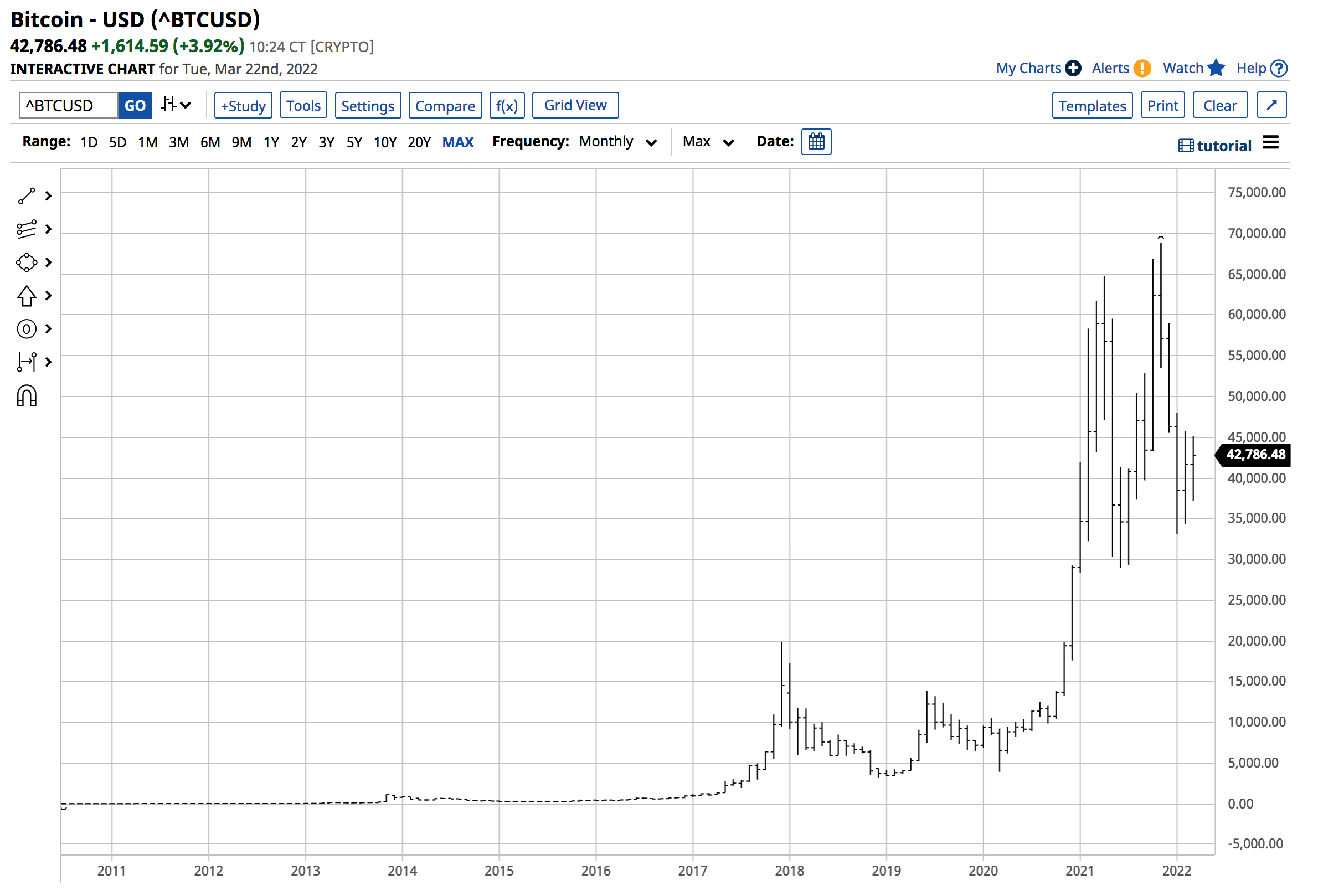
The chart dating back to 2010 when Bitcoin traded at five cents per token shows that the lows have been consistently higher, and the highs have been higher. When bitcoin faces a series of technical resistance levels on the short-term chart, the significant level stands at the all-time peak on November 10, 2021, at $68,906.48.
The case against Bitcoin
On March 23, Bitcoin remains closer to the January 24 low than the November 10 high. The negative factors facing the cryptocurrency with the leading market cap are:
- Bitcoin threatens government’s control of the money supply, which is the leading reason why countries worldwide would not shed a tear if it disappeared.
- While Bitcoin has become a more mainstream asset, the historical volatility prevents many investors and market participants from including it in portfolios.
- Custody continues to be an issue for Bitcoin, and other cryptos as many market participants are not comfortable with computer wallets and storage in the cloud.
- Security raises increasing concerns as cyberwarfare and computer hacking are a clear and present danger given the recent geopolitical events.
- China is in the final stages of rolling out a digital yuan. The Biden administration issued an executive order instructing the Federal Reserve to “continue its research, development, and assessment efforts for a US Central Bank Digital Currency (CBDC).” A digital yuan and US dollar could decrease the demand for Bitcoin and the other over 18,380 cryptos.
- Some market participants looked to cryptos as an inflation hedge. They have not performed well as inflation continued to rise from November 10 through March 22.
Cryptocurrencies continue to face many roadblocks. In 2021, hedge fund manager Ray Dalio said governments could “kill” the asset class.
The factors that support the leading crypto
Supporters of the asset class present a compelling case for survival.
- Fiat currencies derive value from the full faith and credit in the governments that issue legal tender. That faith and credit have declined over the past months.
- Fiat currencies are efficient flight capital vehicles. The war in Ukraine, events in Afghanistan, Chinese threats over reunification with Taiwan, and other geopolitical events increasing the flow of refugees makes Bitcoin and other cryptos attractive ways to secure and transport assets and wealth.
- Saudi Arabia is considering selling crude oil to China for payment in Chinese yuan, threatening the US dollar’s position as the world’s reserve currency. A battle between the yuan and the dollar could open the door for alternatives, which are cryptocurrencies.
- The trend is always your best friend in markets. Since 2010, the path of least resistance in Bitcoin and cryptocurrencies has remained higher.
Bitcoin faces challenges, but it has support. Bitcoin represents globalism, and it embraces transparency. Moreover, bids and offers in the market establish value without government interference. The battle between detractors and supporters will likely continue over the coming months and years.
Meanwhile, at below $2 trillion, the cryptocurrency asset class’s market cap is not at a level that presents a substantial systemic risk. When it rises, that could change, leading to more government regulations and even bans on the asset class. As of March 22, Bitcoin and many other cryptos have room on the upside before systemic risks present a threat.
The BITQ ETF is Bitcoin Soup and should follow the crypto higher or lower
The most direct route for a risk position in Bitcoin is to store the crypto in a computer wallet. The CME offers futures macro and mini futures contracts. In the US, some ETFs move higher and lower with the futures. In Europe, some ETPs hold Bitcoin, Ethereum, and other cryptos.
Meanwhile, I favor an ETF I like to call Bitcoin Soup. The Bitwise Crypto Industry Innovators ETF product (BITQ) is liquid and follows the price action in the crypto asset class. BITQ’s top holdings include:
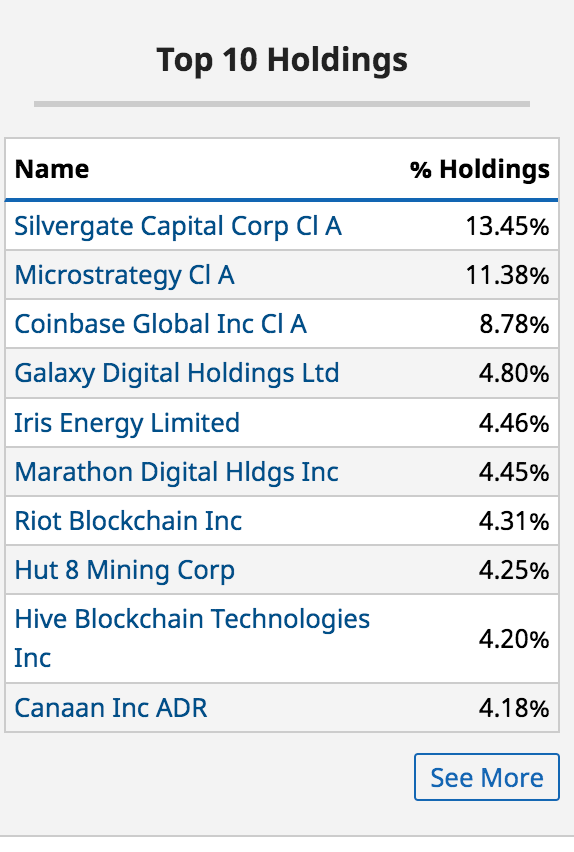
The chart shows BITQ holds a diversified portfolio of crypto exchanges, miners, and other related crypto and blockchain companies. The fund summary states:
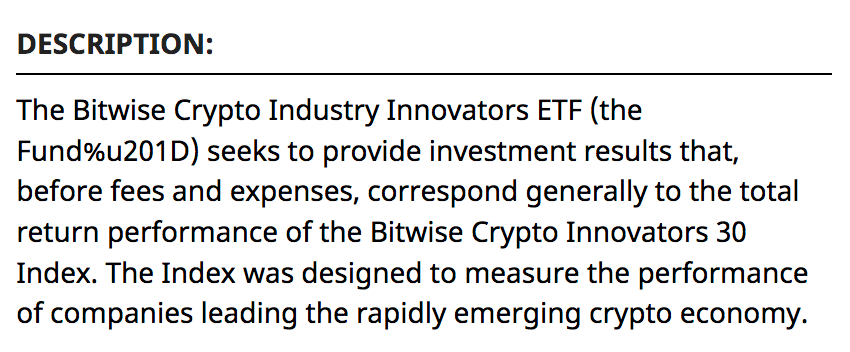
The ETF provides exposure to the emerging crypto economy and ecosystem.
At around $17.70 per share, BITQ had over $116 million in assets under management. The average daily volume was 136,268 shares, and it charges a 0.85% management fee. BITQ is a new but liquid ETF product.
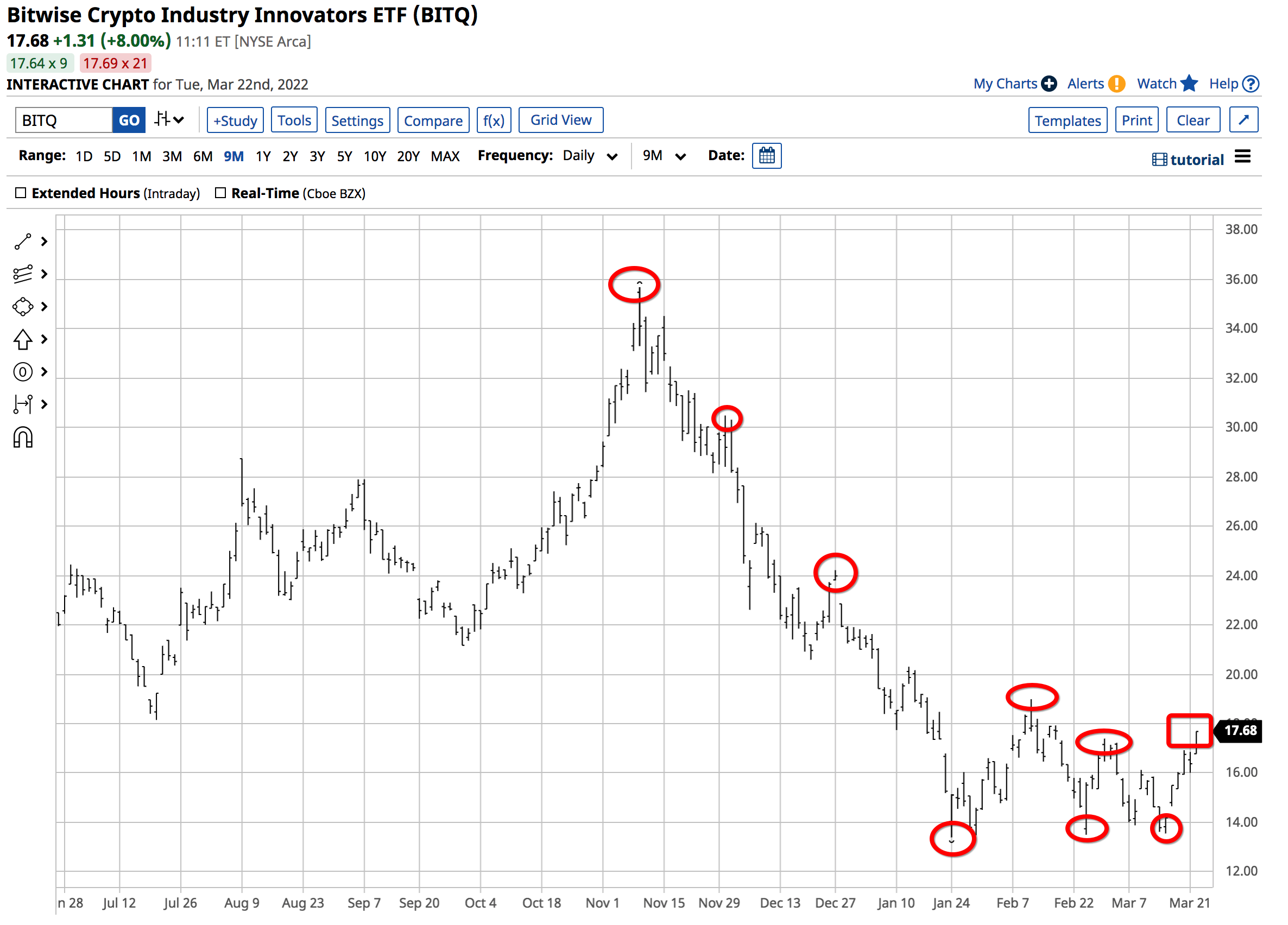
The chart shows that BITQ reached its high on November 9, the day before Bitcoin peaked. It reached a low On January 24, the same day the leading crypto hit the nadir, it reached a low. BITQ displays the same narrowing wedge pattern of lower highs and higher lows as the cryptocurrency. BITQ broke above its first resistance level on March 22. Since its introduction in May 2021, BITQ has done an excellent job tracking Bitcoin’s price.
I believe Bitcoin and BITQ are tightly coiled springs that will break higher or lower sooner rather than later. At $17.68 per share, BITQ offers lots of upside if the coil snaps to the upside.
On the date of publication, Andrew Hecht did not have (either directly or indirectly) positions in any of the securities mentioned in this article. All information and data in this article is solely for informational purposes. For more information please view the Barchart Disclosure Policy here.


/AI%20(artificial%20intelligence)/Data%20Center%20by%20Caureem%20via%20Shutterstock%20(2).jpg)

/A%20corporate%20sign%20for%20SK%20Hynix%20by%20Tada%20Images%20via%20Adobe%20Stock.jpeg)