


Howdy market watchers!
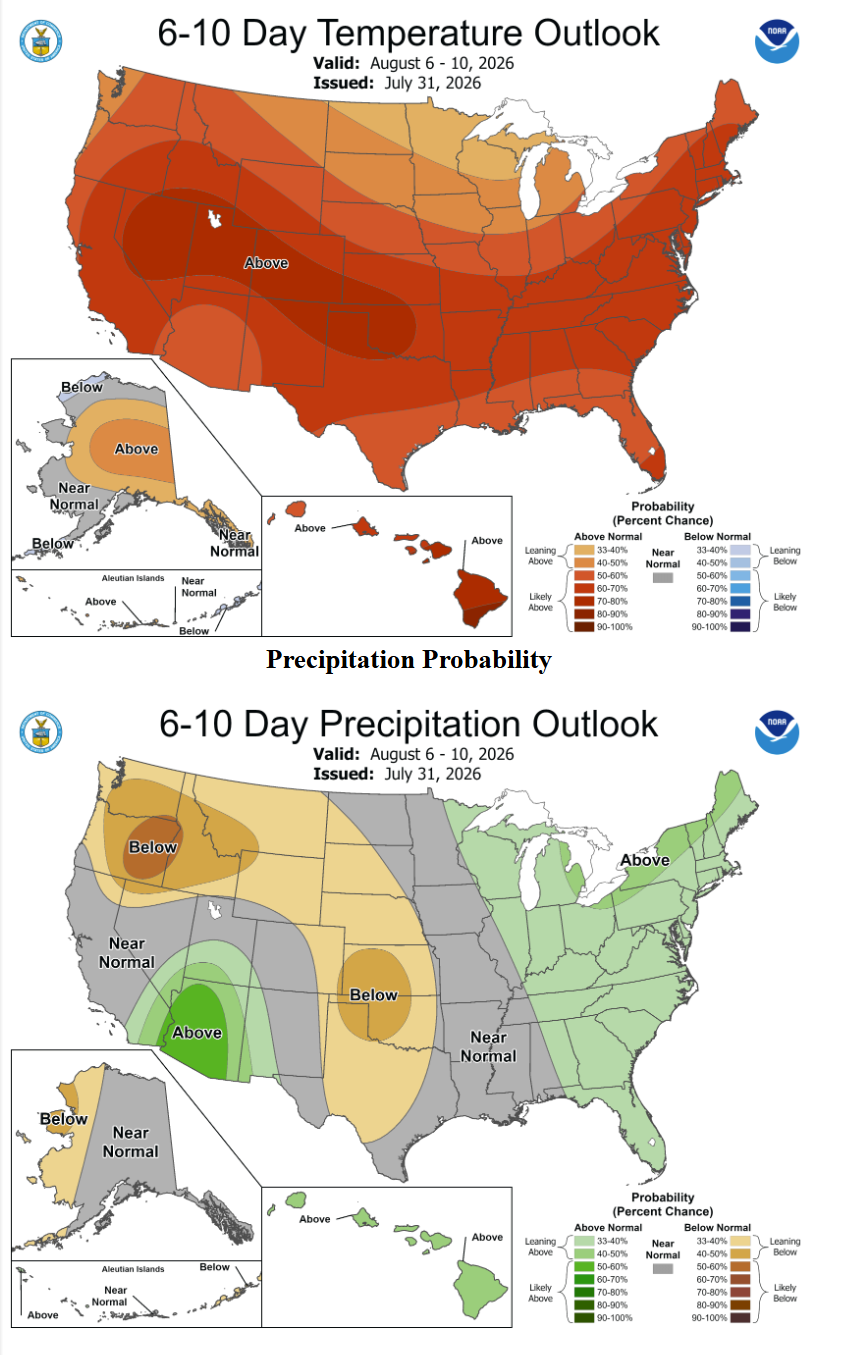
We survived the heat of July! However, it is going to be hotter than normal to start August across the entire continental US. Moisture will be limited to the Eastern half of the country starting in the Eastern portion of the Corn Belt.
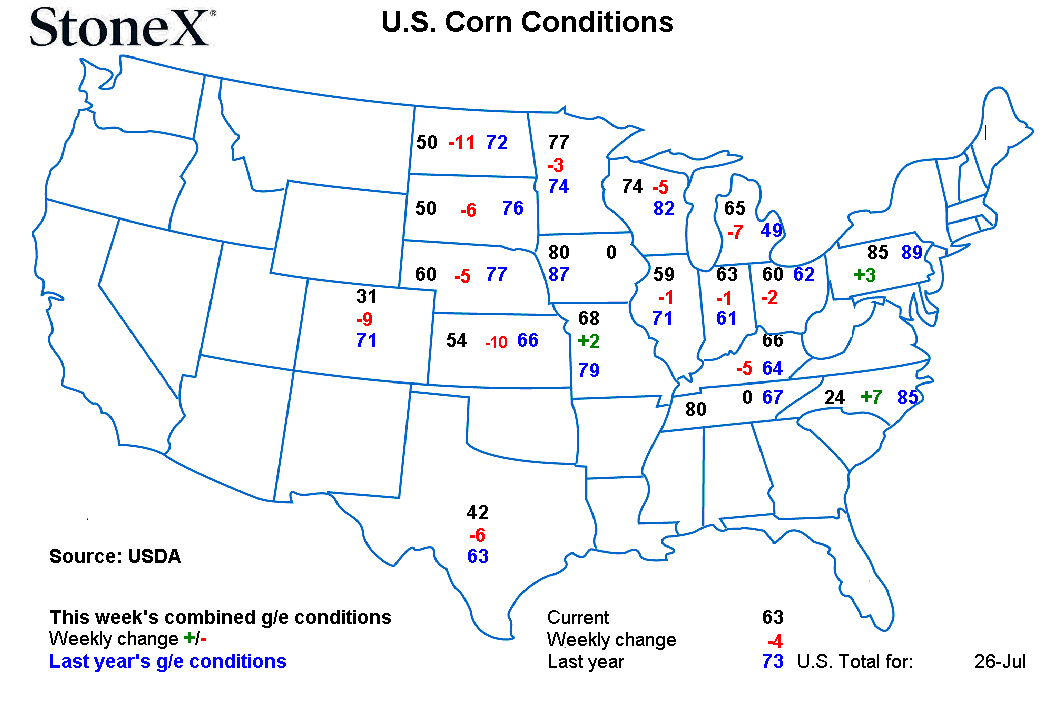
The heat and dry conditions have accelerated corn maturity with picking starting in northern Oklahoma this past week, which usually doesn’t begin until mid-August. Just another example of the atypical year we’re having with ‘only’ five months remaining, if you can believe it. US crop conditions this past week showed a larger than expected decline in corn conditions to 63 percent Good-to-Excellent from 67 percent last week and 65 percent expected and 73 percent last year.
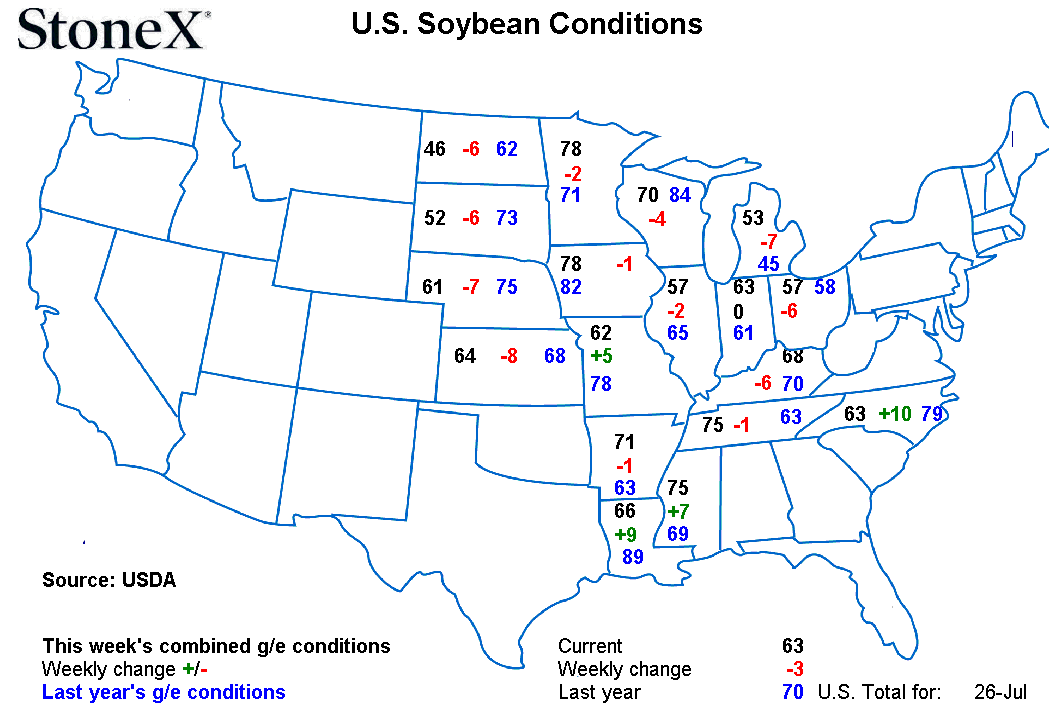
Similarly, soybean conditions declined to 63 percent G/E from 66 percent last week and 64 percent expected and 68 percent last year.
Spring wheat conditions were 53 percent G/E, unchanged from last week and better than expected with harvest now two percent complete. US winter wheat harvest is progressing ahead of last year at 81 percent complete, slightly behind expectations. Cotton conditions were just 46 percent G/E versus last year’s 55 percent and slightly above expectations.
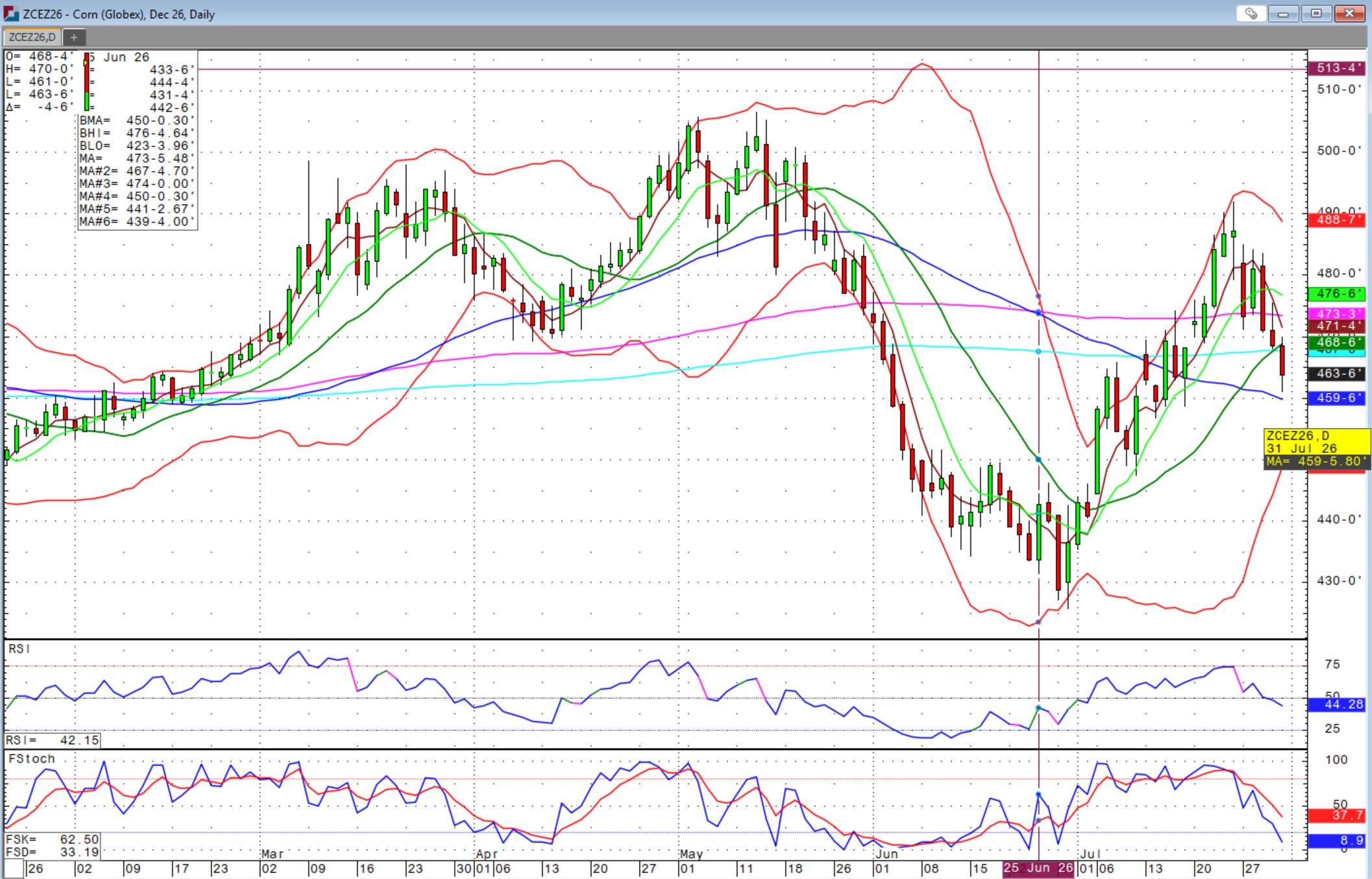
Despite the more than expected decline in US corn conditions, corn futures dropped to start the week, with continued declines throughout the week, largely attributable to the sharp selloff in crude oil that gapped lower at the open last Sunday evening.
While US-Iran tensions escalated last week, they briefly cooled over the weekend before overheating again this week with renewed and elevated threats in all directions. As we’ve written before, I frankly do not see any favorable conclusion in this deal that doesn’t involve regime change in Tehran. WTI crude oil closed the week near $87 per barrel, surging into Friday’s close and putting in an outside reversal higher formation on the chart that started to fill the gap from Sunday evening. In fact, oil futures surged over $2.00 in the last 10 minutes of trade on Friday! Depending on events over the weekend into next week, crude oil looks set to move higher.
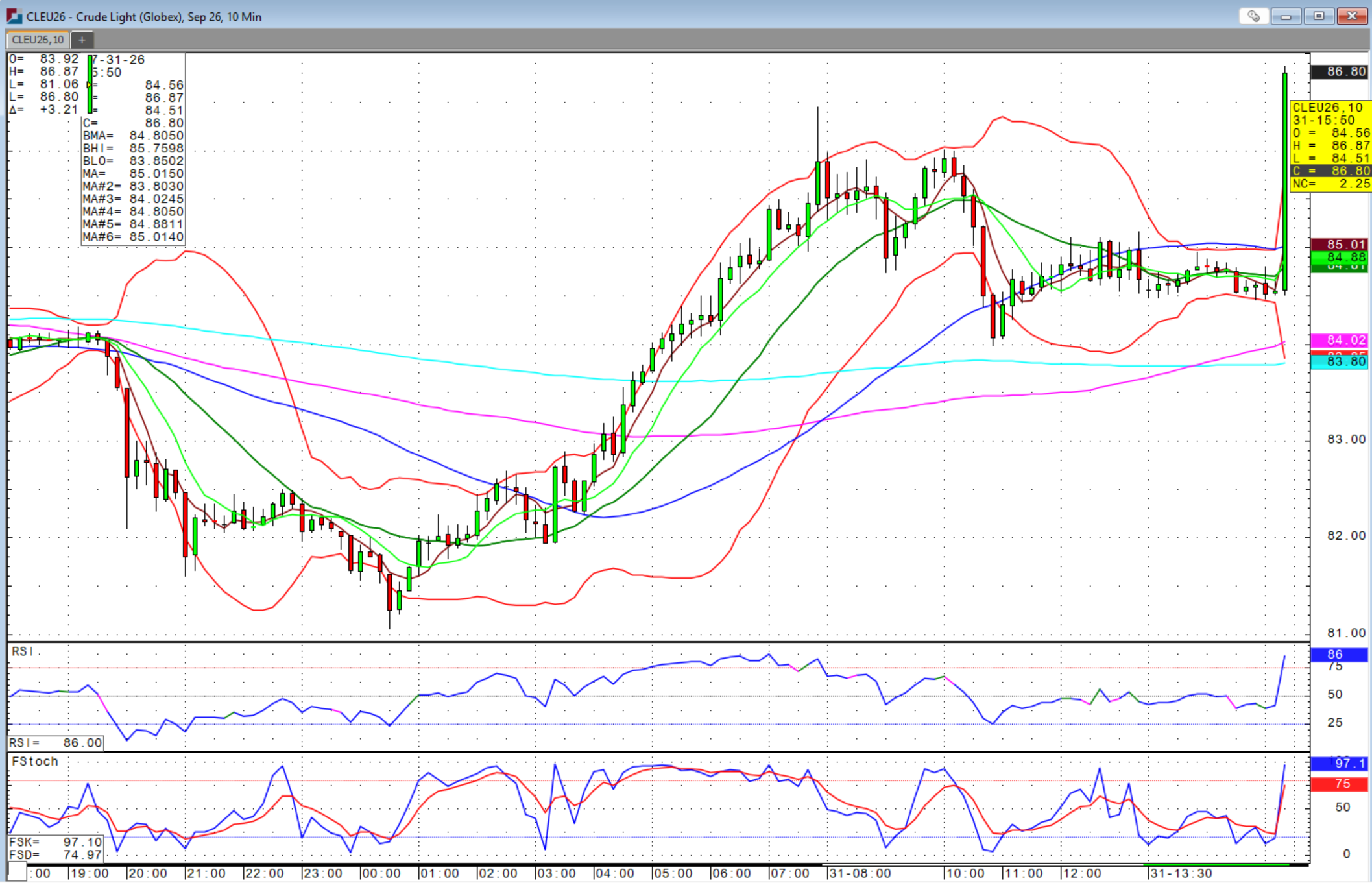
This could and should support the grain complex next week as well that suffered heavy profit taking on Friday that also coincided with the end of the month and after large gains for the month of July.
Extreme heat across Europe also boosted grain markets in the past several weeks as has the resurgence of elevated conflict in the Black Sea that has targeted port infrastructure, vessels and energy grids. Russia and Ukraine have hit each other hard with an outsized number of attacks on the latter comprising export grain terminals. Together, these countries account for approximately 30 percent of traded wheat, hence the global significance when fewer shipments and compromised prospects for new crop exports are hindered. Having said that, information of the actual situation on the ground is desperate as ships have continued to access ports that have been reported offline.
What is increasingly clear is that the Russia-Ukraine conflict is merging with the US-Israel-Iran-Gaza conflict. I wrote several months ago about the risk of this exact outcome and it is becoming truer by the day. China, who has largely stayed out of the fray, now seems to be inserting itself. We have heard reports that China is sending military equipment to Iran although President Trump touts that President Xi said he would not to so.
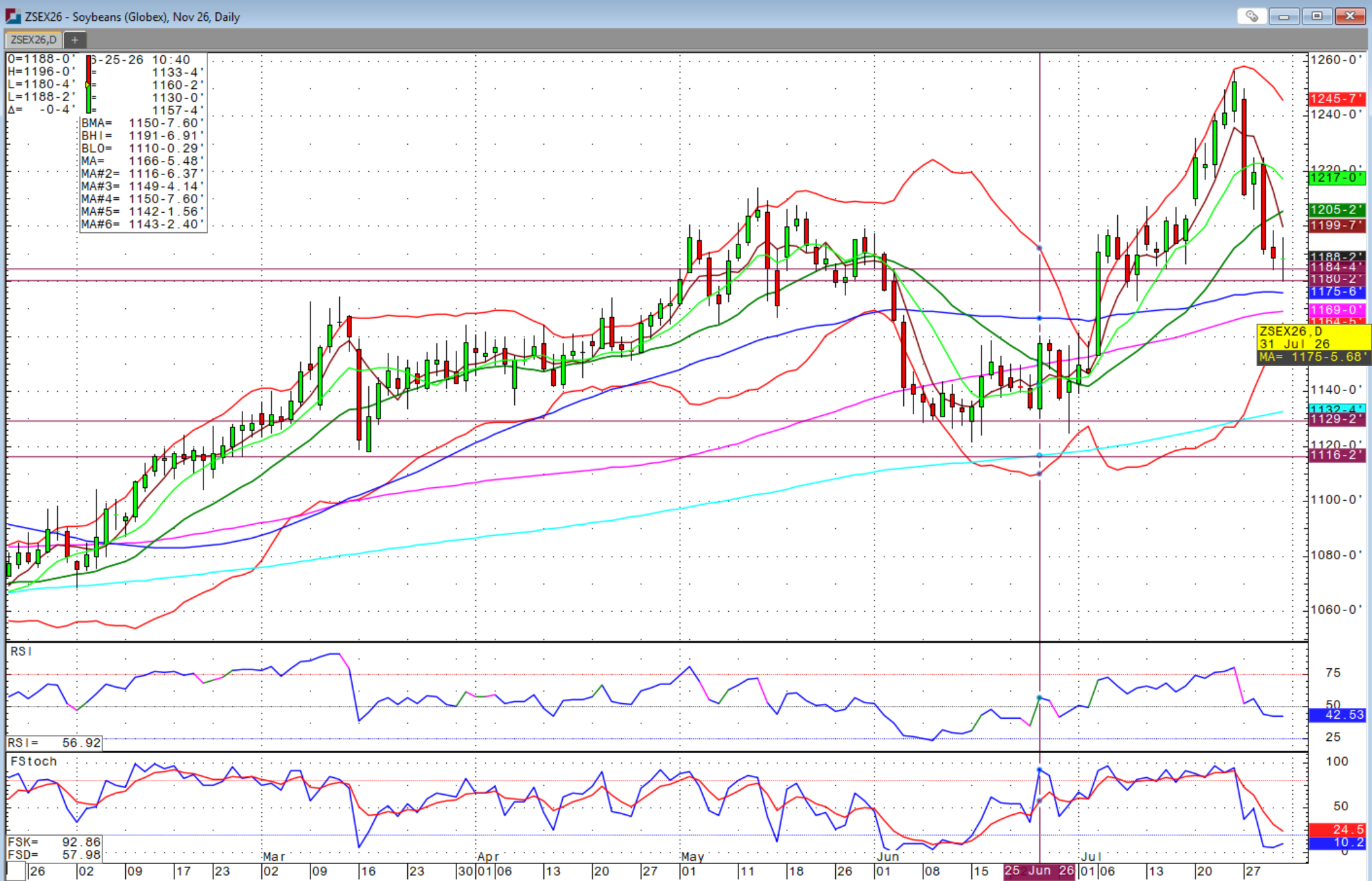
Regardless, the stakes for the late September visit of China’s Xi to the US are intensifying and expanding well beyond just US-China bilateral issues. The recent US soybean purchases by China are showing progress on that commitment that will be used for leverage. Hopefully, we will see more in the way of grain purchases, which would go far in buoying the commodity markets.
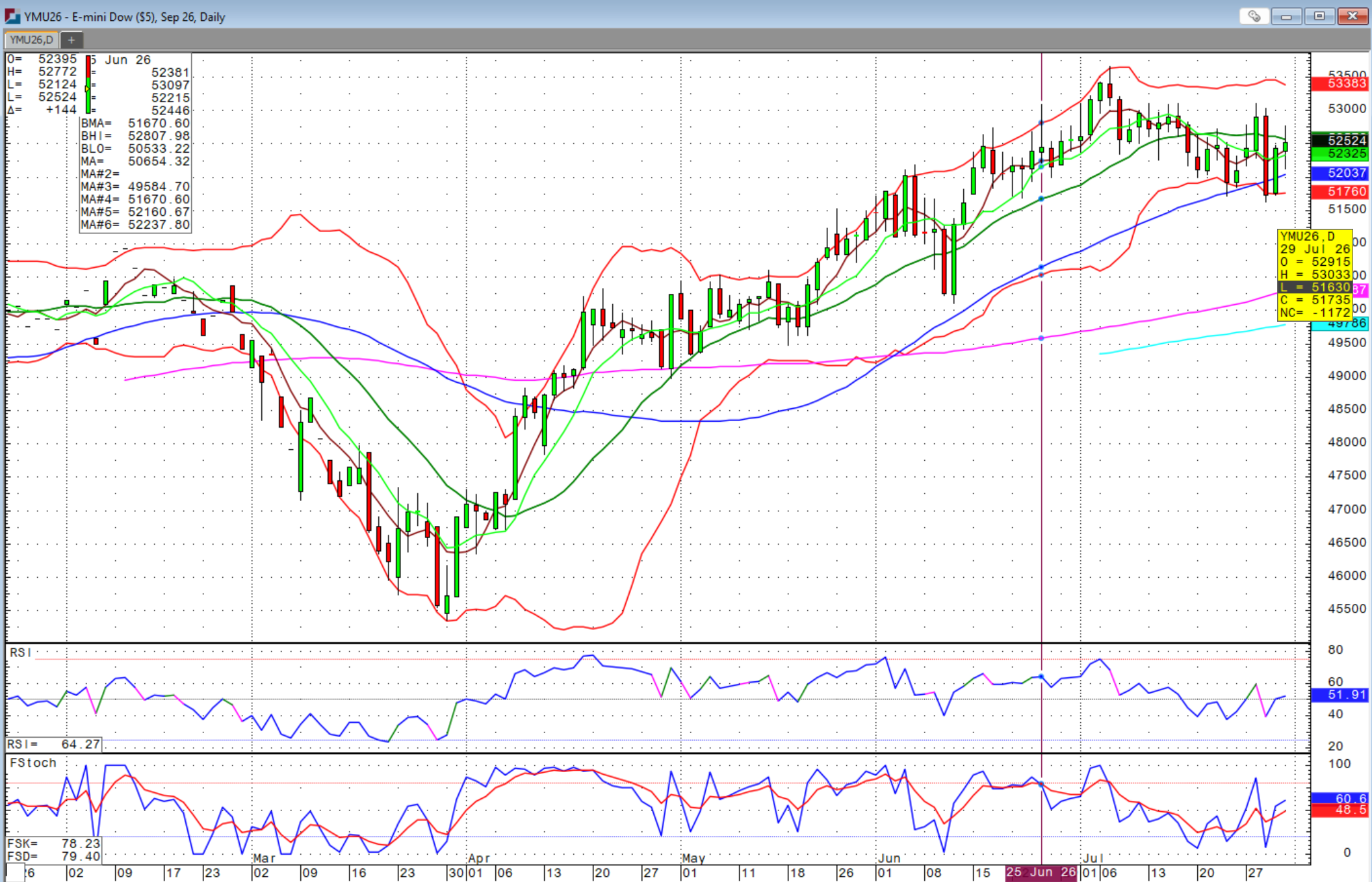
This week marked the second FOMC meeting of the still new Fed Chair Warsh. With tough talk on the price control mandate of the Fed at the last press conference, the markets were somewhat surprised by the interest rate pause at this meeting with some expectations for a hike now to ease the pressure for such in future meetings. The equity markets sold off after the decision, but then recovered only to then selloff sharply into the close with the Dow Jones Industrial Average down nearly 1,200 points. Markets rebounded Thursday after a major hedge fund was forced to unwind, putting in an inside day on the charts followed by a higher high on Friday that could suggest upside follow-through next week. Note that August is often a tough month for the equity markets with summer winding down and so be aware that it could be a choppy few weeks ahead.
There was news out Friday that Fed Chair Warsh may reduce the number of FOMC meetings from 8 to 4 per year. The market will continue to adjust to the style of the new Fed leadership, which will clearly be different with “less” communication to the market being seen as “more”. The US dollar index took cues from the FOMC, plummeting from late June highs back below 100.00. A weaker US dollar is supportive of commodities. Let’s see if the grains can rebase can take these supportive factors into the new trading week and month and regain some positive ground.
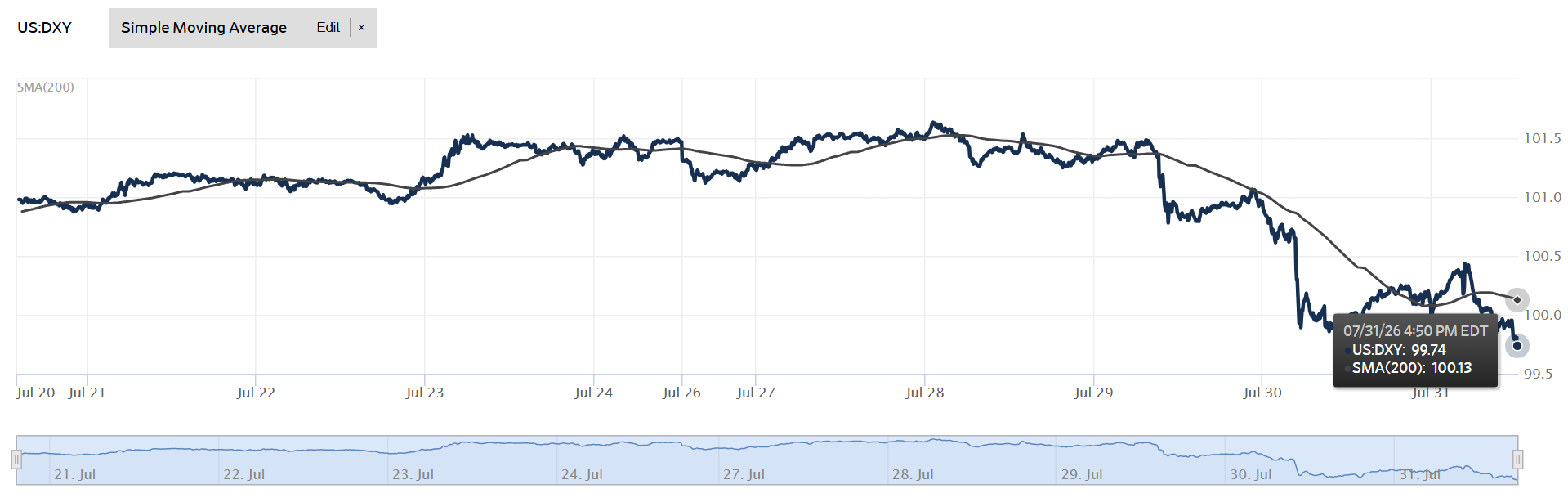
Source: Wall Street Journal
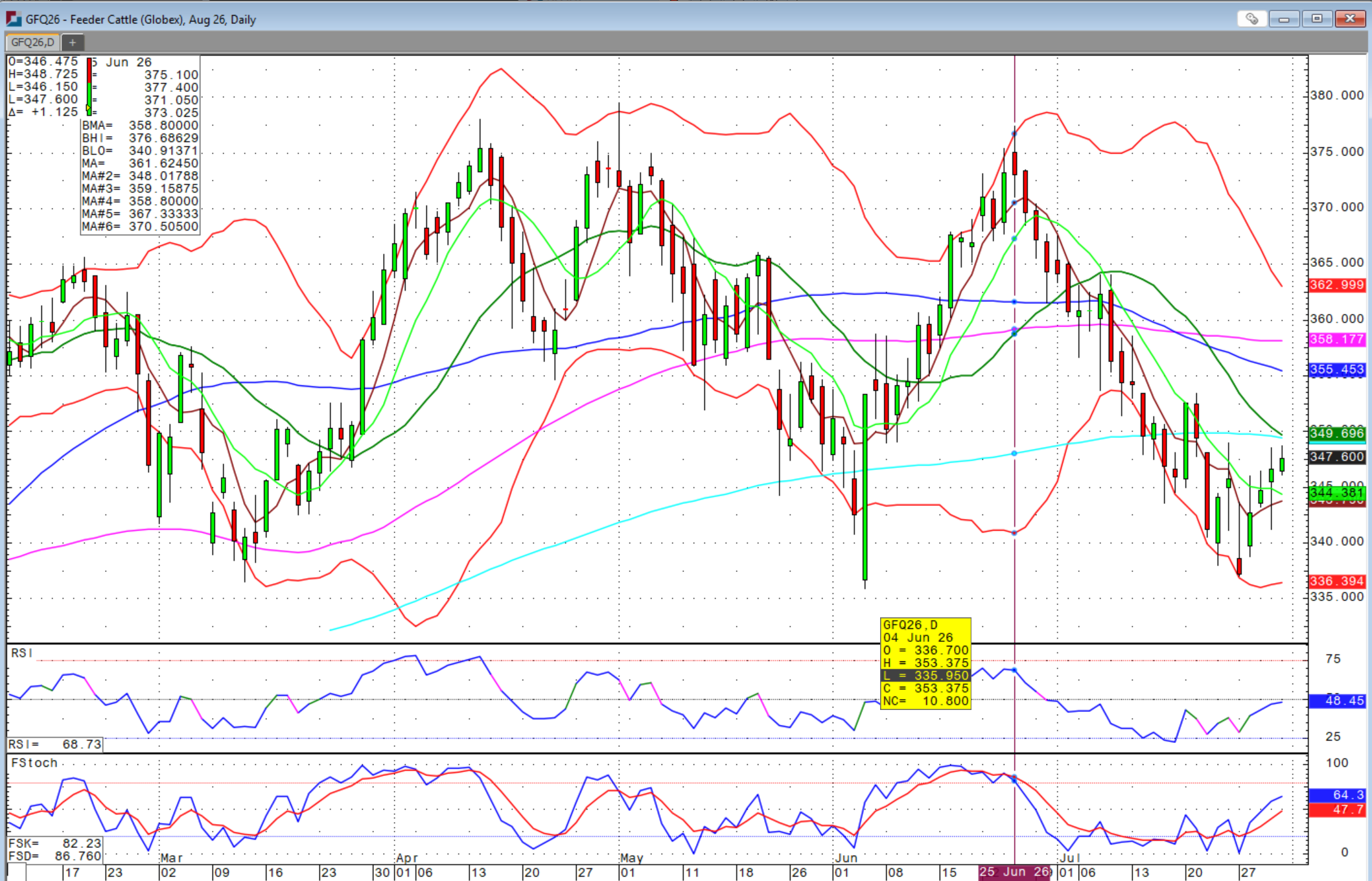
While the grains have faced selling pressure, the cattle markets have finally found support and turned higher after a treacherous one month $40+ drop in feeder futures. The front-month markets held almost exactly where they’ve found support since March at the low-end of the $40-42 range down at $336. The feeder contracts managed four consecutive days of higher closes this week. While we didn’t make a high above the July 24th high, we did have a pretty solid close, especially on the front-month contracts.
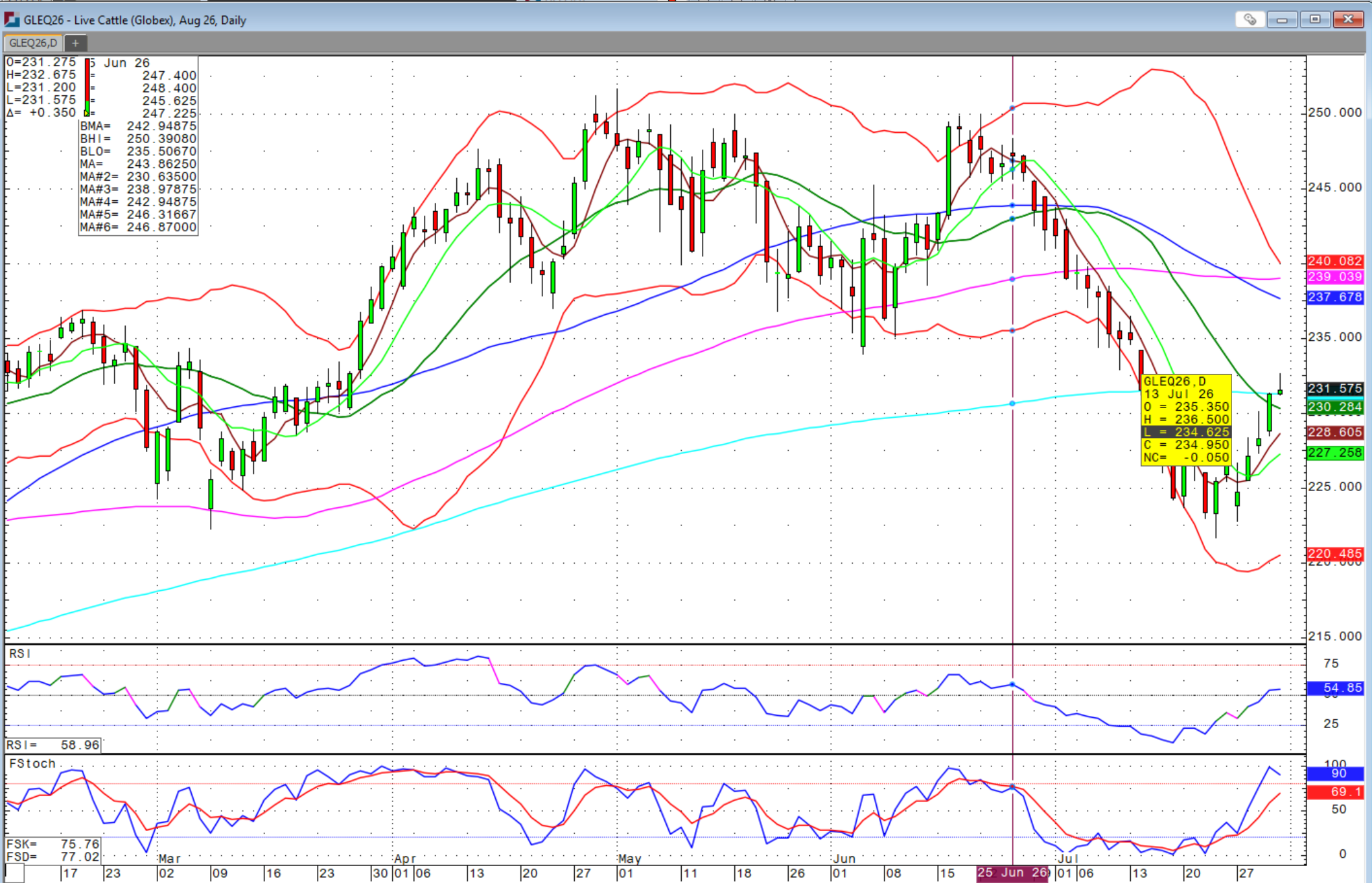
Fed cattle cash trade also resurfaced at higher levels late in the week reaching a high of $233 in Texas, Oklahoma and Kansas. This higher fed cattle trade price is just what the market needed to reaffirm demand returning. We often see buying interest return in early August as back-to-school nears and Labor Day orders pick up. Cash prices have been well above futures in recent weeks, but that gap has finally converged. August live cattle closed above the 200-day moving average, the first time since July 14th, a positive conclusion to the week.
The USDA’s announcement of reopening the US-Mexico border crossings on August 24th and after should now be priced into the market although I believe any reaction to this have been overstated. The southern feeding industry in the US has effectively been handed over to Mexico, in my opinion, and I doubt it will come back. As a result, the meat packing industry in Mexico has also quickly expanded that creates a much higher value export to the US than live cattle. There is cheaper, more available labor south of the border for the packing plants, especially at a time when the US is asking the same workers to leave our country, many of which are or were working in the US packing industry. USDA Press Release: USDA Announces Phased Reopening of Southern Ports for Livestock Trade | USDA
All that to say, I don’t expect an influx of cattle to cross this border any longer, but rather frozen beef either legally or illegally. The Cargill Fort Gibson packing facility has also negotiated with the union to reopen that facility, which should be positive for market competition. Having said all of that, a resurgence in corn prices could re-emerge as a headwind for the livestock complex, especially if fund buying shifts to grains from weather, demand and geopolitical escalation. For now, I would advise to standby and see if this cattle rally can push further with higher boxed beef prices and cash market strength.
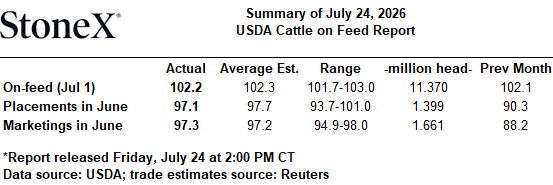
Last Friday’s Cattle on Feed report had a bullish bias with fewer than expected placements and slightly higher marketings.
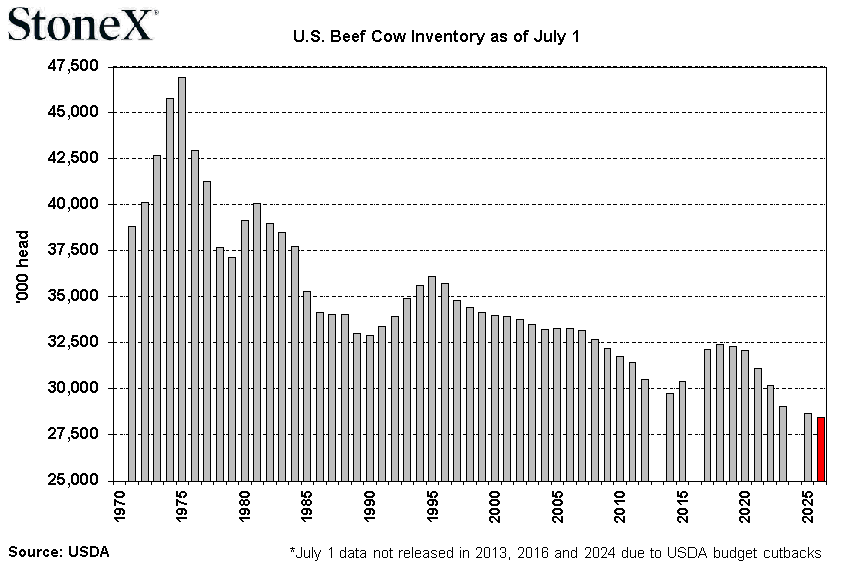
The biannual Cattle Inventory report showed some increase in all cattle numbers largely driven by dairy, but beef cow numbers were still down slightly from last year. While heifer retention is slowly beginning, hot and dry conditions and higher prices will likely continue to keep the pace muted. The recent heat has taken a toll on cattle health, especially in the feedlot with countless heavy cattle perishing from the extreme conditions. This is also tightening supplies of slaughter ready cattle.
Sidwell Strategies is the one-stop shop to protect cattle with futures, puts, LRP or a combination of all, which is probably the best strategy overall. If you’re ready to trade commodity markets, give me a call at (580) 232-2272 or stop by my office to get your account set up and discuss risk management and marketing solutions to pursue your objectives. Self-trading accounts are also available. It is never too late to start and there is no operation too small to get a risk management and marketing plan in place.
Wishing everyone a successful trading week! Let us know if you'd like to join our daily market price and commentary text messages to stay informed!
Brady Sidwell is a Series 3 Licensed Commodity Futures Broker and Principal of Sidwell Strategies. You’re your Trading Account with Sidwell Strategies at https://portal.stonex.com/prefill/index/BradySidwellU52F112P. Contact us at (580) 232-2272 or at trade@sidwellstrategies.com.

/AI%20(artificial%20intelligence)/Ai%20chip%20by%20Quality%20Stock%20Arts%20via%20Shutterstock.jpg)

/Seagate%20sign%20on%20the%20building%20atits%20operational%20headquarters%20By%20JHVEPhoto.jpeg)
/Apple%20logo%20on%20store%20front%20by%20frantic00%20via%20iStock.jpg)