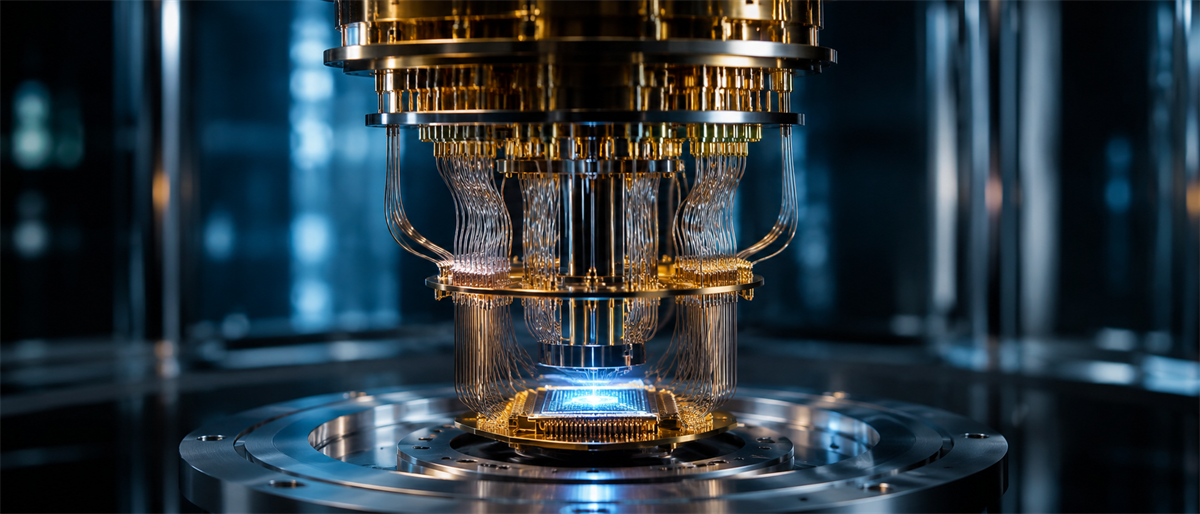
The first week of August 2026 will be another major test for the quantum computing industry as several of the top companies are slated to release Q2 2026 earnings. Heading into earnings season, it's understandable that investors would be skeptical—shares of pure-play quantum computing firms have been slammed throughout much of the year, with shares of leaders like IonQ Inc. (NYSE: IONQ) and D-Wave Quantum Inc. (NYSE: QBTS) falling by approximately 25% and 35% year to date (YTD), respectively.
In the last several weeks, it has appeared that the appeal of speculative, pre-profit quantum names has cooled considerably. This came even as some firms in the space posted better-than-expected results for the first quarter of the year. One question investors may seek to answer heading into earnings is whether any of these firms has had a large enough catalyst to reverse the industry-wide downward trend. IonQ and D-Wave both have promising developments that could help in this respect, although neither is likely to be reflected directly in Q2 earnings.
IonQ's SkyWater Acquisition May Provide a Boost
IonQ announced in January 2026 that it intended to acquire SkyWater Technology (NASDAQ: SKYT), a major domestic semiconductor foundry, and that acquisition has just recently received final regulatory approval. After closing on July 31, the deal should dramatically accelerate IonQ's capacity to build quantum chips while firming up its supply chain structure domestically. This may be transformational, as it allows the company to complete the full scope of its production essentially without relying on imported goods and any applicable tariffs.
How this might be reflected in the company's upcoming earnings, however, is unclear. Certainly, the most significant financial impacts of the deal are likely to factor into future quarters, but IonQ management may use the earnings opportunity to share key updates about its plans to integrate SkyWater's operations that will give investors insight into what to look for in the coming months.
Otherwise, investors will likely be watching to see whether IonQ can continue its positive revenue trend, which stood at 755% year-over-year (YOY) growth in the first quarter. The company established itself as one of the fastest-growing pure-play quantum firms in terms of sales at that point, so it will be imperative that it continue—or, ideally, improve—that revenue trajectory in Q2.
D-Wave's Major Agreement With AT&T Shows a New Path
While IonQ's Q1 results were strong in multiple respects, D-Wave's stood out for less positive reasons. The company saw a sharp YOY decline in revenue due to lumpiness in large system sales and came in well below analyst expectations for the quarter. Still, with bookings up significantly and a healthy pipeline, D-Wave may be poised for a turnaround in Q2.
D-Wave has set itself apart for its two-pronged approach to quantum technology, a feature that has been promising but which has yet to translate to distinctive revenue performance compared to other quantum firms. The recent announcement of the company's agreement with AT&T (NYSE: T), however, may signal a change. AT&T plans to use D-Wave's annealing tech to help power its agentic AI tools—the company has announced that early applications have seen reductions in certain processing time from one hour to under 15 seconds, so the potential for transformation is massive.
The key development, however, may be that AT&T is also looking at D-Wave's gate-model tech for a separate set of potential applications surrounding quantum security and communications. This suggests a path forward for the company in which it is able to provide two distinct sets of quantum tools with different applications that may simultaneously appeal to the same customers, helping the firm stand out relative to others in the quantum space and driving retention.
Rigetti's Mounting Costs Remain a Concern
Rigetti Computing (NASDAQ: RGTI) has been hit hardest among these three companies, with shares falling by nearly 40% YTD. A big issue that this company is facing is rising costs: in Q1 2026, operating expenses surged to more than $27 million, leading to non-GAAP net losses of almost $15 million. With costly fab upgrades and other capital expenditures (CapEx) anticipated throughout the year, this could continue to be a challenge for the company in its future earnings.
Still, Rigetti's revenue growth has been solid, and the company has already made it clear that it will include a portion of its Novera QPU revenue in its Q2 earnings. The question will be whether revenue growth is sufficient to overcome investor concerns about costs for the remainder of the year.
Where Should You Invest $1,000 Right Now?
Before you make your next trade, you'll want to hear this.
MarketBeat keeps track of Wall Street's top-rated and best performing research analysts and the stocks they recommend to their clients on a daily basis.
Our team has identified the five stocks that top analysts are quietly whispering to their clients to buy now before the broader market catches on... and none of the big name stocks were on the list.
They believe these five stocks are the five best companies for investors to buy now...
The article "Quantum Earnings Could Decide Whether the Sector’s Sell-Off Has Gone Too Far" first appeared on MarketBeat.


/AI%20(artificial%20intelligence)/Ai%20chip%20by%20Quality%20Stock%20Arts%20via%20Shutterstock.jpg)
/Seagate%20sign%20on%20the%20building%20atits%20operational%20headquarters%20By%20JHVEPhoto.jpeg)
/Apple%20logo%20on%20store%20front%20by%20frantic00%20via%20iStock.jpg)