




What do the market's best dividend stocks look like?
Annoying an answer as this is, it depends on what you're looking for. Maybe you want prolific dividend growth, for instance. Or maybe you're looking for high current yield.
But today, I want to focus on so-called "total package" dividend stocks: top-quality companies that pay well-covered dividends that amount to above-average yields. In some cases, these companies have been growing their distributions, and a few deliver truly high yields. However, the main point across the board here is these companies' overall quality.
Read on as I highlight Wall Street's best dividend stocks, as rated by research firms that routinely cover these companies. I'll also take some time to explain the importance of dividend income and sustainable payouts.
Disclaimer: This article does not constitute individualized investment advice. Individual securities, funds, and/or other investments appear for your consideration and not as personalized investment recommendations. Act at your own discretion.
How I Chose the Best Dividend Stocks to Buy
Before I started this article, I was video calling a colleague and joked, in a pseudo-philosophical voice, "What is a good dividend stock, anyways?"
But I was only partly kidding. What's ideal to one investor might not fit the bill for another. Ultimately, though, I coalesced around safe dividends, with some capacity to grow, sporting above-average yields, paid by larger (and thus likelier to be more stable) companies. Specifically, they have to …
- Be in the S&P 500.
- Have a yield greater than 1.5%, to ensure they're better than the overall market. Most of the stocks on this list yield more than 2%, some north of 3%,and one yields more than 5%. (If that's too low a baseline yield for you, I suggest you instead read my list of high-yield dividend stocks, where 5%-plus yields are the norm.)
- Have an earnings payout ratio below 70%. This is a generally safe level where there's still at least some room for dividend growth, and the lower the payout ratio, typically the more growth potential there is. (Note: Free cash flow payout ratio is an even better metric, but screening data for this tends to be unreliable.)
- Have at least a consensus Buy rating according to analysts tracked by S&P Global Market Intelligence. S&P boils down consensus ratings down to a numerical system where anything less than 1.5 is a Strong Buy, 1.5 to 2.5 is a Buy, between 2.5 and 3.5 is a Hold, 3.5 to 4.5 is a Sell, and anything greater than 4.5 is a Strong Sell. In this case, I only included stocks with a 2.0 rating or less—so at least a pretty firm consensus Buy rating, if not an outright Strong Buy.
I also limited the energy sector to just two stocks. Energy companies were extremely overrepresented in the screen; most problematic is that several sport variable dividends that rise and fall based on available cash flow, which is largely tethered to the motion of energy prices. So a 3% yield today could be 1% in a year, 2% the year after, and so on. The rest of the list is populated with stocks that have more traditional dividend programs—regular payouts that typically only change when the company announces a hike.
The equities here are listed in reverse order of their consensus analyst rating, starting with the worst-rated stock and ending with the best-rated stock.
Let's look at three of the picks from my broader list of the best dividend stocks to buy.
Make sure you sign up for The Weekend Tea, Young and the Invested's free weekly newsletter that over 10k monthly readers use to level up their money know-how.
UnitedHealth Group
- Sector: Healthcare
- Market cap: $387.0 billion
- Dividend yield: 2.2%
- Consensus analyst rating: 1.59 (Buy)
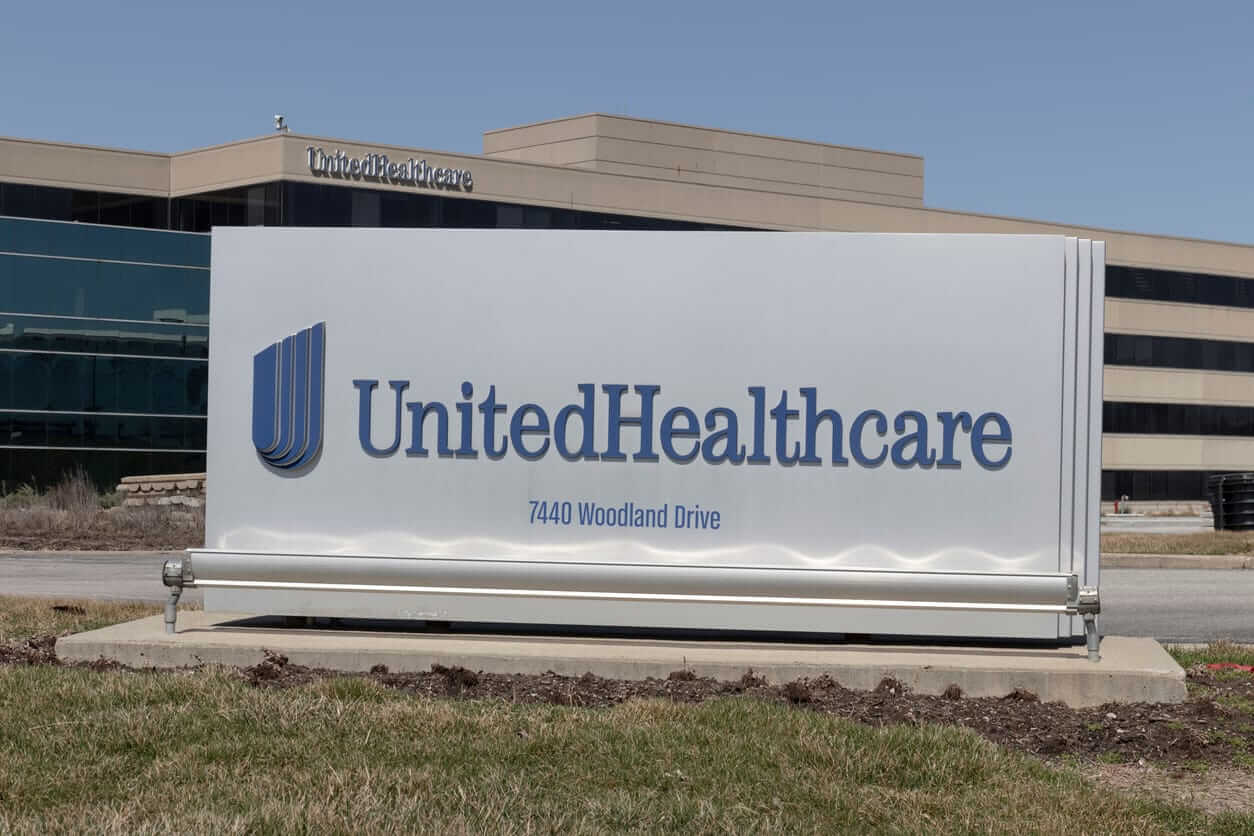
UnitedHealth Group (UNH) is America's largest health insurer, though its massive health care operations go far beyond typical coverage. In addition to its UnitedHealthcare insurance division, UNH also is the parent of Optum, which provides medical-care coordination, pharmaceutical services, and health data and analytics.
Indeed, while UnitedHealth is the better-known brand, Optum's businesses actually contribute more to the bottom line.
UNH shares trudged through a lousy first few months of the year as the company was dogged by a number of issues, including the possibility of funding cuts for Medicaid, rising medical costs, and a Wall Street Journal article claiming that the U.S. Department of Justice was investigating UnitedHealth's Medicare billing practices. But it has since staged an energetic bounce-back that has it outperforming both the S&P 500 and healthcare sectors for the year to date.
Invest With CIBC
CIBC Investor's Edge lets you trade U.S. and Canadian stocks and ETFs, options, mutual funds, and bonds through registered accounts like FHSAs, TFSAs, RRSPs, and RESPs, as well as non-registered accounts.
Sign up with our link today and use promo code EDGE2026 to get 200 free trades with CIBC Investor's Edge.
It's also coming off strong second-quarter results that easily beat Street estimates, thanks in large part to Medicare Advantage.
"We believe UNH is well positioned by virtue of its diversification, strong track record, elite management team, and exposure to certain higher growth businesses," say Oppenheimer analysts (Outperform), who upgraded their earnings estimates for 2026-28 following the report. "The company's Optum business is a nice complement to its core managed care operations and continues to account for a large share of earnings. Furthermore, UNH's vertical integration strategy strengthens the company's competitive positioning across many areas of the healthcare landscape."
UnitedHealth has a robust bull camp of 22 Buys, against five Holds and no Sells, to put it among the best-rated dividend stocks on Wall Street.
As for the dividend, UNH raised its payout by 5% in June, to $2.32 per share, which comes out to about half of this year's projected profits. That's a higher ratio than in recent years, but it still gives UnitedHealth some room to modestly improve the dividend going forward.
Related: 8 Best High-Yield Dividend ETFs for Income-Hungry Investors
BlackRock
- Sector: Financials
- Market cap: $166.2 billion
- Dividend yield: 2.1%
- Consensus analyst rating: 1.53 (Buy)
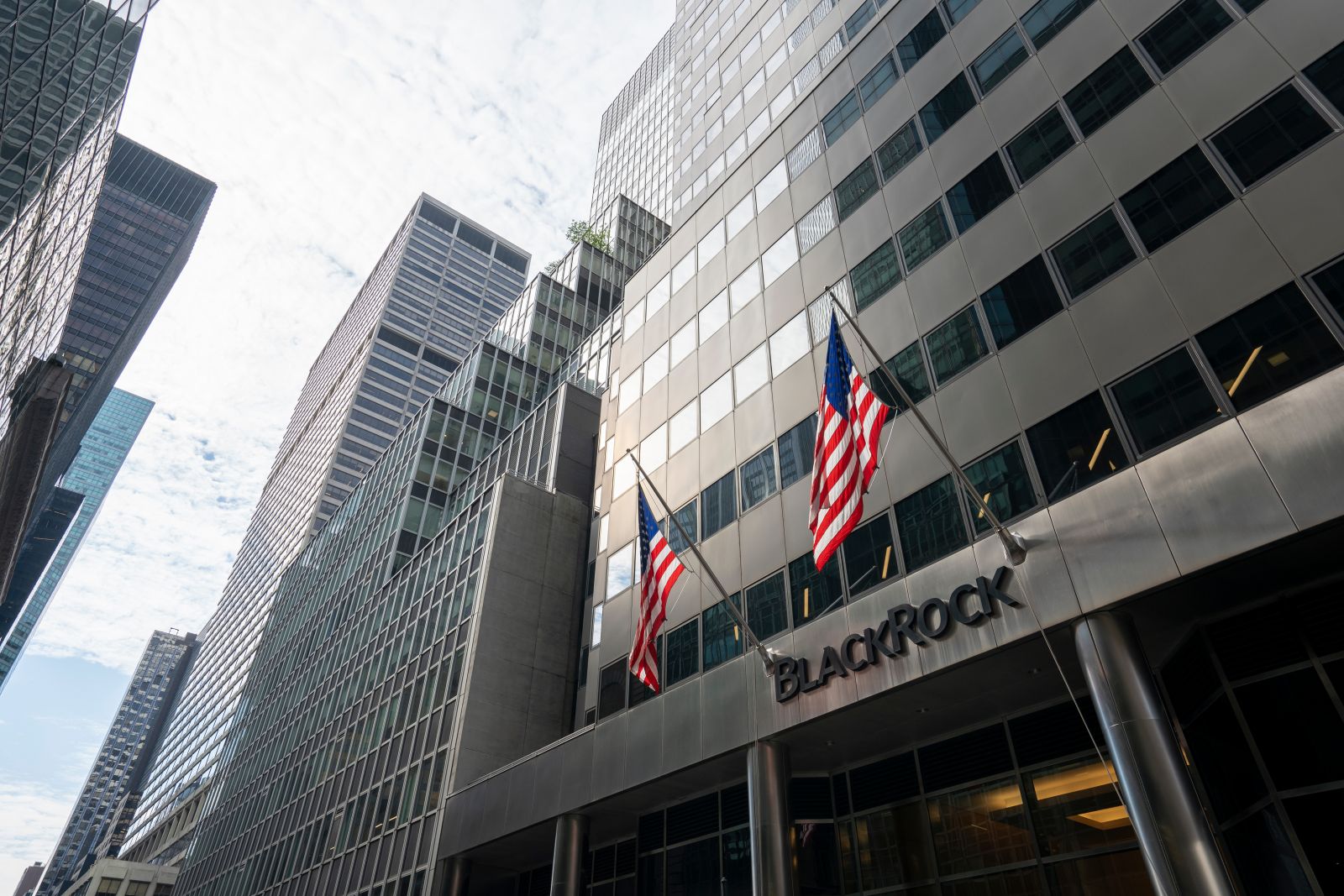
BlackRock (BLK) is one of the world's largest asset management firms, boasting more than $15 trillion in assets across its many lines of business. Individual investors know it well for both its BlackRock mutual funds and closed-end funds (CEFs), as well as its iShares exchange-traded funds (ETFs). But it also manages money for institutional clients, including pension plans, foundations, charities, and insurance companies, among others.
BlackRock has been in a broader consistent uptrend since the depths of the Great Recession, and that has come alongside similar progression in both the company's top and bottom lines. There have been a few hiccups along the way, of course, such as COVID and early 2026's market downturn—but analysts frequently call out these dips as reasons to buy BLK shares.
Related: The 7 Best REITs to Buy for the Rest of 2026
In fact, it's difficult to find any Wall Street pros with something negative to say about BlackRock right now despite the fact that BLK remains in the red so far in 2026. Shares currently enjoy 15 Buy calls versus two Holds and no Sells.
"We believe that BLK remains well positioned to deliver above-peer organic growth given its unmatched product breadth and distribution footprint (helped by its iShares franchise)," say Keefe, Bruyette & Woods analysts Aidan Hall and Kyle Voigt, who rate BlackRock's stock at Outperform (equivalent of Buy). "Also, its scale and demonstrated ability to generate operating leverage bodes well for future earnings growth and operating leverage. The firm's increasing alternatives presence and growing technology revenue stream add further breadth to what is already a diverse product/solutions offering."
BlackRock has been a fount of dividend growth since the Great Recession, too. In the past decade alone, BLK has managed to average 10% annual dividend growth. Its most recent hike, announced in early February 2026, was a stout 10% bump to $5.73 per share. Still, a payout ratio just below 45% of 2026 profit estimates should keep investors plenty confident in the dividend's health and its ability to keep growing.
Do you want to get serious about saving and planning for retirement? Sign up for Retire With Riley, Young and the Invested's free retirement planning newsletter.
Devon Energy
- Sector: Energy
- Market cap: $50.6 billion
- Dividend yield: 2.4%
- Consensus analyst rating: 1.30 (Strong Buy)
Energy businesses are typically referred to by their "stream." Upstream companies search for and extract oil, gas, and other raw energy resources; midstream companies transport, store, and sometimes process those resources; and downstream companies refine these resources into final products such as gasoline, diesel, and natural gas liquids (NGLs).
Devon Energy (DVN) is an upstream firm—an independent oil and natural gas exploration and production (E&P) firm that operates in some of America's most potent locations, including the Delaware Basin, Anadarko Basin and Eagle Ford.
DVN has also become much bigger thanks to the company's recent merger with Coterra Energy. Devon says that on a pro forma basis, the combined company's 2025 daily production was about 548,000 barrels of oil, 348,000 barrels of natural gas liquids, and about 4.3 billion cubic feet of natural gas.
Related: 10 Best Dividend Mutual Funds You Can Buy Now
E&P companies are more beholden to commodity prices than the other "streams," so as oil and nat gas prices go, so go their shares. Their differences boil down to operational efficiency, and Devon Energy is among the best, according to Wall Street analysts, who as a group have 25 Buys on the stock against two Holds and no Sells. For now, that makes Devon the best-rated dividend stock to buy within our selection universe.
"DVN has multiple catalysts for absolute and relative outperformance post-[Coterra] close, but attracting long-only capital requires clearer focus on durable core assets," say Jefferies analysts, who recently upgraded the stock to Buy from Hold. "Divesting non-core, particularly the Marcellus (likely commanding a premium to current valuation), could eliminate debt and boost returns."
Devon Energy celebrated the acquisition by announcing an $8 billion share buyback authorization and hiking its dividend by 33%, to 32¢ per share quarterly. That comes out to just 25% of this year's expected earnings—a conservative payout ratio that offers plenty of dividend stability and room for expansion.
What If I Need Help Picking Stocks?
Motley Fool Stock Advisor is a stock picking service that espouses my favorite, plain-vanilla trading style: buy-and-hold. Fool analysts provide recommendations for both "Steady Eddies" and potential high-flying stocks with sound fundamentals—exactly the combination of holdings you want to generate strong performance without risking extremely high volatility.
Importantly, Stock Advisor doesn't just give you a list of tickers and call it a day. It also provides investment rationales and research for each pick to help educate you before you buy.
Stock Advisor has returned more than 900% since its founding in February 2002, more than tripling the S&P 500 over that time (as of 6/25/26). You can join this service at a discounted rate for the first year, and get a 30-day membership-fee-back period, if you sign up for Stock Advisor today.
Read More on Young and the Invested
- Empower Personal Strategy Review: Wealth Management More People Can Afford
- 11 Best Debit Cards for Kids [2026]
- 10 Best Schwab ETFs to Buy [Build Your Core for Cheap]


/Micron%20Technology%20Inc_%20logo%20on%20building-by%20vzphotos%20vis%20iStock.jpg)

/AI%20(artificial%20intelligence)/AI%20engineer%20working%20on%20laptop%20by%20ART%20STOCK%20CREATIVE%20via%20Shutterstock.jpg)