/AI%20(artificial%20intelligence)/Close-%20up%20of%20computer%20chip%20with%20AI%20sign%20by%20YAKOBCHUK%20V%20via%20Shutterstock.jpg)
This is sponsored content. Barchart is not endorsing the websites or products set forth below.
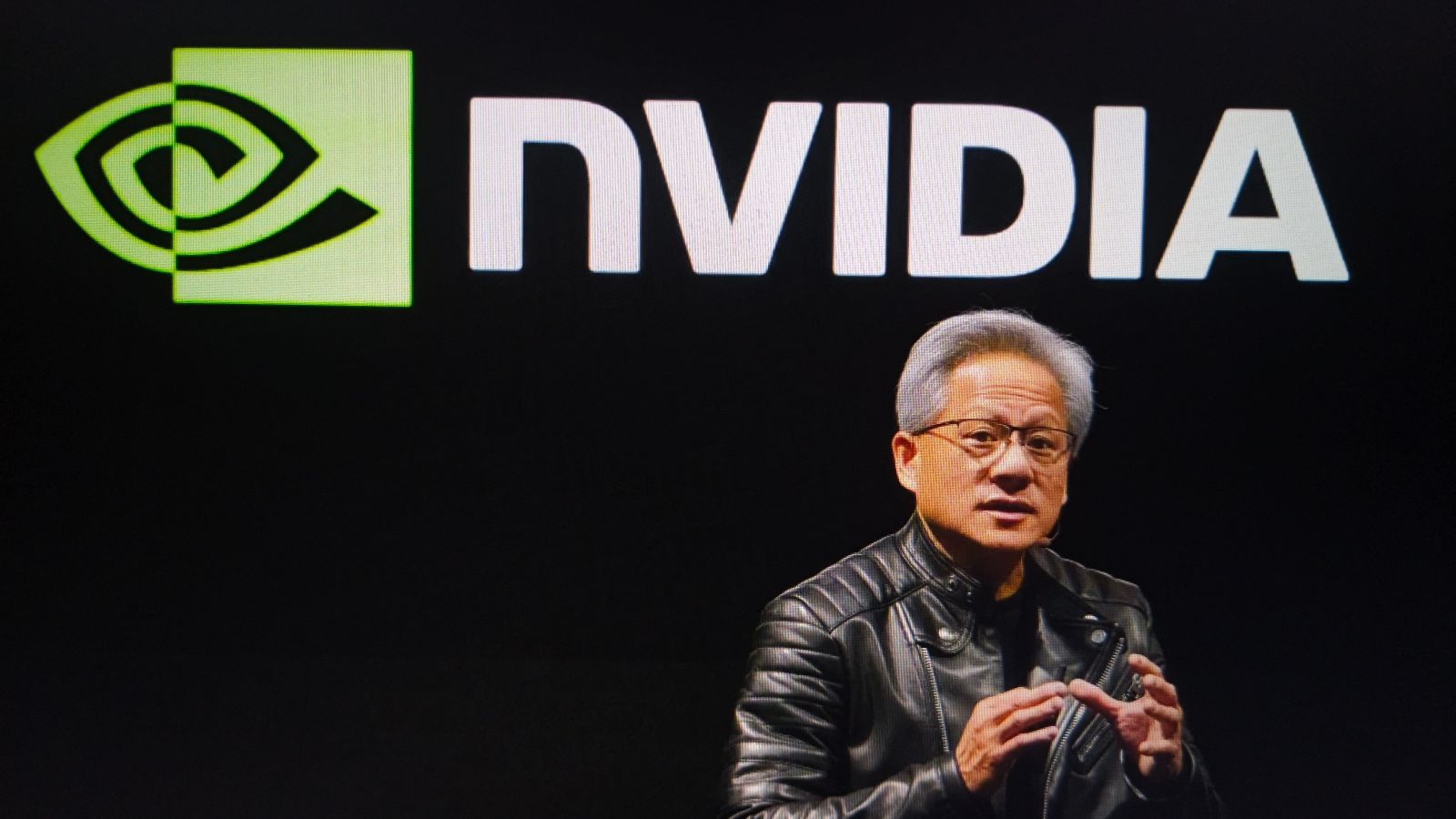
NVIDIA's (NVDA) Q1 2026 earnings report (May 28th after market close) comes as AI demand continues growing with no signs of slowing. Investors will focus on Data Center revenue, Blackwell chip adoption, gross margins, and any comments on China tariffs. After posting 78% year-over-year revenue growth last quarter, NVDA faces high expectations heading into this report.
Analysts will watch the company's competitive standing against newer AI chip makers, supply chain updates, and what executives say about enterprise AI adoption. Data Center sales remain NVIDIA's biggest growth driver, with last quarter's segment bringing in $35.6 billion, up 93% from the previous year.
As a $3.3 trillion market cap chip maker, NVDA stock often brings plenty of volatility after earnings. Traders looking at positions around this key announcement can use Direxion's Single Stock Daily Leveraged & Inverse ETFs for tactical short-term trades.
Q1 2026 Financial Expectations
Wall Street expects NVIDIA to post earnings of $0.83 per share, up 43% from $0.58 in the same quarter last year. The company has beaten estimates in all four previous quarters, with beats between 7.6% and 13.7%.
Revenue will be the main focus after management guided for Q1 revenue of $43 billion, plus or minus 2%, in February. Analysts will pay close attention to the gross margin figure, previously expected to hit around 71%.
Recent Quarterly Performance
NVIDIA stock dropped 8.5% after its Q4 2025 report despite delivering adjusted EPS of $0.85 and revenue of $39.3 billion, both above expectations. The company's Data Center revenue hit $35.6 billion, up 93% year-over-year, driven by strong sales of its Blackwell chips.
Looking ahead, Wall Street projects adjusted EPS of $4.07 for fiscal 2026, growing to $5.14 in fiscal 2027—a 25% increase. This growth outlook reflects NVIDIA's strong position in AI chips and growing business in automotive and professional visualization markets.
Wall Street Outlook
Analyst ratings on NVIDIA lean heavily positive, with most analysts recommending "Strong Buy." Only a small number suggest "Hold" or "Sell."
The average price target is $166.10, ranging from $100 on the low end to $220 on the high end, suggesting room for growth from current levels around $135. This indicates analysts believe NVIDIA can maintain its growth despite more competition in the AI chip space.
Trading NVIDIA's Earnings With Specialized ETFs
NVDA's quarterly reports typically create big stock moves as investors react to Data Center performance, margins, and company outlook. Traders with strong views on the upcoming report can use Direxion's ETF products to set up leveraged positions for earnings beats or inverse positions for potential misses.
These ETFs let traders take specific positions without needing margin accounts or the ability to short sell.
Leveraged ETF Trading Options
Direxion's Daily NVDA Bull 2X (NVDU) and Bear 1X (NVDD) Shares give short-term traders magnified or inverse exposure to NVDA's daily stock moves.
These products use derivatives to deliver specific daily results, especially useful during earnings season.
Bullish Strategy: NVDU
Direxion Daily NVDA Bull 2X Shares (NVDU) lets traders double their exposure to NVIDIA. NVDU seeks daily investment results, before fees and expenses, of 200% of the performance of NVDA.
- Targets 200% of NVDA's daily performance
- When NVIDIA rises 1%, NVDU seeks a 2% gain (before fees)
- When NVIDIA falls 1%, NVDU seeks a 2% decline (before fees)
- Good fit for traders expecting strong Data Center numbers or positive guidance
- Trading picks up before earnings announcements
- Currently trades about 922,000 shares daily
- Built for traders who stay on top of their positions
Bearish Strategy: NVDD
Direxion Daily NVDA Bear 1X Shares (NVDD) provides inverse exposure to NVIDIA without shorting.* This is particularly useful for retirement account traders who can't short stocks in IRAs or 401(k)s. NVDD seeks daily investment results, before fees and expenses, of the inverse of the performance of NVDA.
- Seeks inverse (-1x) daily performance compared to NVDA
- When NVIDIA drops 1%, NVDD seeks a 1% gain (before fees)
- When NVIDIA rises 1%, NVDD seeks a 1% decline (before fees)
- Appeals to traders worried about margin pressure or high valuation
- Gives retirement account holders a way to take bearish positions
- Trades over 10 million shares daily
- Works well as a hedge for existing NVIDIA positions
Both NVDU and NVDD reset daily and work best as short-term trading vehicles, not long-term investments. These products need active attention and are designed for traders who understand leverage and how daily resets affect performance.
This report covers NVIDIA's fiscal first quarter ending April 30th, as the company follows a January 31 fiscal year end. The May 28th announcement will show how NVIDIA is starting fiscal 2026.
*Short-selling is a trading strategy where investors borrow shares and sell them, hoping the stock price will fall.
Investing in the funds involves a high degree of risk. Unlike traditional ETFs, or even other leveraged and/or inverse ETFs, these leveraged and/or inverse single-stock ETFs track the price of a single stack rather than an index, eliminating the benefits of diversification. Leveraged and inverse ETFs pursue daily leveraged investment objectives, which means they are riskier than alternatives which do not use leverage. They seek daily goals and should not be expected to track the underlying stock's performance over periods /anger than one day. They are not suitable for all investors and should be utilized only by investors who understand leverage risk and who actively manage their investments. The Funds will Jose money if the underlying stock's performance is flat, and it is possible that the Bull Fund will Jose money even if the underlying stock's performance increases. and the Bear Fund will lose money even if the underlying stock's performance decreases, over a period longer than a single day. Investing in the Funds is not equivalent to investing directly in NVDA.
An investor should carefully consider a Fund’s investment objective, risks, charges, and expenses before investing. A Fund’s prospectus and summary prospectus contain this and other information about the Direxion Shares. To obtain a Fund’s prospectus and summary prospectus call 866-476-7523 or visit our website at direxion.com. A Fund’s prospectus and summary prospectus should be read carefully before investing.
The Funds have derived all disclosures contained in this document regarding NVIDIA Corporation from publicly available documents. In connection with the offering of each Fund’s securities, neither the Funds, the Trust, nor the Adviser or any of its respective affiliates has participated in the preparation of such documents. Neither the Funds, the Trust nor the Adviser or any of its respective affiliates makes any representation that such publicly available documents or any other publicly available information regarding NVIDIA Corporation is accurate or complete. Furthermore, the Funds cannot give any assurance that all events occurring prior to the date hereof (including events that would affect the accuracy or completeness of the publicly available documents described above) that would affect the trading price of NVIDIA Corporation have been publicly disclosed. Subsequent disclosure of any such events or the disclosure of or failure to disclose material future events concerning NVIDIA Corporation could affect the value of a Fund’s investments with respect to NVIDIA Corporation and therefore the value of the Funds.
Direxion Shares Risks – An investment in a Fund involves risk, including the possible loss of principal. Each Fund is non-diversified and includes risks associated with a Fund concentrating its investments in a particular security, industry, sector, or geographic region which can result in increased volatility. A Fund’s investments in derivatives such as futures contracts and swaps may pose risks in addition to, and greater than, those associated with directly investing in securities or other investments, including imperfect correlations with underlying investments or the Fund’s other portfolio holdings, higher price volatility and lack of availability. As a result, the value of an investment in a Fund may change quickly and without warning.
Leverage Risk – The Bull Fund obtains investment exposure in excess of its net assets by utilizing leverage and may lose more money in market conditions that are adverse to its investment objective than a fund that does not utilize leverage. A total loss may occur in a single day. Leverage will also have the effect of magnifying any differences in the Fund’s correlation with NVDA and may increase the volatility of the Bull Fund.
Daily Correlation Risk – A number of factors may affect the Bull Fund’s ability to achieve a high degree of correlation with NVDA and therefore achieve its daily leveraged investment objective. The Bull Fund’s exposure to NVDA is impacted by NVDA’s movement. Because of this, it is unlikely that the Bull Fund will be perfectly exposed to NVDA at the end of each day. The possibility of the Bull Fund being materially over- or under-exposed to NVDA increases on days when NVDA is volatile near the close of the trading day.
Daily Inverse Correlation Risk – A number of factors may affect the Bear Fund’s ability to achieve a high degree of inverse correlation with NVDA and therefore achieve its daily inverse investment objective. The Bear Fund’s exposure to NVDA is impacted by NVDA’s movement. Because of this, it is unlikely that the Bear Fund will be perfectly exposed to NVDA at the end of each day. The possibility of the Bear Fund being materially over- or under-exposed to NVDA increases on days when NVDA is volatile near the close of the trading day.
NVIDIA Corporation Investing Risk — NVIDIA Corporation faces risks associated with meeting the evolving needs of its large markets – gaming, data center, professional visualization and automotive – and identifying new products, services and technologies; competition in its current and target markets; changes in customer demand; supply chain issues; manufacturing delays; potential significant mismatches between supply and demand giving rise to product shortages or excessive inventory; the dependence on third-parties and their technology to manufacture, assemble, test, package or design its products which reduces control over product quantity and quality, manufacturing yields, development, enhancement and product delivery schedules; significant product defects; international operations, including adverse economic conditions; impacts from climate change, including water and energy availability; business investment and acquisitions; system security and data protection breaches, including cyberattacks; business disruptions; a limited number of customers; the ability to attract, retain and motivate executives and key employees; the proper function of its business processes and information systems; its intellectual property; and other regulatory and legal issues.
Semiconductor Industry Risk – Semiconductor companies may face intense competition, both domestically and internationally, may have limited product lines, markets, financial resources or personnel and may face risks related to the availability of materials.
Technology Sector Risk — The market prices of technology-related securities tend to exhibit a greater degree of market risk and sharp price fluctuations than other types of securities. These securities may fall in and out of favor with investors rapidly, which may cause sudden selling and dramatically lower market prices.
Additional risks of each Fund include Effects of Compounding and Market Volatility Risk, Derivatives Risk, Counterparty Risk, Rebalancing Risk, Intra-Day Investment Risk, Industry Concentration Risk, Market Risk, Indirect Investment Risk, and Cash Transaction Risk. Additionally, for the Direxion Daily NVDA Bear 1X Shares, Shorting or Inverse Risk. Please see the summary and full prospectuses for a more complete description of these and other risks of a Fund.
Distributor: ALPS Distributors, Inc.
The above is sponsored content. Barchart was paid up to one hundred sixty two thousand dollars for placement and promotion of the content on this site and other forms of public distribution covering the period of January - June 2025. For more information please view the Barchart Disclosure Policy here.


/Elon%20Musk%2C%20founder%2C%20CEO%2C%20and%20chief%20engineer%20of%20SpaceX%2C%20CEO%20of%20Tesla%20by%20Frederic%20Legrand%20-%20COMEO%20via%20Shutterstock.jpg)
/2d%20illustration%20of%20Cloud%20computing%20by%20Blackboard%20via%20Shutterstock.jpg)