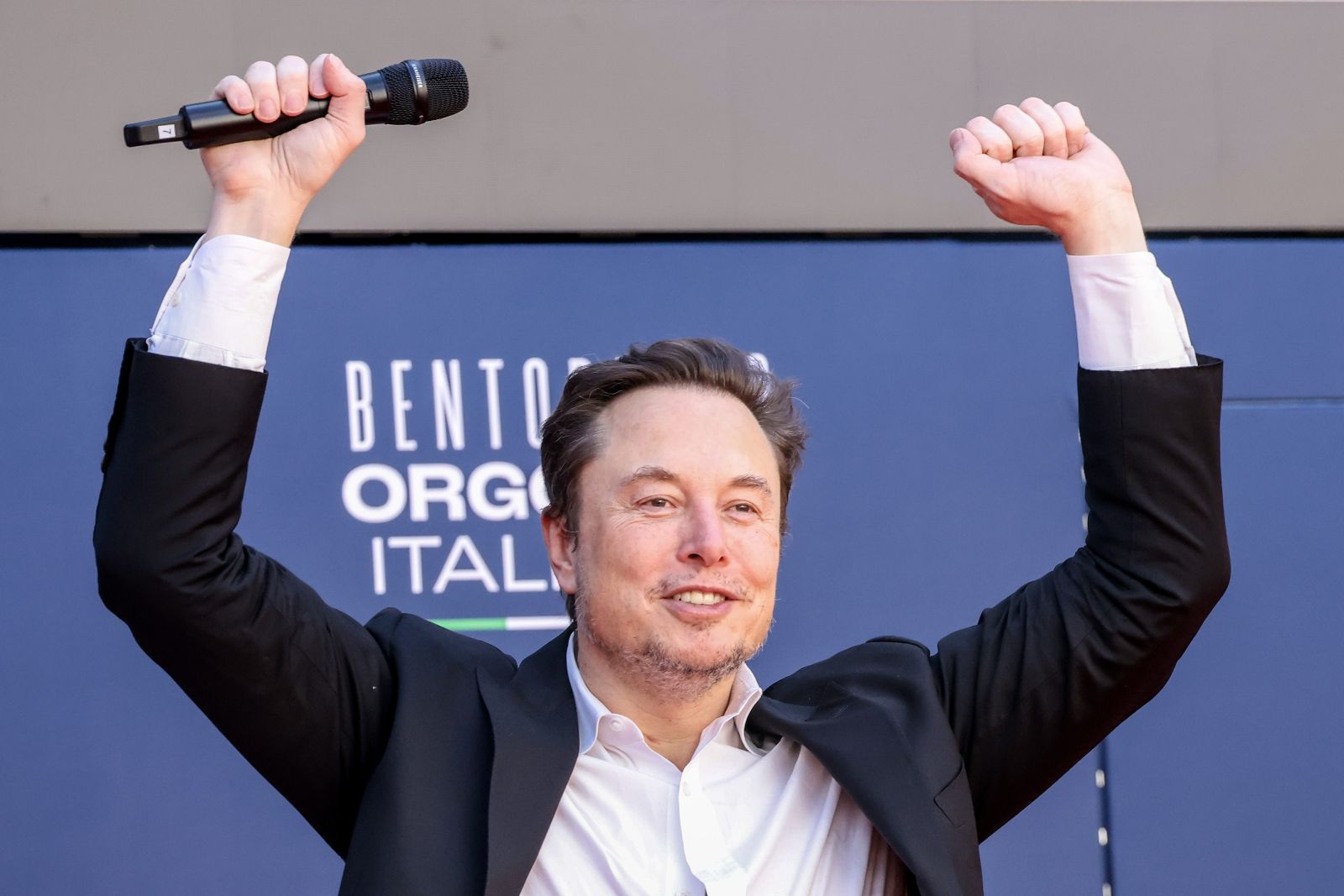
Amidst the hum of industrial innovation inside Tesla’s (TSLA) Gigafactory in 2022, CEO Elon Musk — never one to shy away from bold statements and predictions — delivered a message rooted in the very premise that has motivated him to become the founder of many of the most prominent and exciting names in tech. Speaking with TED’s Chris Anderson just before the factory’s grand opening, Musk expressed concern over a rising tide of despair about what lies ahead. The comment was anything but trivial: “A lot of people are sad about the future... We want to be excited about what’s going to happen.”
Three years later, the quote feels even more resonant. The “Space Age” of the 1960s propelled generations of Americans to dream big and imagine a world beyond the stars. Landing that pinnacle role as a NASA astronaut — and thereby earning the opportunity to be at the forefront of humanity's technological ascension — became the raison d'être of millions. What once inspired droves of starry-eyed children to dedicate their lives to becoming the world’s leaders in STEM continues to dissipate.
According to the National Literary Institute, 40% of students across the nation now cannot read at a basic level. And according to YouGov, the top dream job for teens aged 13–17 is becoming a YouTuber. Astronaut? Not even in the top 15. As roles like streamer, professional gamer, and influencer continue to rise to the top, careers driven by ambition, selfless service, and technological progress have steadily declined in ranking. This cultural shift has coincided with a mental health epidemic, where nearly 15% of American youth now experience major depression, according to Mental Health America.
This isn’t to say one career path is inherently better or worse than another. Rather, the point is this: Chasing money rarely brings fulfillment. While the adage “money can’t buy happiness,” along with countless other warnings about greed, may feel overused, there’s truth in it. People are far more likely to find lasting fulfillment through the pursuit of the greater good, technological innovation, and the selfless betterment of humanity. And what better way to ensure a lifetime of meaning than by striving toward the seemingly unachievable?
Don't Miss:
- Think it’s too late to invest in the booming AI sector? This one’s still under the radar
- China Just Triggered a Semiconductor Supply Crisis — And Investors Are Flocking to Fund This U.S. Startup as One of the Only Solutions
Deeply Personal
To dismiss Musk’s words as corporate posturing is to ignore the pattern. Whether it’s electrifying the auto industry, slashing launch costs for rockets, or dabbling in brain-computer interfaces, Musk’s work has consistently revolved around a singular premise: The future can be better — and more exciting — but it’s going to require people to build it.
For Musk, technological ambition is deeply personal. His ventures aren’t just products or platforms; they’re provocations — invitations to imagine a world where we solve climate change, colonize Mars, and integrate AI-enhanced networks to push humanity further. When he says people are losing faith in the future, he’s not speculating. He’s responding to a crisis of imagination and purpose.
From South Africa to Silicon Valley: A Life Engineered Around Tomorrow
Born in Pretoria, South Africa, Musk’s trajectory from precocious coder to the world’s wealthiest man has been well documented. But beneath the surface of his entrepreneurial success lies a consistent thread: an obsession with what’s next.
His early ventures — Zip2 and PayPal (PYPL) — only scratched the surface. But it’s companies like Tesla and SpaceX that have entrenched Musk as a cultural figurehead for futurism. He’s not just building cars and rockets; he’s attempting to rewire humanity’s trajectory.
The Gigafactory, where he delivered that 2022 TED quote, is symbolic of that effort. Designed to mass-produce batteries at a scale unlike anything else on the planet at the time, the site is part of Musk’s broader push to accelerate the world’s transition to sustainable energy. It’s not just a factory — it’s a foothold in the future.
Why Musk’s Words Matter — Even If You Don’t Like Him
Elon Musk is polarizing by design. Critics call him erratic, overpromising, and needlessly provocative. Supporters view him as a visionary whose impatience is a feature, not a bug.
But few would deny his influence. Musk occupies a rare space where private ambition actively shapes public discourse — and policy. Whether tweeting about AI safety or questioning the pace of government bureaucracy, he has a knack for making big ideas impossible to ignore.
His 2022 quote reflects that unique blend of pragmatism and idealism. At a time when public sentiment around the future is tinged with anxiety, political unrest, and fears of automation, Musk’s insistence that we must look forward to tomorrow is more than motivational fluff. It’s a counter-narrative to despair.
A Reason for Optimism
Here’s the thing: Musk’s worldview — at times extreme, often grandiose — offers something increasingly rare in public life. A reason to believe that technological progress can still serve human joy, not just economic utility.
When Musk urges us to be excited about the future, he’s not pitching a product. He’s issuing a challenge: What are we building? Why does it matter? And how do we rekindle a sense of wonder in a world that feels perpetually on edge?
That challenge may not come with easy answers. But coming from a man whose ambitions include Martian cities and neural implants, it feels less like a pipe dream — and more like a provocation we can’t afford to ignore.
On the date of publication, Caleb Naysmith did not have (either directly or indirectly) positions in any of the securities mentioned in this article. All information and data in this article is solely for informational purposes. For more information please view the Barchart Disclosure Policy here.


/Sign%20of%20Intel%20at%20entrance%20%20by%20michaelmond.jpeg)

/NVIDIA%20Corp%20logo%20outside%20building-by%20BING-JHEN_HONG%20via%20iStock.jpg)