



This is sponsored content. Barchart is not endorsing the websites or products set forth below.
Before 1908, cars were toys for the ultra-wealthy. Then Henry Ford built the Model T, and within two decades, 60% of American families owned one. That's what happens when someone cracks the affordability problem in a category that's ready to explode.
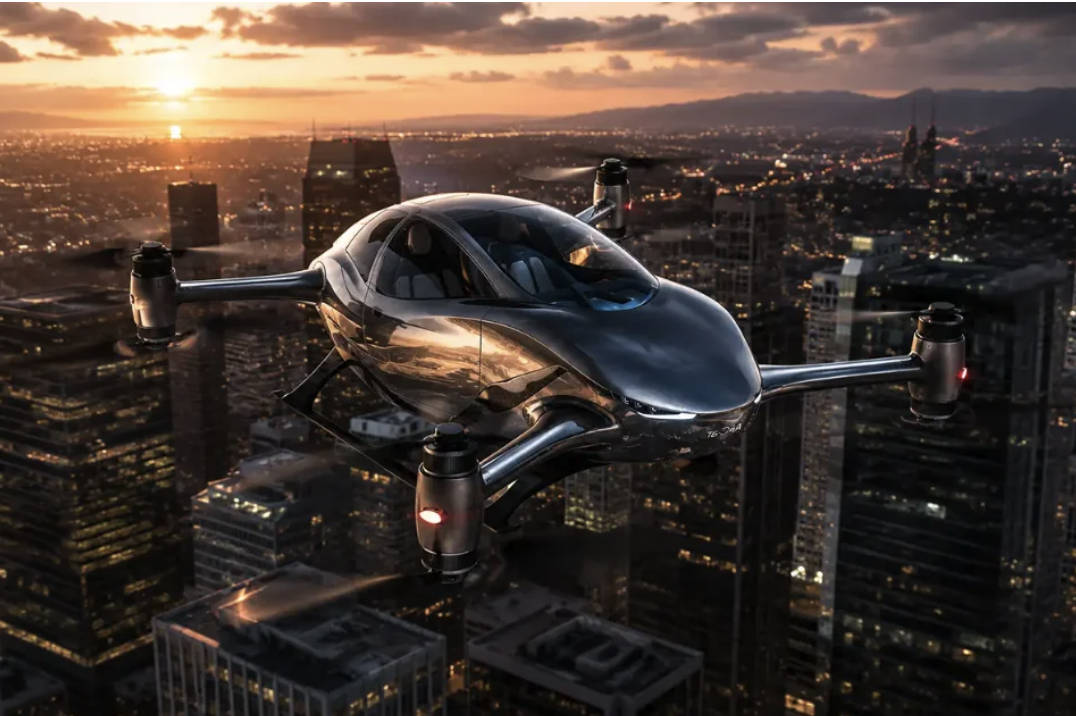
AirCar just did that for flying cars. At $99,000, four times more affordable than the nearest competitor, the LightSport is the Model T moment this market has been waiting for. And the investment window is open right now.
How AirCar Lowered the Cost of eVTOL Production
Most companies in the eVTOL space are building for the top of the market. Autonomous air taxis. Premium aircraft targeting commercial operators and high-net-worth buyers. Price points in the $400,000 to $600,000 range that position flying cars as a luxury product for a narrow slice of the population.
At $99,000, AirCar’s LightSport sits at a price point that moves flying cars from the luxury category into the realm of aspirational but achievable. How? They build everything in house, from carbon fiber airframes to 400V motors, hitting ~50% target margins where competitors can't compete.
The eVTOL market has been waiting for a solution like this.
A $4.4B Market on the Verge of Liftoff
In 2024, the global eVTOL market was valued at $4.4 billion. By 2030, it's projected to reach $28.6 billion. That's 550% growth in six years, a rate that outpaces the smartphone market in its first six years of mainstream adoption, and significantly outpaces the electric vehicle market between 2017 and 2023, which was already considered one of the defining investment stories of the last decade.
Several forces converging at once are driving that growth. Urban congestion has reached a breaking point in cities around the world, and ground-based infrastructure has proven consistently inadequate to solve it. Battery technology has advanced to the point where electric aviation is not only viable but increasingly practical at consumer price points. Regulatory bodies, including the FAA, are actively building frameworks to accommodate this new category of aircraft. And consumer appetite, long primed by decades of popular culture and increasingly by real-world demonstrations, is translating into genuine, deposit-backed demand.
The demand exists, the technology works, and the regulatory pathway is forming. The question for investors isn't whether the eVTOL market will grow, but whether they want to be positioned before that growth peaks.
Why AirCar's Traction Matters
In early-stage investing, the difference between a compelling story and a compelling opportunity is traction. AirCar has traction.
More than 1,000 manned test flights across 10 successful prototypes. That's a flight record, one of the most substantial proof-of-concept datasets in the personal eVTOL category, built over years of real-world testing.
$21 million in deposit-backed pre-orders from 200+ customers. In a category where vaporware is common and timelines routinely slip, deposits from real customers are a meaningful demand signal.
FAA MOSAIC certification in progress, with first deliveries projected roughly 12 months out. MOSAIC is the regulatory framework specifically designed for Light Sport Aircraft, and AirCar's LightSport has been engineered with that pathway in mind from the beginning.
Together, these proof points tell a consistent story: this is a company that has built the thing, flown it, priced it competitively, found real customers willing to put money down, and is moving through the final regulatory hurdle toward delivery.
The Window Investors Are Looking At
There's a pattern to the way transformative markets develop. First, the technology exists but only at the high end: expensive, inaccessible, and largely dismissed by mainstream audiences. Then someone cracks the affordability problem. Then, adoption accelerates faster than almost anyone predicted. Then it becomes obvious.
We've seen this play out across categories. The personal computer was a hobbyist toy until it wasn't. The internet was a niche curiosity until it wasn't. The smartphone was a luxury item until it wasn't. In each case, the investors who moved early, before the category became consensus, captured the most significant returns. The investors who waited for certainty got in at a very different price.
The flying car market is in that early window right now. AirCar is the company that has cracked the affordability problem. The product is built, the flights are logged, the pre-orders are real, and the regulatory path is clear.
Most retail investors will wait for the IPO headlines, read the coverage when the first major exit happens, calculate what they would have made, and move on to the next thing. That's how most people engage with early markets. The mainstream arrives after the story is written.
A smaller group of investors will look at the same set of facts and reach a different conclusion. The product is real, the market is growing at 550% over six years, and the price point solves the affordability problem that has limited the category. The window is open.
That window doesn't stay open indefinitely. As FAA certification progresses and first deliveries begin, the investment profile changes, the early-stage risk premium compresses, and the price of entry increases. The terms available today aren't the terms that will be available after the first delivery lands.
The Proof Points at a Glance
For investors who want the headline numbers before going deeper:
- 1,000+ manned test flights across 10 successful prototypes
- $21M in deposit-backed pre-orders from 200+ customers
- $99,000 price point, 4X more affordable than the nearest competitor
- FAA MOSAIC certification in progress, first deliveries roughly 12 months out
- eVTOL market projected to reach $28.6B by 2030, 550% growth from 2024
AirCar has already done the hardest part: built the product, proven it works, and found customers willing to pay for it.
The 1908 Moment Is Now
Henry Ford didn't invent the automobile. What he did was solve the problem that had kept it out of reach for most of the world: the cost. When he solved it, he created an entirely new market, infrastructure, and way of life for millions of people.
AirCar has done the same thing in its category. The flying car existed before the LightSport. What didn't exist was a flying car at $99,000: a price point that moves the product from novelty to attainable.
The investors who recognized the Model T moment in 1908 had conviction based on a real product, price breakthrough, and market waiting to be unlocked.
That same moment is available right now. Invest in AirCar by 07/13 to receive 10% bonus shares.
This is a paid advertisement for AirCar's Regulation A offering. Please read the offering circular and related risks at invest.aircar.com/. Barchart has not reviewed, approved, or endorsed the content and was paid $3.00 per click for placement and promotion of the content on this site and other forms of public distribution covering the period of June-July 2026.



/A%20photo%20of%20a%20Sandisk%20Solid%20State%20Drive%20by%20Top%20Popular%20Vector%20by%20Shutterstock.jpg)
/AI%20(artificial%20intelligence)/Data%20Center%20by%20Caureem%20via%20Shutterstock%20(2).jpg)
