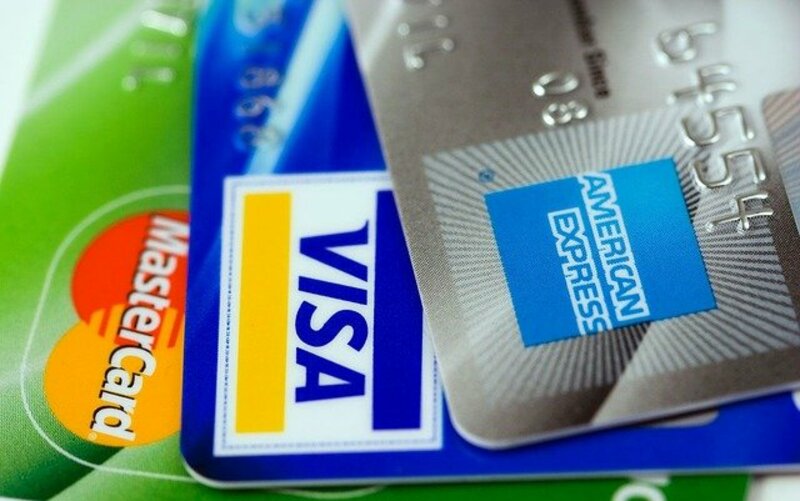
While various questions surround the state of the economy, American Express (AXP) – and more specifically its latest earnings report – may have offered some clarity. With the company’s fourth-quarter profits jumping 23% from the year-ago period, investors took that as a positive sign of forward viability. The usually quiet AXP stock shot up 7% on Friday following the financial disclosure.
Significantly, the optimistic print follows an impressive showing by the U.S. economy during the final three months of 2023. Delivering a 3.3% growth rate, the American machinery represented a picture of resilience against seemingly relentless inflation and the subsequent rise in interest rates to tame it. By these figures, it would seem foolish to bet against AXP stock.
At the same time, one has to wonder how long consumers can keep opening their wallets. For those who believe in the glass-half-full narrative, American Express reported a considerable rise in maintained balances – up 17% from last year. Theoretically, this dynamic translates into more interest income for the credit card issuer.
Nevertheless, AmEx also reported a rise in delinquencies and credit losses and that raised eyebrows among market observers. After all, the company’s cardmembers tend to be more financially stable and are likelier to pay off balances by the end of each month.
Sure enough, data from the U.S. Bureau of Economic Analysis showed that last year, the personal saving rate jumped to a high of 5.3% before eventually settling down to 3.7% in December. Stated differently, as the monetary policy paradigm changed, so did consumers’ behaviors. Rather than spend money, they saved it, which makes sense. Higher rates reward savings – or at the very least penalizes spending through opportunity costs.
So, it makes sense that more than a few traders believe that AXP stock has become overextended. But with the Federal Reserve is hinting at interest rate cuts, can the bulls continue to ride the northbound wave?
Bulls and Bears Clash Over AXP Stock
Unsurprisingly, given the strong Q4 performance, AXP stock represented one of the top highlights in Barchart’s screener for unusual stock options volume. Specifically, total volume reached 133,106 contracts against an open interest reading of 283,519. Notably, the delta between the Friday session volume and the trailing one-month average metric came out to 512.54%.
Drilling down, call volume hit 81,217 contracts while put volume landed at 51,889 contracts. This pairing yielded a put/call ratio of 0.64, on paper favoring the bulls. Turning to Fintel’s options flow screener – which exclusively filters for big block trades likely made by institutions – a few major trades stood out:
- 557 contracts sold of the Feb 9 ’24 187.50 Put (with a premium received of $10,500).
- 655 contracts sold of the Mar 15 ’24 160.00 Put (with a premium received of $6,400).
- 532 contracts sold of the Feb 9 ’24 185.00 Put (with a premium received of $8,500).
As notable as these trades are – because big institutions probably placed them – the income generated is rather miniscule. Essentially, these sold puts imply that investors would be comfortable buying AXP stock at the listed strike prices should it fall to these levels. In the meantime, the put writers will happily collect the income. Fundamentally, sold puts represent a neutral to bullish sentiment.
However, the biggest transaction in the options flow screener by far was the 1,694 contracts sold of the Apr 19 ’24 210.00 Call. Here, the premium received stood at $424,530. That’s an aggressive wager that AXP stock won’t materially rise above the $210 strike, which is only about 4.3% away from Friday’s close. If AXP does shoot past this level, the call writer must sell shares at the lower strike price.
However, circumstances could get very interesting if the call writer doesn’t have all the “physical” securities necessary to cover the position if AXP stock goes awry against the short call position. In that case, the writer may be forced to buy AXP in the open market, only to sell it at a loss at the strike price.
Sustained Optimism Not an Unreasonable Outcome
Interestingly, AXP’s gamma exposure (GEX) score sits at -1. Fundamentally, a negative GEX means that as the target security rises in value, the underlying options position becomes less sensitive to further increases. That makes sense amid the heavy interest in sold calls. Essentially, a rising price in AXP stock makes the short call less valuable.
Moving forward, investors should keep a close eye on the GEX. If the metric gets increasingly larger (as in, becomes a bigger negative number), those holding short call positions against AXP stock will likely see their losses amplified for every move higher that AmEx makes in the open market. And that would raise the risk profile that AXP may become subject to a gamma squeeze.
Fundamentally, it’s not out of the question that AXP stock could swing higher from its already-elevated perch. While increased balance carryover is a concern, AmEx cardholders at the end of the day tend to be better off than the average consumer. Let’s face it – if AmEx cardholders began waiting in the bread line en masse, we would be having bigger problems than deciphering AXP’s GEX score.
So, American Express is probably a buy. But if nothing else, I would avoid shorting it. The data argues against this daring position.
More Stock Market News from Barchart
- KO vs. PEP: Which Dividend Aristocrat is a Better Buy Right Now?
- Interest Rates: 30-Year Yields are Calling Out Powell's Cuts
- Why Is Disney Stock So Low, While Netflix Stock Is Soaring?
- Stocks Finish Mixed as a Slump in Intel Weighs on the Overall Market
On the date of publication, Josh Enomoto did not have (either directly or indirectly) positions in any of the securities mentioned in this article. All information and data in this article is solely for informational purposes. For more information please view the Barchart Disclosure Policy here.

/Micron%20Technology%20Inc_%20logo%20on%20building-by%20vzphotos%20vis%20iStock.jpg)
/A%20hand%20holding%20a%20phone%20with%20the%20Reddit%20logo_%20Mamun_Sheikh%20via%20Shutterstock_.jpg)