



/PayPal%20Holdings%20Inc%20logo%20on%20phone-%20by%20bizoo_n%20via%20iStock.jpg)
San Jose, California-based PayPal Holdings, Inc. (PYPL) operates a technology platform that enables digital payments for merchants and consumers worldwide. The company has a market capitalization of $39.9 billion and operates a two-sided network at scale that connects merchants and consumers, enabling its customers to connect, transact, and send and receive payments online and in person.
Companies with a market cap of $10 billion or more are typically referred to as “big-cap stocks.” PYPL fits right into that category, with its market cap exceeding this threshold, reflecting its substantial size and influence in the credit services industry.
However, the stock currently trades 44% below its 52-week high of $79.50 recorded on Jul. 28, 2025. PYPL has declined 2.4% over the past three months, underperforming the State Street Financial Select Sector SPDR ETF’s (XLF) marginal rise during the same time frame.
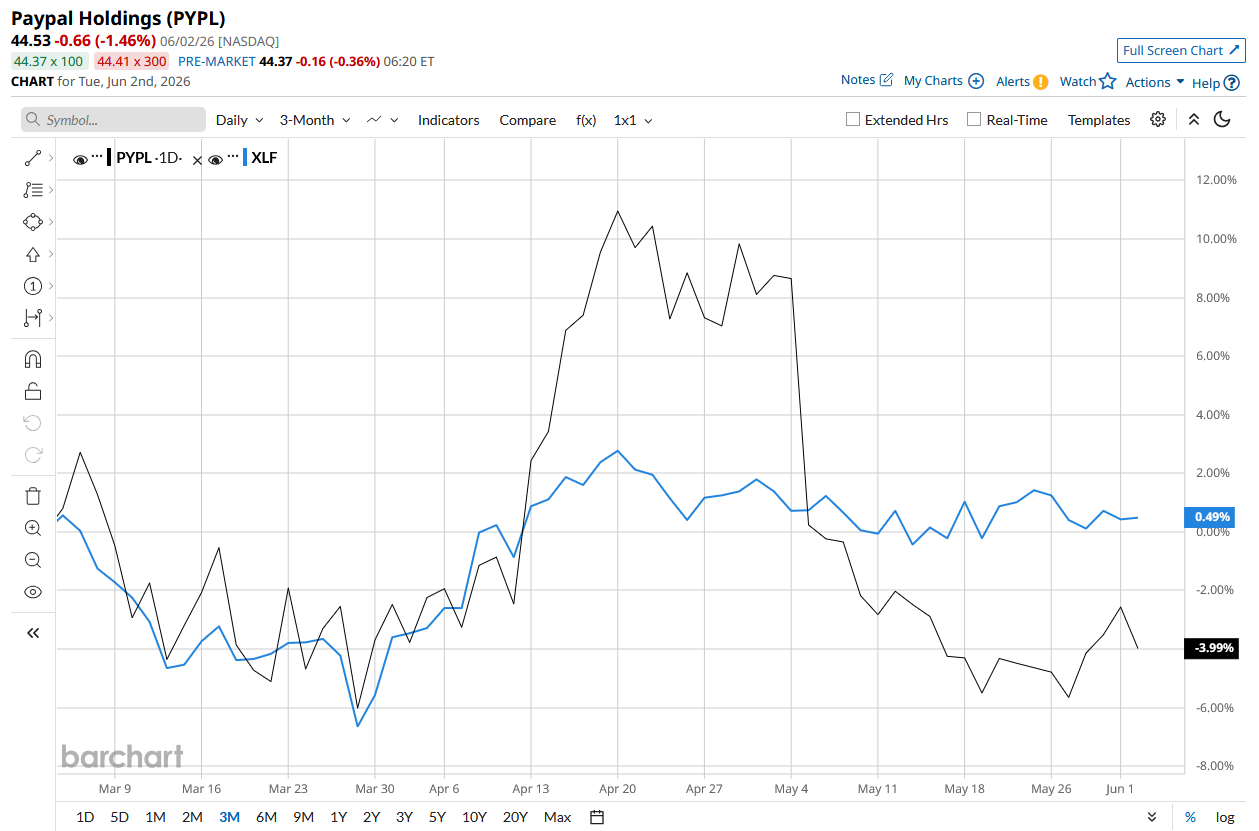
In the longer term, PYPL has delivered a similar performance. The stock has declined 37.2% over the past 52 weeks, underperforming the marginal rise of XLF over the same period. PYPL has been trading below its 200-day moving average since last year, and below its 50-day moving average since last month.
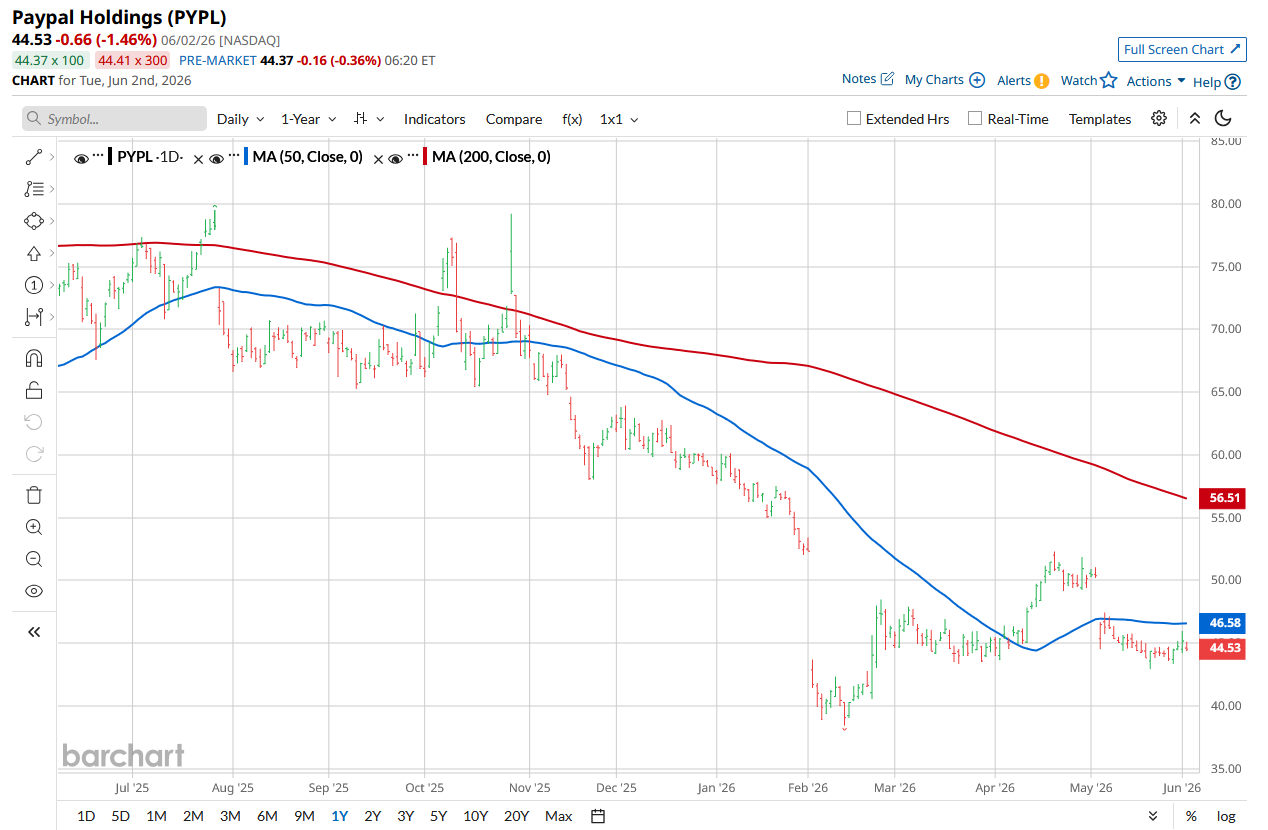
On May 5, PYPL stock declined 7.7% following the release of its Q1 2026 earnings. The company’s revenue rose 7.2% from the prior year’s quarter to $8.4 billion and surpassed the Street’s estimates. Moreover, its adjusted EPS came in at $1.34, also coming in on top of Wall Street’s estimates. However, investors were not fans of the company’s Q2 outlook, which called for a single-digit decline in adjusted earnings for the current quarter.
When stacked against its rival, SoFi Technologies, Inc. (SOFI) has surged 29.8% over the past year, rallying PYPL.
Wall Street has a skeptical view of the stock currently. Among the 44 analysts tracking DE, the overall consensus stands at a “Hold.” Its mean price target of $49.44 suggests 11% upside potential from current price levels.
On the date of publication, Aritra Gangopadhyay did not have (either directly or indirectly) positions in any of the securities mentioned in this article. All information and data in this article is solely for informational purposes. For more information please view the Barchart Disclosure Policy here.

/Amazon_com%20Inc_%20%20package%20by%20-%20AdrianHancu%20via%20iStock.jpg)
/Salesforce%20Inc%20HQ%20building-by%20JHVEPhoto%20via%20Shutterstock.jpg)

/Dell%20Technologies%20by%20Poetra_RH%20via%20Shutterstock.jpg)
/Intel%20Corp_%20Santa%20Clara%20campus-by%20jejim%20via%20Shutterstock.jpg)