
In May 2022, nearby ICE cotton futures prices reached $1.5802 per pound, the highest levels in over a decade since 2011. Since then, the soft commodity has made lower highs and lower lows and was under half the price at the high on March 22, 2023.
On December 14, 2022, when cotton was at the 81.41 cents per pound level on the nearby ICE futures contract, I wrote, “Cotton is Consolidating.” While my article on Barchart suggested the price could move back to the $1 per pound level, the May futures contract failed at below 90 cents and was below 79 cents on March 22. So far, a seasonal rally has not materialized, and cotton futures remain in a bearish trend. A continuation of lower highs and lower lows now depends on Mother Nature over the coming weeks and months.
The iPath Series B Cotton Subindex TR ETN product (BAL) tracks cotton futures prices higher or lower.
A bearish trend since May 2022
In May 2022, nearby ICE cotton futures rose to the highest price since 2011, reaching $1.5802 per pound.
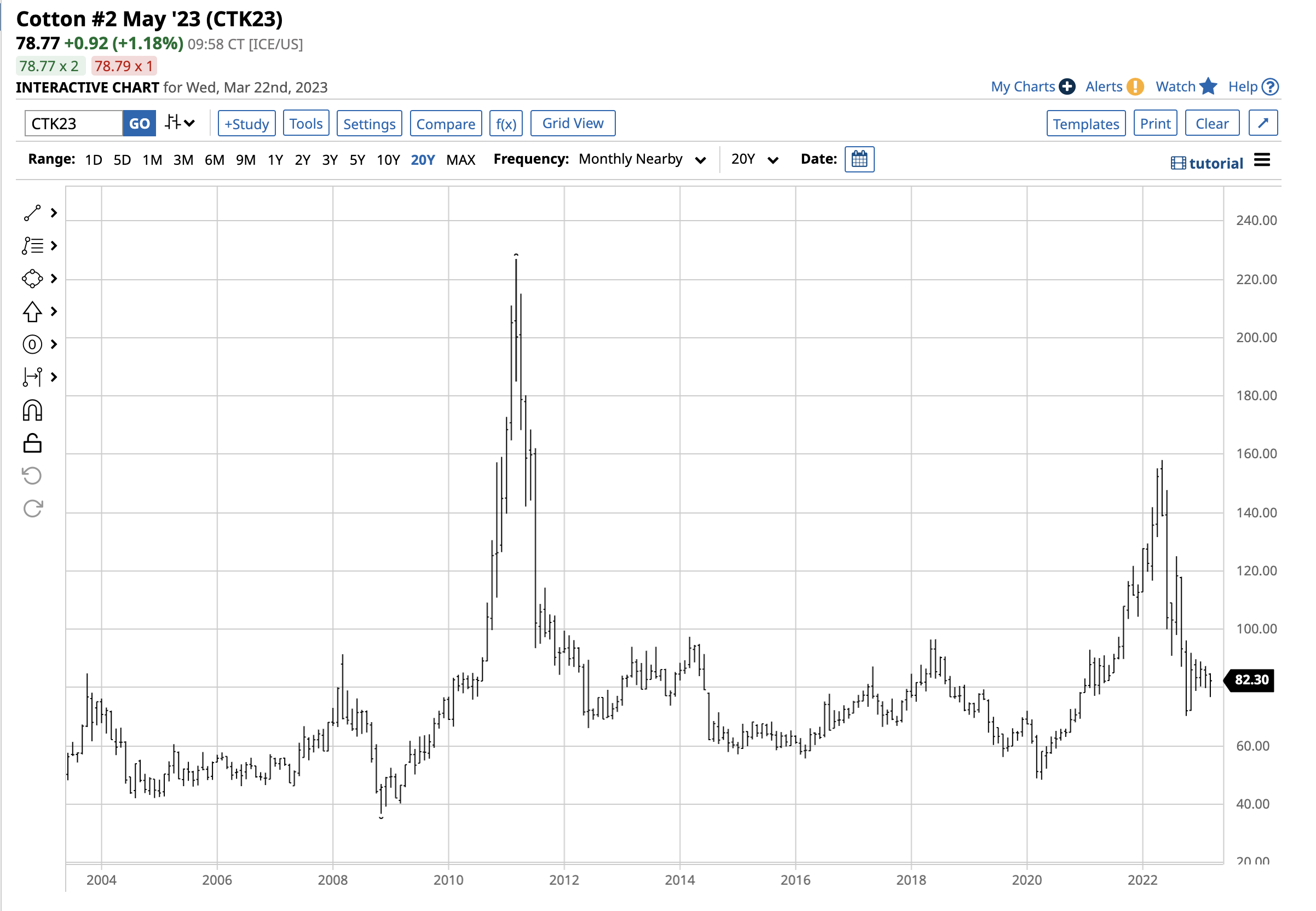
The chart highlights cotton has made lower highs and lower lows since the May 2022 high. Cotton traded to a 70.21 cents per pound low in October 2022, and at just under the 79 cents level on March 22, the futures were still at half the price of the 2022 high and in a bearish trend.
Seasonal highs in spring but no signs of a rally in 2023
Cotton tends to make seasonal highs during spring and early summer.
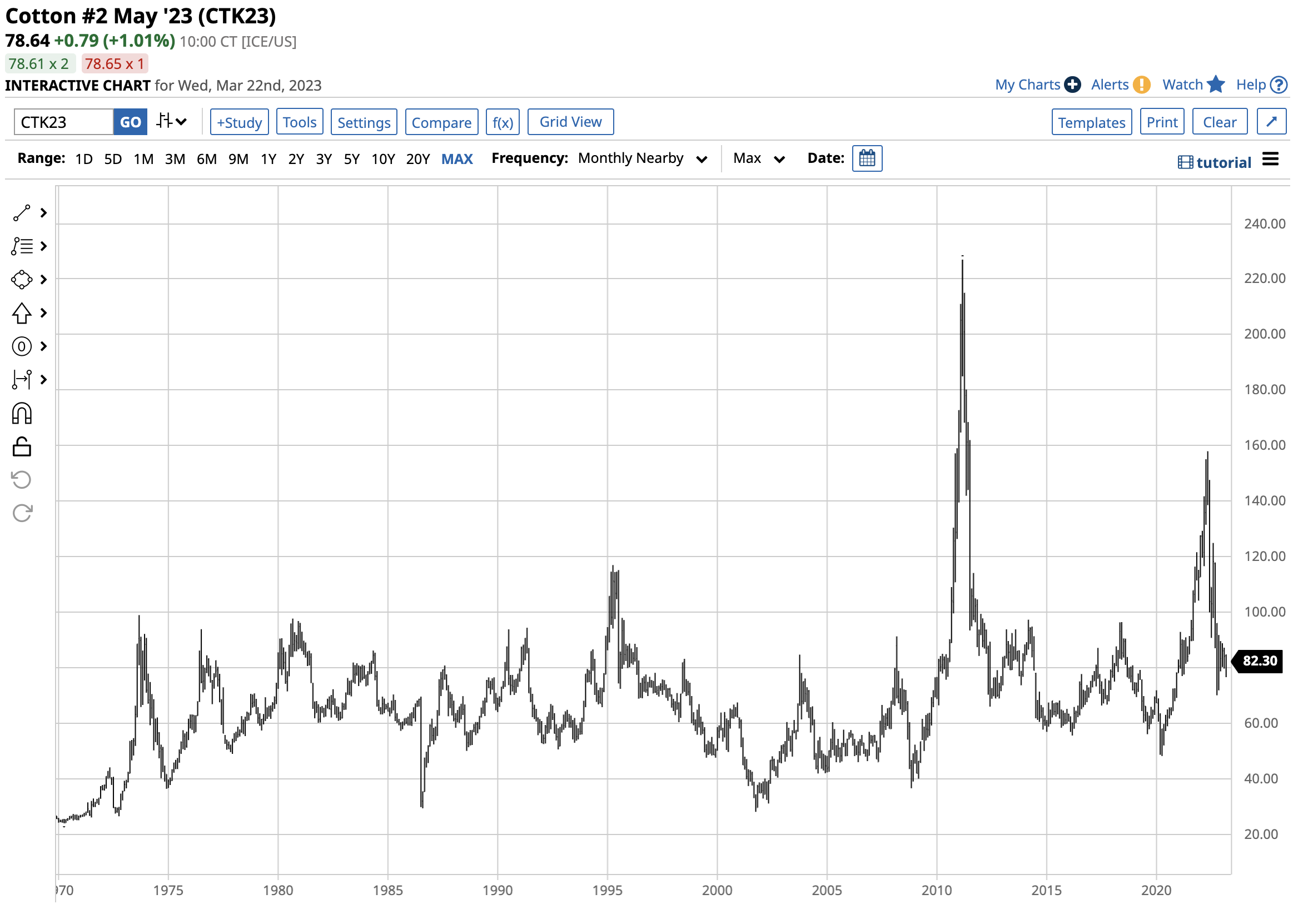
The long-term chart dating back to the late 1960s shows highs tend to occur during the uncertainty of the annual northern hemisphere planting season. The 1995 peak was in April, the 2011 record high occurred in March, and the 2022 high was in May. In late March 2023, there are few signs of a developing rally.
Spikes higher have led to long consolidation periods
The long-term chart shows that explosive rallies in cotton have led to multi-year corrections over the past half-century. In the world of commodities, the cure for high prices is always those high prices. When cotton or other raw material prices spike higher, it encourages producers to increase output. At the same time, high prices dampen the demand, adding to price pressures and long periods of price weakness, followed by consolidation.
Nearby cotton futures reached a 70.21-cents low in October 2022, and since then, the price action in the May futures has been in a range from over 75 cents to below 90 cents as the market digests the correction. If the past price action is a guide, the consolidation period could continue to keep cotton prices rangebound.
It’s all about the weather
Cotton is an agricultural commodity with a twist. Cotton’s price path depends on the overall economy as it is the primary ingredient in clothing. A weak economy tends to cause people to spend less on clothes and other products that require cotton. Meanwhile, cotton supplies depend on the weather.
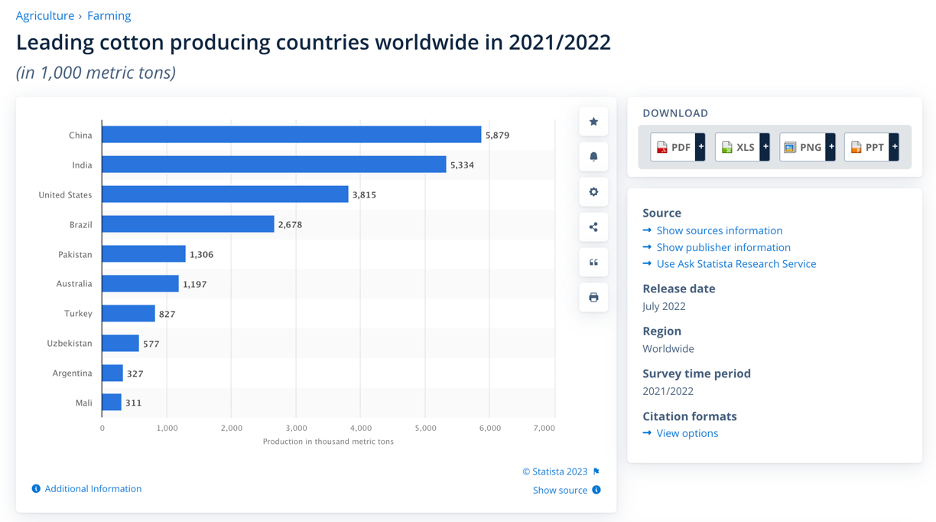
Source: Statista
The chart shows that the four leading cotton-producing countries are China, India, and the United States. As in most other commodities, China is the leading consumer.
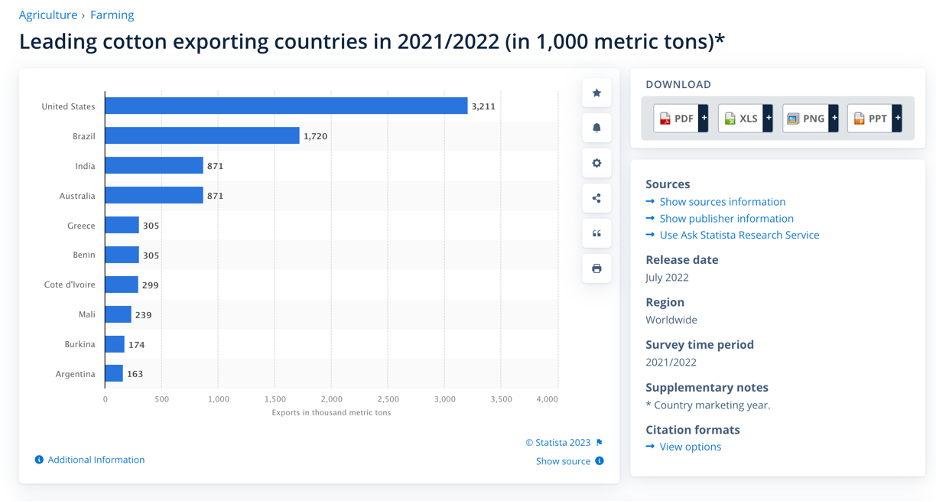
Source: Statista
The U.S. and Brazil export the most cotton, and the weather conditions each year is a significant factor for the path of least resistance of prices. Drought, floods, or other weather events can cause shortages that increase cotton prices. Meanwhile, inflation at the highest level in decades has caused input prices to rise, supporting cotton at below the 80 cents per pound level.
The USDA’s latest March 2023 World Agricultural Supply and Demand Estimates Report did nothing to push cotton prices higher from the current trading range:

Source: USDA March 2023 WASDE report
The summary shows that the USDA left U.S. supply and demand forecasts unchanged from the February report. Meanwhile, higher beginning and ending stockpiles and declining Brazilian exports kept cotton within its trading band. The USDA increased world ending stocks by 2.1 million bales, which was not bullish for the fluffy fiber futures.
BAL tracks cotton- The odds of a huge move are slim
The most direct route for a risk position in cotton is via the ICE cotton futures. The iPath Series B Cotton Subindex TR ETN product (BAL) tracks cotton prices higher and lower. At $55.88 per share on March 22, BAL had $12.235 million in assets under management. BAL trades an average of 1,805 shares daily and charges a 0.45% management fee.
May cotton futures rose from 70.40 cents on October 31, 2022, to 88.57 cents on November 16, a 25.8% rally.
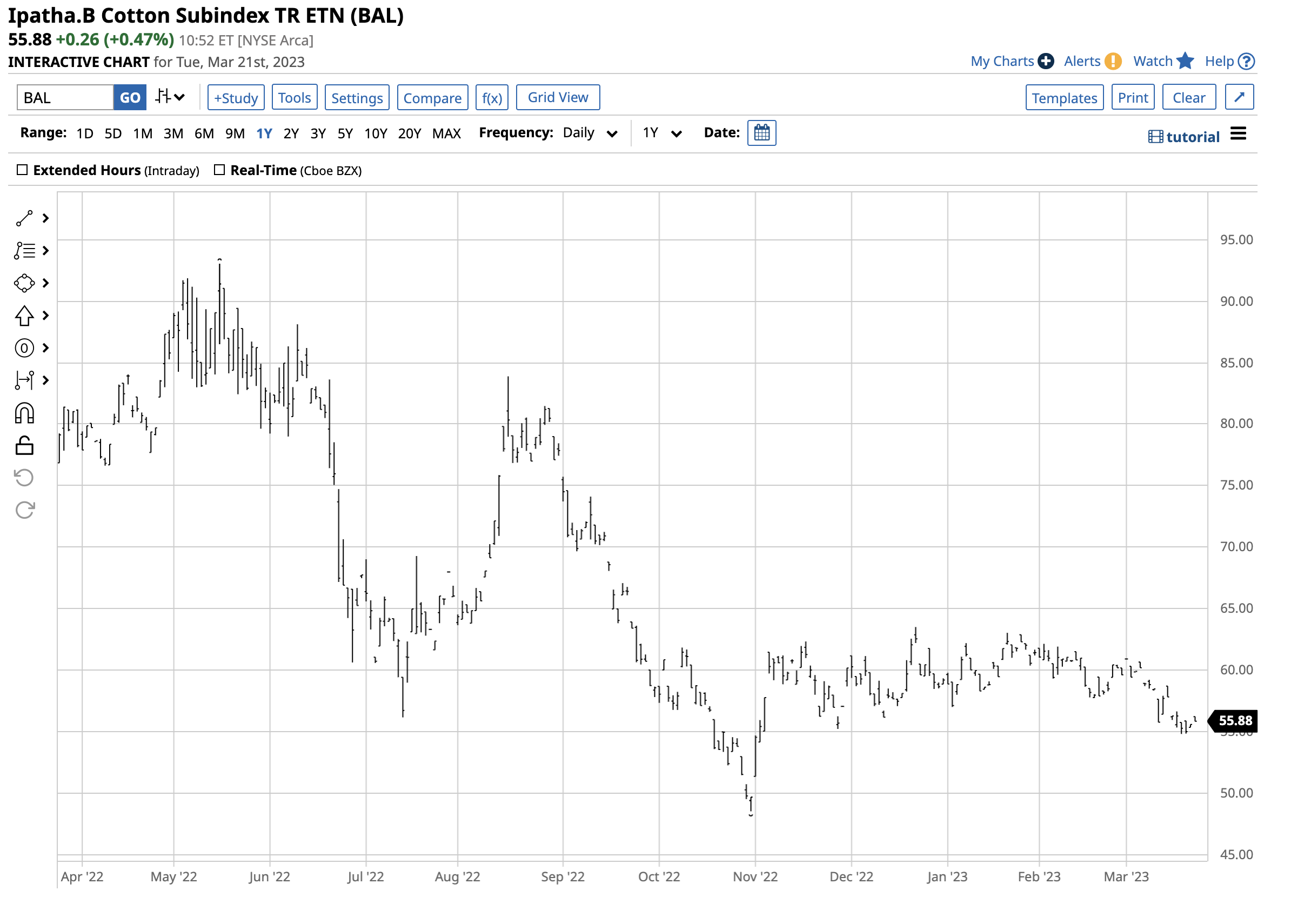
Over the same period, BAL moved from $48.58 to $62.35 per share or 28.3%. BAL does an excellent job tracking cotton prices, but like the thinly traded cotton futures arena, it can suffer from low liquidity.
Barring any significant weather event during the coming weeks and months, I expect cotton to remain in its current trading range as inflation supports the price. The global economy and adequate global stocks will likely prevent any upside spikes, as we witnessed in 2022.
More Softs News from Barchart
- Cotton Higher for Midweek
- Cotton Closes in Black on Tuesday
- Cocoa Prices Underpinned by Reduced Cocoa Supplies from Ivory Coast
- Sugar Closes Higher on Forecast for Smaller Global Surplus
On the date of publication, Andrew Hecht did not have (either directly or indirectly) positions in any of the securities mentioned in this article. All information and data in this article is solely for informational purposes. For more information please view the Barchart Disclosure Policy here.

/A%20close-up%20of%20a%20SpaceX%20sign%20by%20Sundry%20Photography%20via%20Adobe%20Stock.jpeg)

/AI%20(artificial%20intelligence)/AI%20chip%20by%203Dsss%20via%20Shutterstock.jpg)