



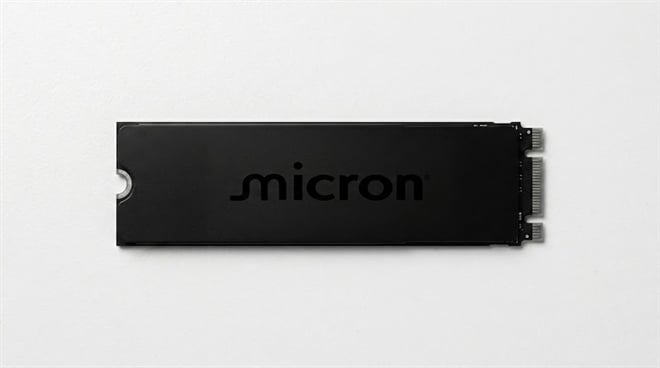
The artificial intelligence (AI) boom is creating a modern gold rush, with companies investing billions to build the powerful data centers that will define our technological future. In this race, it's easy to focus on the most visible tools, the picks and shovels, like the graphics processing units (GPUs) that command the spotlight.
However, every GPU, no matter how powerful, is dependent on a constant, high-speed flow of data. This has created a critical, often overlooked chokepoint in the global supply chain: specialized memory chips required to feed the AI engine.
This dynamic has placed memory manufacturers in an incredibly strategic position. As a key supplier of this essential technology, Micron Technology, Inc. (NASDAQ: MU) is at the epicenter of this structural shift. Micron's stock price has already seen a one-year gain of over 500% as the market awakens to the reality that demand for essential components is far outpacing the world's ability to produce them. For investors, understanding this memory deficit is fundamental to identifying the core opportunities of the AI economy.
Not a Cycle, But a Structural Memory Deficit
The current surge in memory demand is not a temporary, cyclical spike that has historically characterized the semiconductor industry. Instead, it represents a durable, long-term shift driven by the foundational architecture of artificial intelligence. The memory requirements for AI servers are vastly different from those of consumer-grade components.
Training and running large language models require High-Bandwidth Memory (HBM), a sophisticated technology that stacks memory dice vertically to create an ultra-wide information highway directly to the processor.
Manufacturing HBM is a complex and capital-intensive process that cannot be scaled up overnight. This has led to a prolonged supply deficit. Industry reports and company guidance confirm that Micron's production capacity for these high-margin memory products is largely sold out through the entire 2026 calendar year.
This multi-year pipeline of committed orders gives Micron an exceptional level of revenue visibility, providing a stable foundation for growth that is insulated from the typical boom-and-bust cycles of other hardware segments. The persistent, structural need for these specialized components appears poised to fuel Micron's performance for years to come.
How Demand Fuels a Powerful Balance Sheet
The impact of this tight supply environment is clearly visible in Micron's financial results. Micron is successfully converting immense demand into financial strength, a trend that has prompted Wall Street to take decisive notice.
An examination of the most recent earnings report from Dec. 17, 2025, reveals a company executing at a high level:
Explosive Revenue Growth: Revenue soared to $13.64 billion, a 56.7% year-over-year increase that comfortably surpassed analyst expectations. This top-line growth is a direct result of both higher shipment volumes and stronger pricing power.
Exceptional Profitability: Micron reported earnings per share (EPS) of $4.78, decisively beating the Wall Street consensus estimate of $3.77 by over a dollar. This level of outperformance signals excellent operational efficiency and cost management.
Powerful Margins: Net margins expanded to a robust 41.49%. For investors, this is a key indicator of a company's competitive advantage. It shows that Micron is not just selling more products; it is selling them at highly profitable prices due to their critical nature and limited availability.
This powerful financial performance has fueled a wave of optimism among analysts. Of the 37 analysts covering the stock, an overwhelming 33 have issued a Buy or Strong Buy rating. This confidence is solidified by recent, aggressive price target upgrades from firms such as UBS Group (to $535) and Lynx Equity (to $825), both of which point to Micron's clear and durable revenue stream as a core driver of future value.
A Long-Term Case for Micron in an AI-Powered World
For investors evaluating Micron, the combination of strong fundamentals and high market expectations warrants a strategic outlook. While the stock's remarkable one-year gain has led to some natural profit-taking by executives, a common occurrence after such a rapid ascent, the activity of institutional investors may tell a more compelling story.
Over the past 12 months, Micron has seen net institutional inflows of $8.72 billion, a strong signal that large-scale asset managers are continuing to build long-term positions.
The structural, multi-year demand for AI memory provides a powerful tailwind that is unlikely to diminish soon. For investors with a long-term focus on the AI infrastructure build-out, periods of market volatility, which are often tied to broader economic sentiment rather than company-specific fundamentals, might be considered potential entry points before taking a position.
Where Should You Invest $1,000 Right Now?
Before you make your next trade, you'll want to hear this.
MarketBeat keeps track of Wall Street's top-rated and best performing research analysts and the stocks they recommend to their clients on a daily basis.
Our team has identified the five stocks that top analysts are quietly whispering to their clients to buy now before the broader market catches on... and none of the big name stocks were on the list.
They believe these five stocks are the five best companies for investors to buy now...
The article "Memory Money: Data Is the New Oil, and Memory Is the New Pipeline" first appeared on MarketBeat.

/Super%20Micro%20Computer%20Inc%20HQ%20photo-by%20Tada%20Images%20via%20Shutterstock.jpg)

/Microsoft%20logo%20on%20building%20by%20franz12%20via%20iStock.jpg)
/Microsoft%20Corporation%20logo%20on%20sign-by%20Jean-Luc%20Ichard%20via%20iStock.jpg)
