




The U.S. is the world’s leading corn producer, and the coarse grain is the primary ingredient in ethanol production. Brazil is the top sugarcane producer and processes sweet commodity into biofuel.
Chicago ethanol swaps reached a record $3.45 per gallon high in November 2021. At the $2.2450 per gallon level on December 27, 2022, ethanol is at its highest price since 2014. While the war in Ukraine, sanctions on Russia, and Russian retaliation have increased fossil fuel prices, other factors support ethanol prices as we move into the New Year. Ethanol demand could continue to rise as the world addresses climate change with alternative and renewable fuels.
The war in Ukraine pushed gasoline to a record high in 2022
Russia’s early 2022 invasion of Ukraine pushed energy commodity prices to multi-year or all-time highs. Gasoline is the most ubiquitous fossil fuel product, and has risen to the highest price in history.
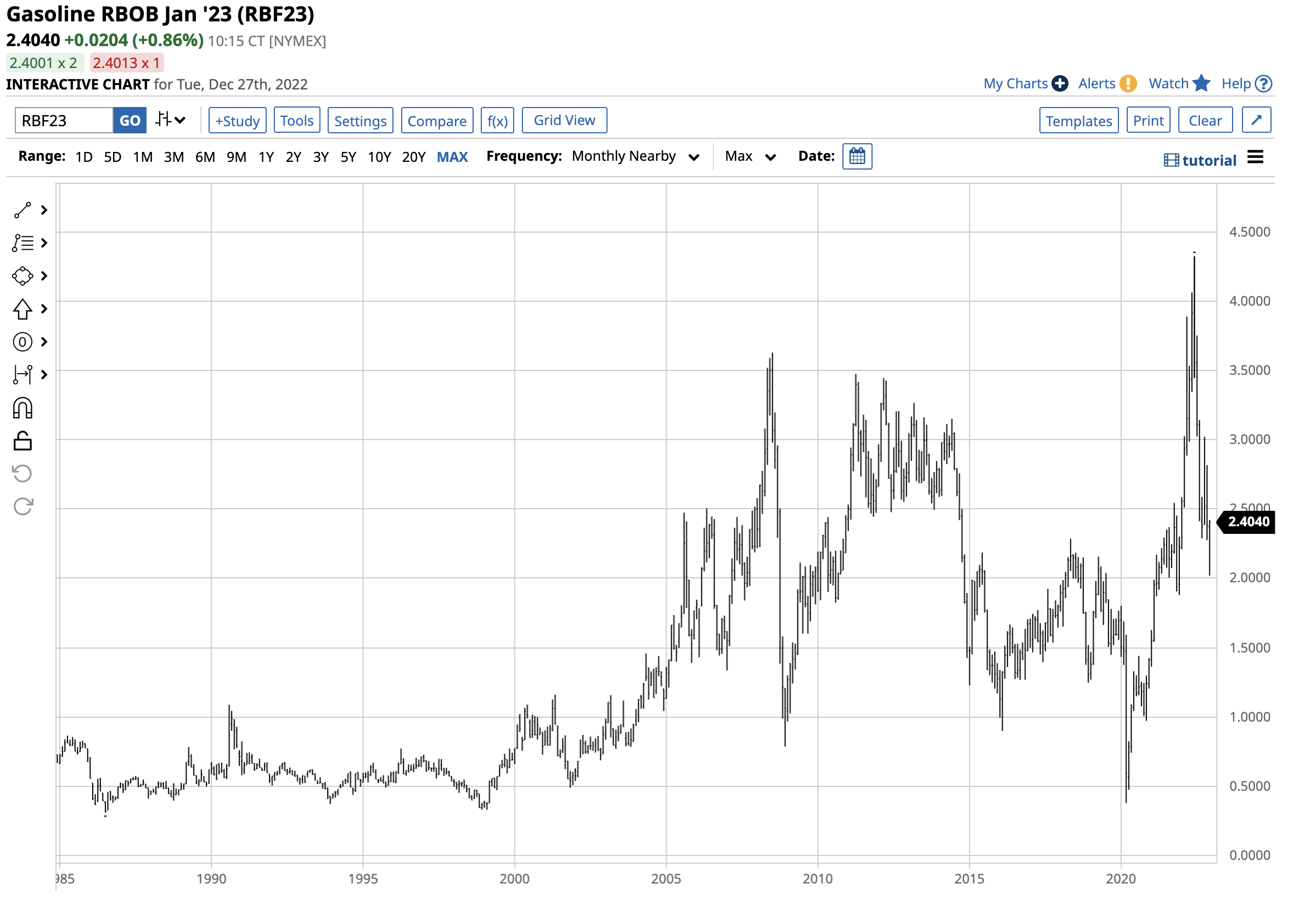
The chart highlights gasoline’s rise to a record $4.3260 per gallon wholesale high in June 2022 during the peak diving season. NYMEX gasoline futures broke above the previous all-time peak in March 2022 when the price surpassed the July 2008 $3.6310 per gallon level.
Rising gasoline prices put upward pressure on ethanol prices.
Environmental support for ethanol from U.S. energy policy
During his 2020 campaign, U.S. President Joe Biden pledged to address climate change. The Biden administration followed through on its promises with an energy policy that supports alternative and renewable fuels and inhibits the production and consumption of hydrocarbons. However, the world, including the United States, continues to run on fossil fuels. While there are more EVs on the road, gasoline-powered automobiles far outnumber electric cars.
The U.S. began adding ethanol to gasoline in the 1970s to lessen the dependence on petroleum from the Middle East. In August 2005, President George W. Bush signed the Energy Policy Act of 2005, requiring oil companies to add ethanol to their gasoline. The amount of ethanol in gasoline has increased over the past years. In June 2022, the Biden administration raised the ethanol blending requirements.
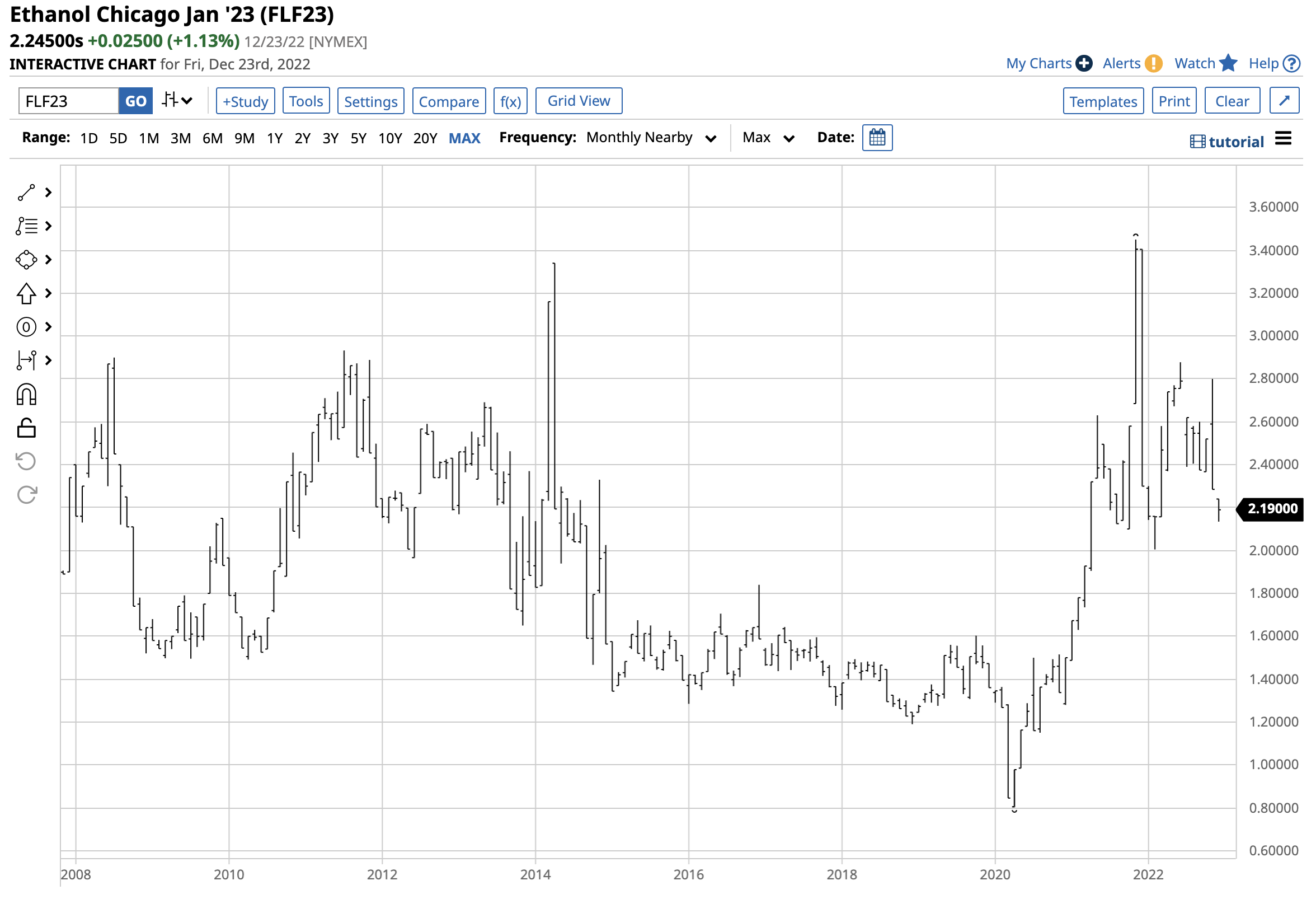
The chart of Chicago ethanol swaps illustrates the marginal new high in biofuel prices in November 2021 when the price rose to $3.45 per gallon wholesale, surpassing the April 2014 $3.34 high. At the $2.2450 level on December 27, ethanol prices remain at the highest pre-2021 level since 2014.
Addressing the environment has increased ethanol demand.
Corn and sugar prices are at multi-year highs
Corn and sugar, the primary ingredients in ethanol production in the United States and Brazil, were sitting at multi-year highs in late December 2022.
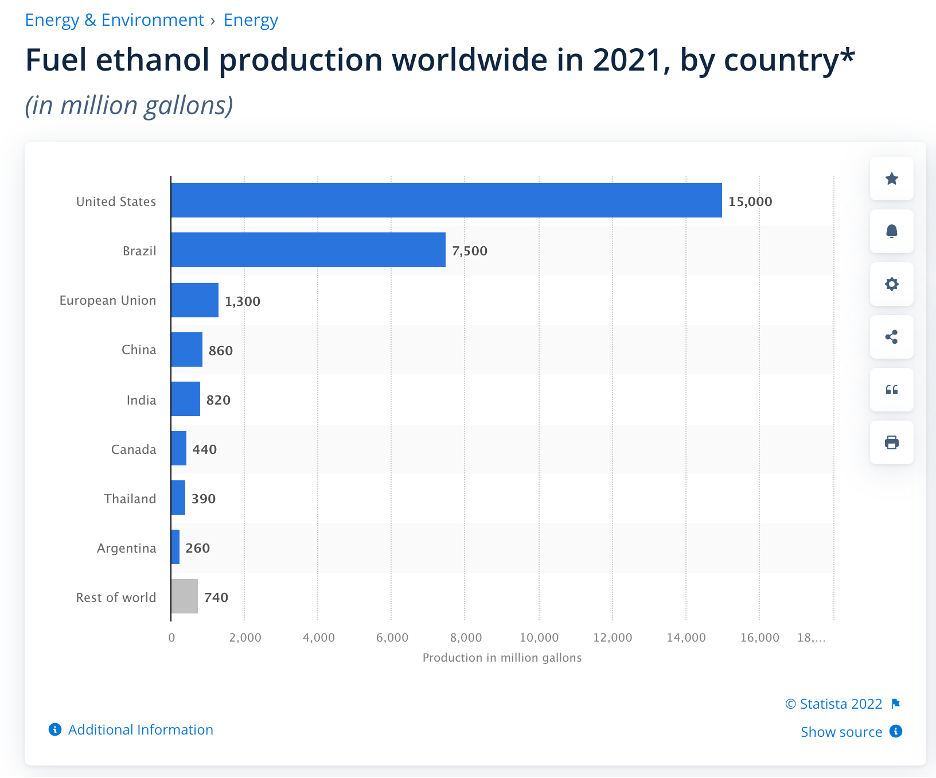
Source: Statista
The chart shows the U.S. and Brazil dominate the world’s ethanol output.
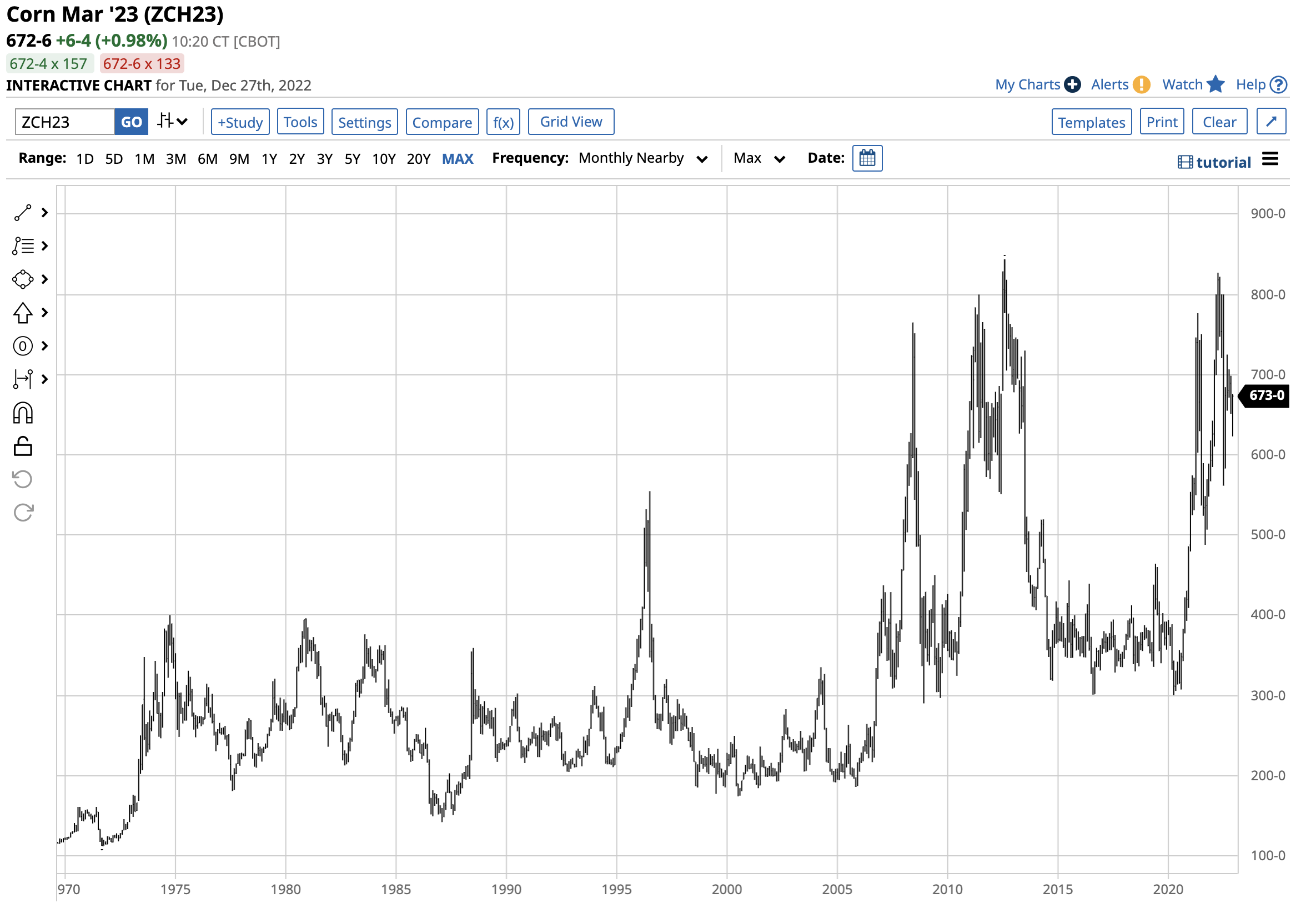
The long-term CBOT corn futures chart shows that at $6.7275 for March delivery, corn prices are at the highest level since 2013. While the war in Ukraine has caused corn production and exports from Europe’s breadbasket to decline, the robust ethanol demand has supported corn prices.
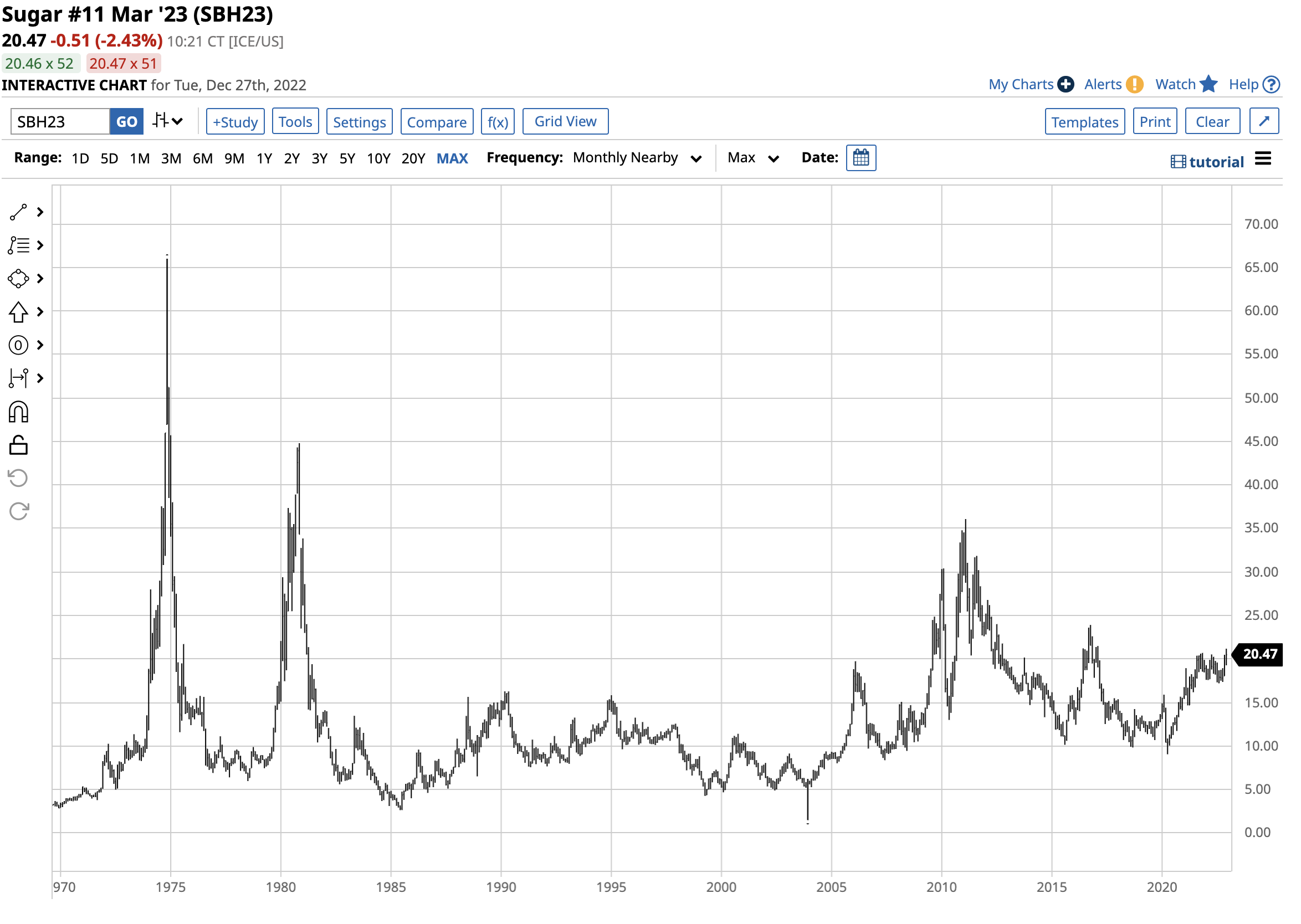
March ICE sugar futures prices at nearly 20.50 cents per pound level are trading at their highest since early 2017. The most expensive gasoline prices in years, environmental policies, and inflation have pushed ethanol, corn, and sugar prices higher.
The bull case for ethanol
As we head into 2023, the bullish case for ethanol includes:
- The war in Ukraine, sanctions on Russia, and Russian retaliation continue, creating fossil fuel supply concerns.
- The U.S. and European energy policies remain on a greener path that supports elevated ethanol prices.
- As China emerges from COVID-19 protocols, worldwide energy demand will rise.
- OPEC, the international petroleum cartel, is likely to keep upward pressure on oil prices as Russia is the most influential non-member, cooperating with the cartel on production policies.
The odds favor elevated ethanol prices in 2023.
The bearish case for ethanol
Meanwhile, several factors could change the ethanol bull into a bear in 2023 and beyond:
- An end to the war in Ukraine via a negotiated settlement with Russia would take the pressure off fossil fuel prices and ethanol.
- Rising recessionary pressures that cause the U.S., European, and global economies to contract would cause ethanol demand to decline.
- A shift in U.S. energy policy towards traditional fuels could pressure ethanol prices.
- Bumper corn and sugar crops in 2023 would make the inputs in ethanol production less expensive.
While there are bearish scenarios for biofuel in 2023, the odds continue to favor the upside. Agriculture is playing an increasing role in energy prices, and corn and sugarcane are the products that will continue to be at the center of the stage in the coming year.
More Energy News from Barchart
- Nat-Gas Prices Recover Modestly on Storm Factors
- Crude Prices Higher as Russia Threatens Production Cut
- Crude Prices Higher as Russia Threatens Production Cut
- Nat-Gas Prices Tumble as U.S. Nat-Gas Inventories Climb
On the date of publication, Andrew Hecht did not have (either directly or indirectly) positions in any of the securities mentioned in this article. All information and data in this article is solely for informational purposes.

/AI%20(artificial%20intelligence)/AI%20microchip%20by%20DesignKingBD360%20via%20Shutterstock.jpg)

/A%20Palantir%20office%20building%20in%20Tokyo_%20Image%20by%20Hiroshi-Mori-Stock%20via%20Shutterstock_.jpg)
/The%20Cerebras%20logo%20displayed%20on%20a%20smartphone%20screen%20by%20Rafael%20Henrique%20via%20Shutterstock.jpeg)