



- Both the Brent and WTI crude oil markets remain fundamentally bullish, as indicated by forward curves in backwardation as far out as one wants to look.
- This tells us the supply and demand situation remains tight, something the current US administration knows and tried to use in a strategy of selling high and buying low.
- Unfortunately Russia, part of OPEC+, also knows the situation and needs to destabilize the west and its sanctions for Russia invading Ukraine, leading to the expected announcement of a large production cut Wednesday.
Let’s take a moment to discuss the crude oil situation. I know roughly half the US blames the current administration from the sun coming up in the morning to the ongoing fight against inflation. However, if we follow the advice of the Godfather and look at it from a business point of view rather than a personal one, some might be surprised by what they see.
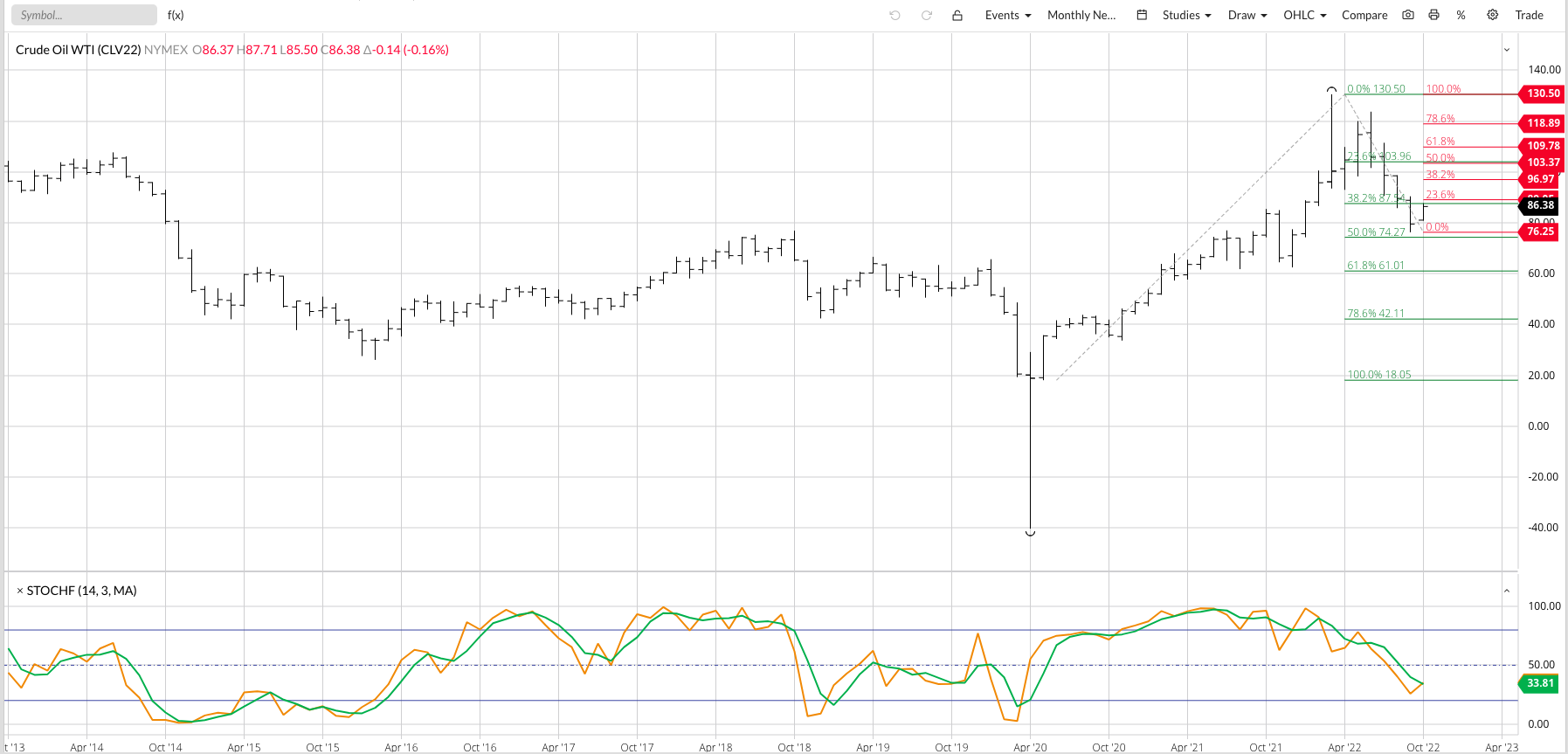
First, there is an old market rule that tells us to “buy low and sell high”. I think all of us would agree this still makes sense, even in this day and age where meme stocks are pumped to ridiculously high prices before being dumped, after drawing suckers in to buy high and sell low. Anyway, back to crude oil. The current administration tackled a big part of the inflation mess (and if we are being honest with ourselves, the situation was initiated by the previous US administration) by releasing oil from the US Strategic Petroleum Reserves (SPR), a move that was announced on March 31, 2022. A look at the continuous monthly chart for WTI crude oil (CLX22) shows us the market posted a spike high of $130.50 during March. From a trading point of view, then, the current administration sold crude oil when it was at or near its high.
After closing March near $100, WTI started to rally again, eventually reaching a high of $123.68 during June. When July rolled around, US President Biden made a trip to Saudi Arabia with the key topic of discussion being OPEC increasing its production. Why? Because if the Cartel upped its output to meet the global energy crisis created by one of the OPEC+ members – Russia – then the US would be able to rebuild its SPR as more oil became available worldwide. In other words, again from a trading point of view, the US would be buying low. And initially the strategy seemed to be working as WTI dropped to $76.25 during September, down 42% from its March high.
But then the calendar page turned to October, bringing US midterm elections one month closer and the Madman Across the Water (Russia’s Putin) knew it was time to make his next chess move. Putin needs to get the previous US administration back in power as he knows he has control of the supporting party in general. That’s what the last year has been about, going back to Putin’s pre-Olympic meeting with China’s Xi last February just before he launched Russia’s invasion of Ukraine. One of the unstated goals was to weaken the current US administration as global inflation spun out of control, but somehow those in charge were able to build a coalition to sanction Russia for its actions.
Since the invasion didn’t work as well as Putin had hoped, he now turns his attention back to the current administration’s attempt to sell crude oil high and buy low. The easiest way to do that is to undermine the second part by coercing the rest of the OPEC cartel and its allies (OPEC+) into a massive cut in production. Not only will the world be plunged deeper into an energy crisis, but it could possibly work to ease some of the sanctions on Russia as winter approaches.
Regardless of what happens Wednesday in Vienna, the next move has to come from the Biden Administration. It is going to be tricky given some of the domestic issues that continue to brew including US oil and gas exporters not looking to cut back and a railroad strike that is still possible by the end of the year.
More Energy News from Barchart




/Netflix%20on%20tv%20with%20remote%20by%20freestocks%20via%20Unsplash.jpg)