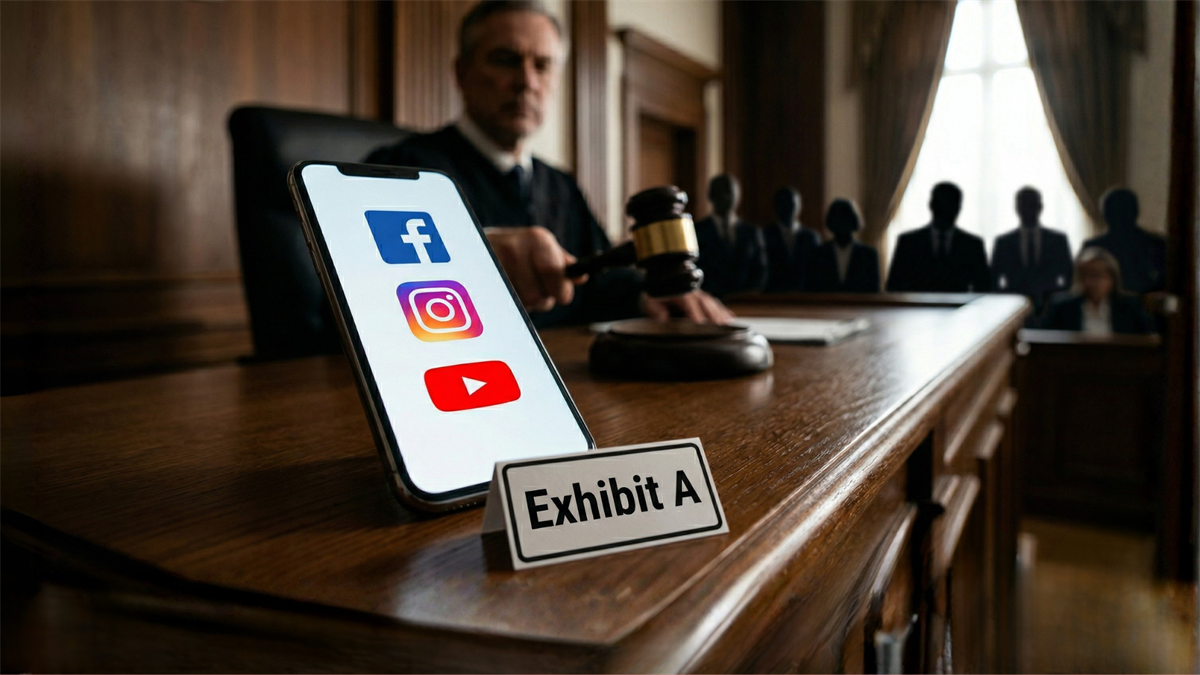
Popular social media platforms may be liable for personal injury to users following the recent landmark case against Meta Platforms Inc. (NASDAQ: META) and Alphabet Inc. (NASDAQ: GOOG).
The tech giants behind Instagram, Facebook, and YouTube are obligated to pay millions in both compensatory and punitive damages to an unidentified client who had accused the firms of creating highly addictive products that led to mental health issues.
The damages are a drop in the bucket for these massive companies, but the implications—and the potential fallout going forward—could be a much bigger concern for all social media platform providers and their investors.
Both firms' stocks have been battered in the days surrounding the verdict, with Meta shares falling by 13% and Alphabet by 8% in a five-day period at the end of March 2026.
There is seemingly an opportunity for investors to buy a dip, but the larger question for those investors may be how to determine whether Big Tech's business models are likely to see a broader restructuring and, if so, how this could impact factors like market share, valuation, and more.
Potential Impacts on Future Trials and Products
The latest trial is particularly high-profile but not unique, as social media companies are routinely subject to lawsuits related to their platforms.
However, the finding in this particular case could shift the tide for future suits, including multiple cases expected to go to trial as soon as this year.
In the near-term, this could mean that these and other tech giants are exposed to additional damage judgments and the unwanted publicity that comes with these legal battles.
More importantly, though, investors might see Big Tech being pushed into a similar corner as Big Tobacco decades ago, when prominent cigarette makers became liable in various ways for the addictive and harmful nature of their products.
Companies like Meta and Google are accustomed to citing Section 230 of the Communications Decency Act of 1996 as a way of protecting themselves from liability over the content that users on their platforms post.
There is a real risk to these companies that this argument may collapse in favor of one examining the social media platforms as flawed products themselves in need of redesign.
In that case, major changes to platforms like Facebook and Instagram may be in store, although exactly how those services may be altered remains to be seen.
However, some of the key features of social media highlighted in the trial—infinite scroll, autoplayed content, and the use of algorithmic recommendations—may also have a bearing on advertisements.
What Investors Should Keep In Mind
Social media is a significant source of revenue for companies like Meta and Alphabet, which have relied for years on steadily growing engagement rates to build ad sales.
This growth has continued apace—in the last quarter of 2025, for instance, Meta reported ad revenue growth of 24% year-over-year (YOY) across its family of apps, thanks in large part to AI-driven ad performance and 3.5 billion daily users across its products.
Besides loss of ad revenue, which would itself be massive, industry-wide legal exposure in a scenario in which social media platforms are found to be defectively designed could total into the tens of billions of dollars and lead to significant mass arbitration risks. At that point, even mega-cap companies in the tech space would see sizable impacts to their financial well-being.
Further, investors should expect that companies will have to invest heavily in meeting any new safety regulations that may emerge following this or subsequent trials.
This could lead to significant compression of operating margins and would pile onto already-high capital expenditure, elevated in many cases because of the costs of integrating AI. It could even impact the market share of some of these firms in the social media landscape if an opportunity presents itself for differently-designed alternatives to shine.
Investors may not find the results of the latest trial to be reason to abandon META and GOOG positions—indeed, they both remain solid analyst favorites with consensus price targets suggesting possible upside of 60% and 25%, respectively.
Still, the seemingly small financial impact of this particular case may have a ripple effect that could lead to much larger implications for social media overall and these firms in particular.
Where Should You Invest $1,000 Right Now?
Before you make your next trade, you'll want to hear this.
MarketBeat keeps track of Wall Street's top-rated and best performing research analysts and the stocks they recommend to their clients on a daily basis.
Our team has identified the five stocks that top analysts are quietly whispering to their clients to buy now before the broader market catches on... and none of the big name stocks were on the list.
They believe these five stocks are the five best companies for investors to buy now...
The article "Big Tech Just Got Hit—Why This Lawsuit Could Change Social Media Forever" first appeared on MarketBeat.


/Facebook-you've%20been%20Zucked%20by%20Annie%20Spratt%20via%20Unsplash.jpg)