

Turn Losing Stocks Into Income (The Wheel Strategy Explained)
Imagine collecting income from a stock… before you even buy it. Then you collect income after you own it. And then you repeat that process over and over again.
That’s the basic idea behind something called the wheel strategy. It’s one of the most popular income-generating strategies because it turns a simple cycle into a repeatable process. First, you get paid while waiting to potentially buy a stock you like. Then, if you end up owning the shares, you get paid while you hold them.
And once the shares are sold, the whole process starts again.
In this article, I’m going to walk you through exactly how the wheel strategy works, step by step, and show you a real example using Apple so you can see how the entire cycle plays out. I’ll also give you a wheel strategy PDF cheat sheet with a trading journal, so you can print it out and keep it handy.
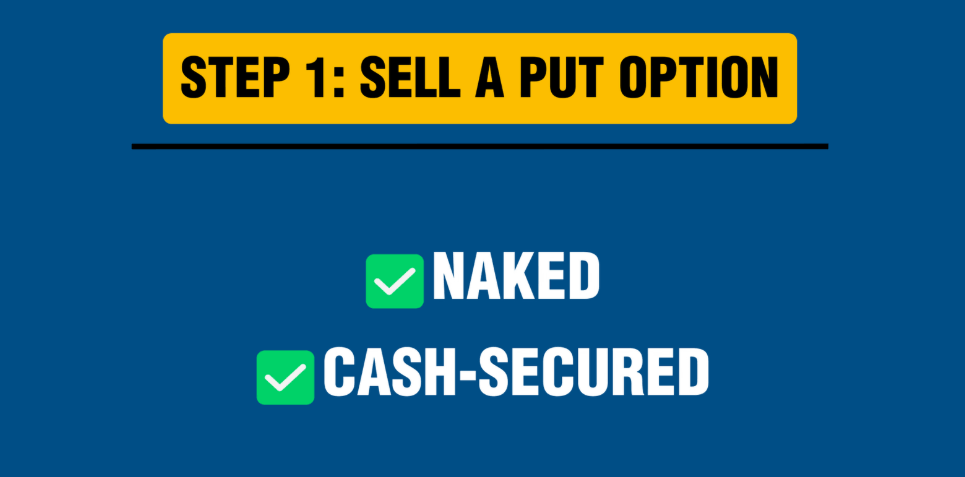
The very first step in the wheel strategy is to sell a put option. It can be naked or cash-secured; it doesn’t matter. What’s important is that you sell the put at a strike price you’d be comfortable buying the underlying asset at.
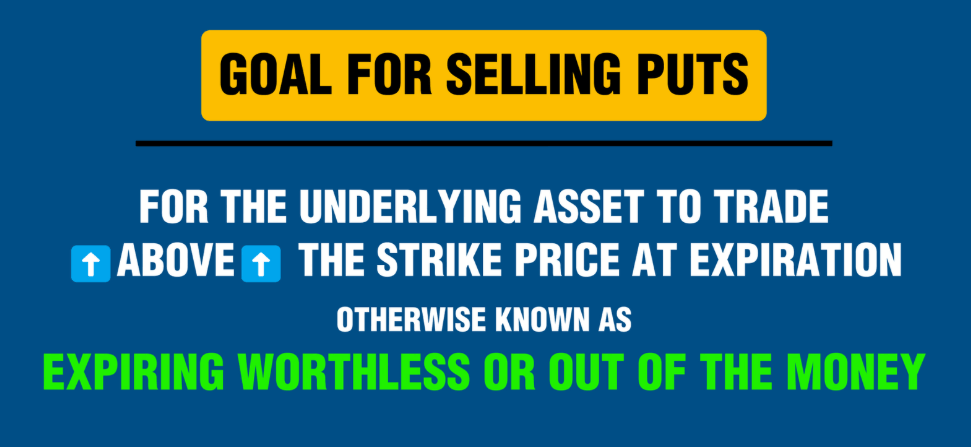
And the goal for this strategy is for the asset to trade above the strike price at expiration, which is called expiring worthless or out of the money. At that point, you can sell another.
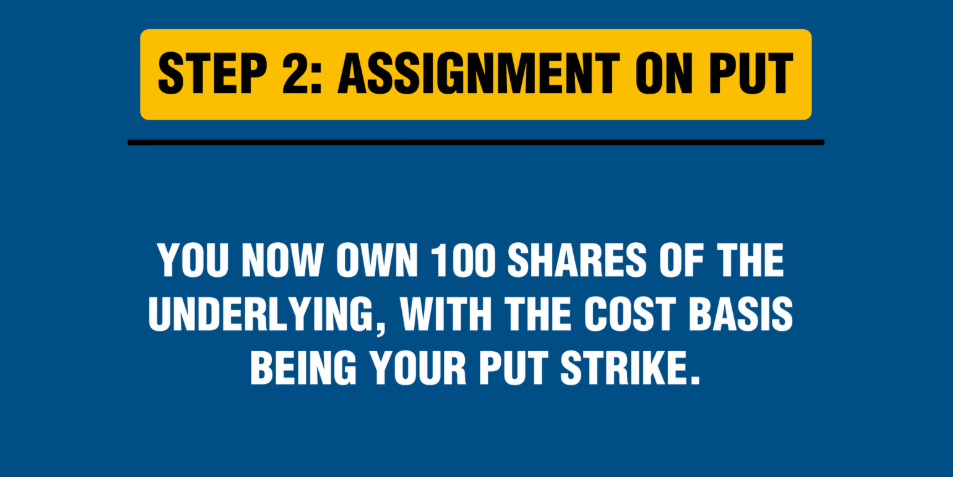
But statistically, at some point in your trading career, the underlying security will drop below the strike, and your put will expire in the money. So you get assigned. Don’t panic! You’re now the proud owner of 100 shares of the underlying at the strike price you already said, “I’m happy to own it at this price”.
The good news is, assignment is step 2 of 4 in the wheel strategy.
Now you can sell a covered call on the shares you just bought, which is step 3 in the wheel strategy. Selling a covered call means selling a call option against those shares to collect income.
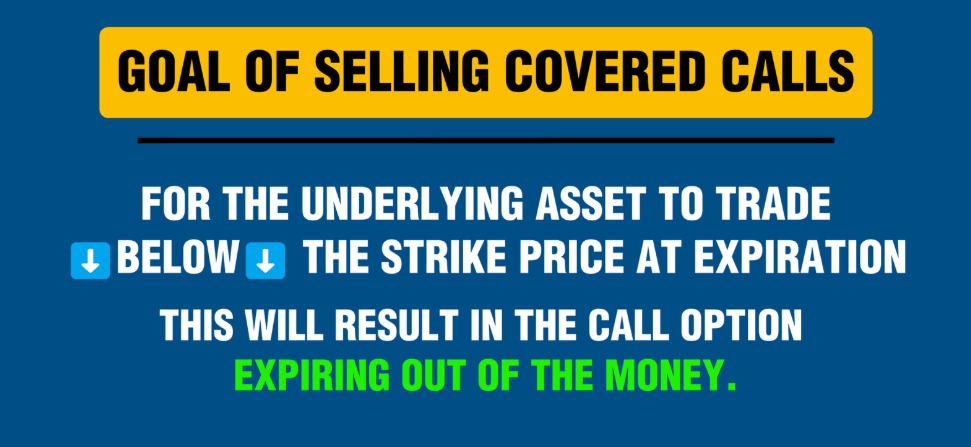
This time, though, the goal is for the stock to trade below the call option strike at expiration. So you keep your shares and can sell another covered call, over and over. And so, the income cycle continues.
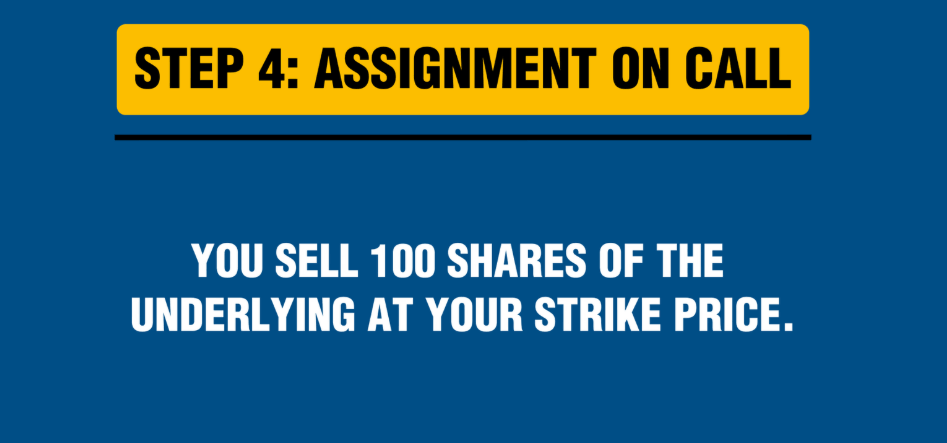
But, like before, statistically, at some point, the stock will eventually trade above the call option strike at expiration, and you will get assigned, meaning you’ll sell 100 of those shares at the strike price. This is the fourth and final step of the wheel strategy.
And guess what? You have cash again, which you can use to restart the wheel and sell another cash-secured put.
To better explain the concept, let’s use a real-world example.
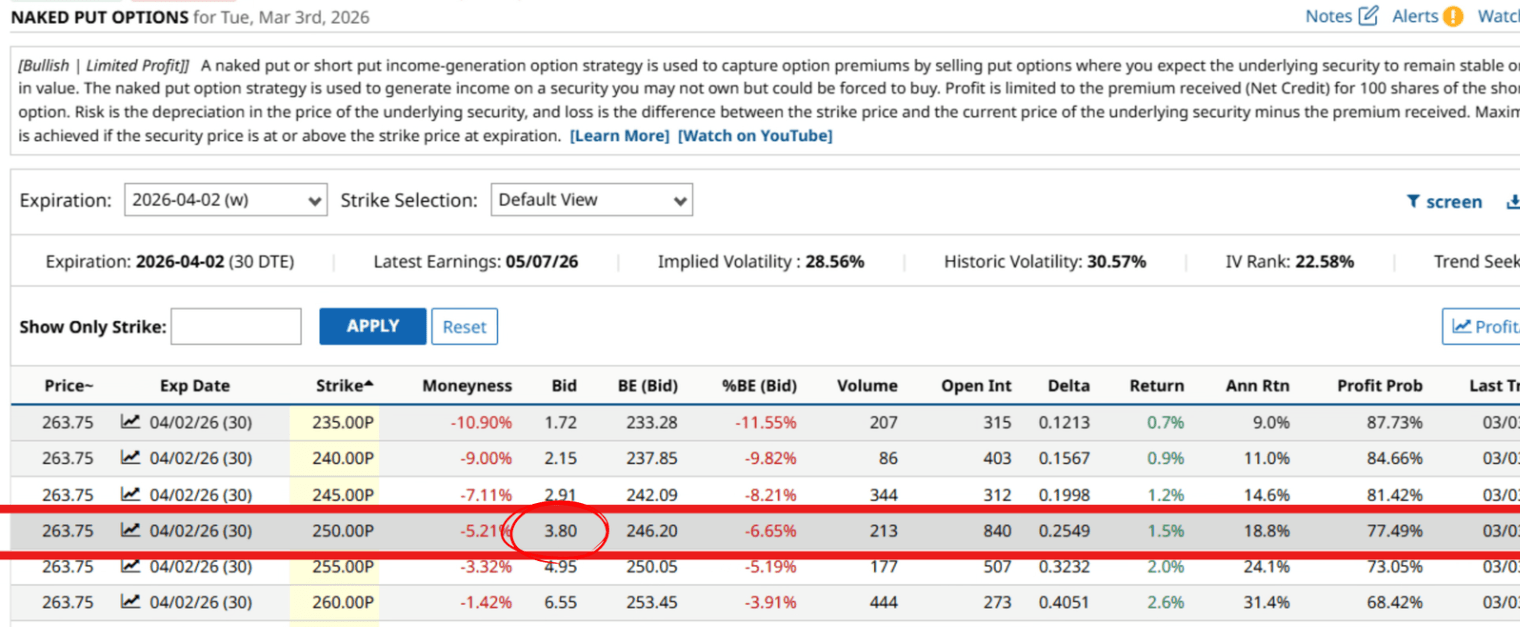
Let’s say you’re looking at Apple. At the time of recording, the stock is trading a little below $264.
And you’d be happy to buy the shares at, let’s say, $250. Instead of waiting for it to decline, you can sell a 250-strike put on Apple that expires on say, April 2, 30 days from now (at the time of recording.) You get $3.80 per share or $380 total. Remember, each option is for 100 shares.
Now, let’s say 30 days go by and Apple is trading at $260, still above your strike price, well, the option expires worthless.
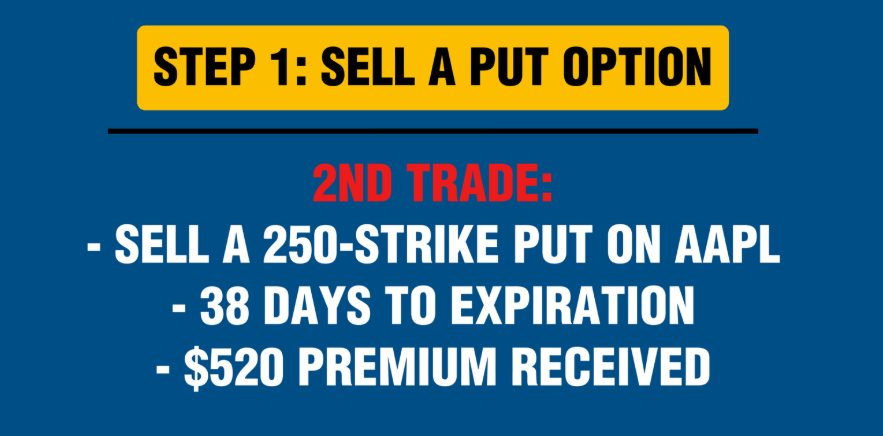
Then you sell another put on Apple for $250 - again, about a month out, on May 8. Let’s say you get $520 total this time to sell the put.
Then, the expiration date rolls around, and what do you know, Apple stock went down a little, and now trades at $245, which means your cash-secured put is now in the money, and you’ll buy 100 shares of the stock for $250 each. But remember, you were paid $9 share already, or $900 total on these trades - so your cost basis for these shares is $241.
It’s important to know your cost basis as we move to the next step.
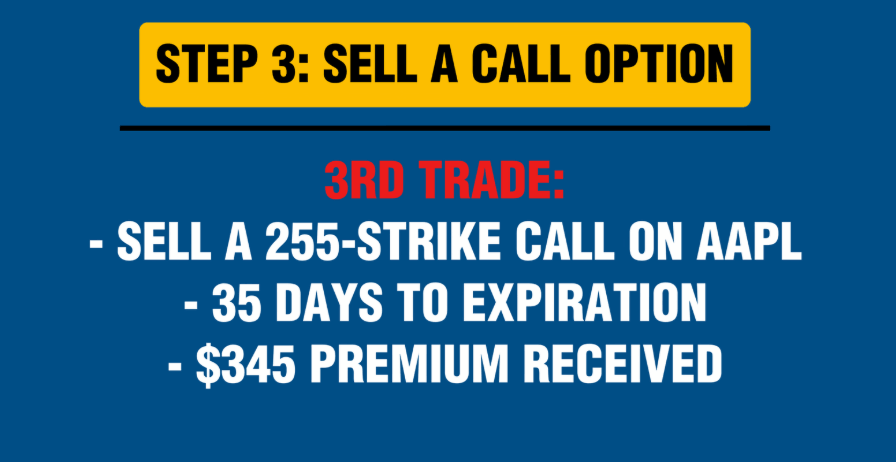
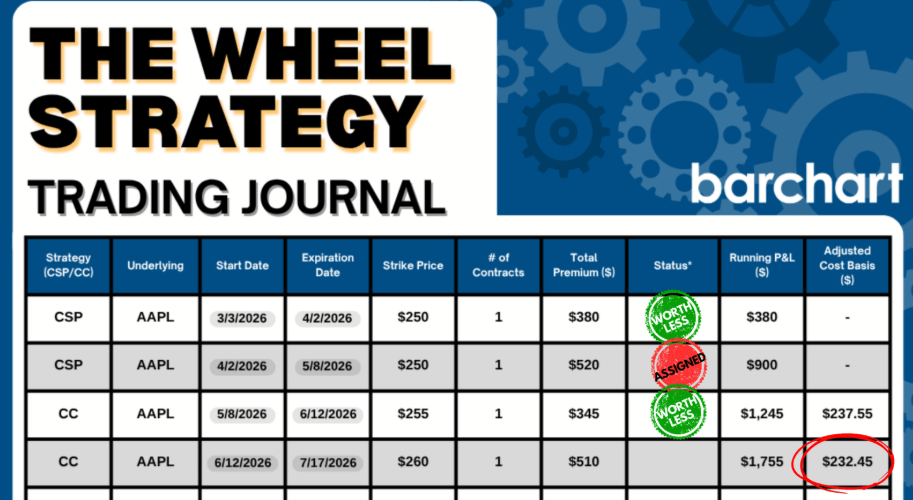
So now, you transition to selling a covered call with an expiration of say, 35 days away - June 12.
What’s important is that now you want to pick a strike that’s above your cost basis, which is $241. So, let’s say you’re perfectly fine selling your shares at $255 each, that becomes your short call strike price. The premium is $3.45 - so you receive $345 for this trade. Your cost basis now adjusts lower to $237.55. Hold on to this number.
Now, let’s say June 12 comes around, and Apple is now trading at $254, just below your strike price. The covered call expires worthless, and you sell another.
As long as you sell the covered call above your cost basis, your trade will remain profitable. This time maybe you decide to set the strike price a little higher, at $260 to capture that upward momentum, and set the expiration on July 17, and now you receive $5.10 a share, or $510 for the trade. Your cost basis is now even lower, $232.45.
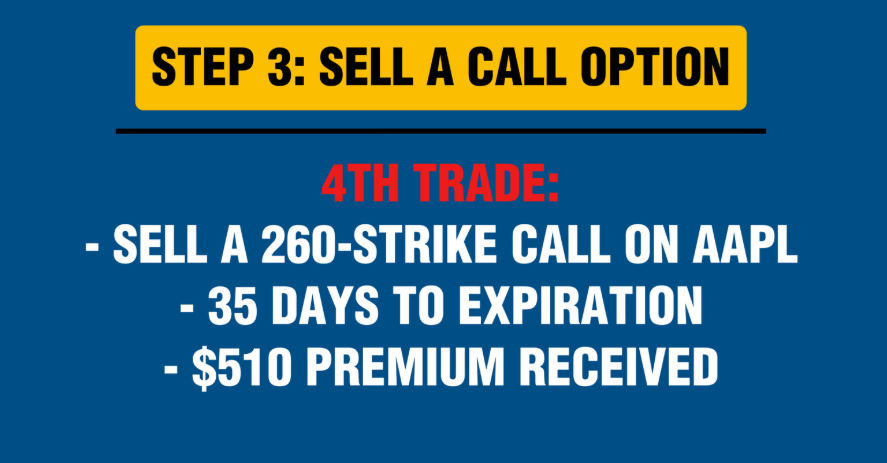
Fast forward to expiration, and Apple is now trading at $261, it’s above the call option strike, and it’s now in the money. You get assigned and sell your shares at the $260 each - that was the call option strike.
So let’s stop for a moment and take a look at the P&L.
Quick math. You sold Apple at $260, and your cost basis was $232.45… that means you have a profit of $27.55 a share or $2,755 total. Sounds great, right? It is because if you had bought and held 100 shares of Apple at $263.75 back on March 3, sat on them for a full 150 days - five solid months - and then sold them on July 17, well, you’d have a loss of $275. Right? $2.75 a share times 100.
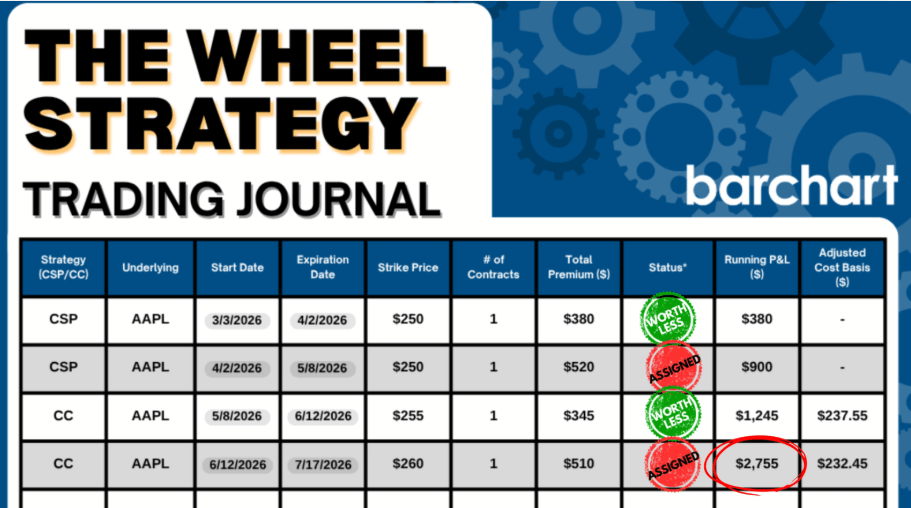
And that, in a nutshell, is why the wheel strategy can be so powerful. You see how it cycles between cash-secured puts and covered calls, generating income while gradually rotating your capital. The beauty here is in the repetition. Each stage naturally flows into the next, turning your cash into income, your shares into collateral, and your assignments back into cash.
The key is to keep track of your cost basis. By the way, I left you a link to a nice little handout that you can download - it’s a cheat-sheet that explains the strategy, along with a trading journal to track your cost basis for a trade within the wheel strategy. Check it out! In the description below.
Of course, markets don’t move in straight lines, premiums change with volatility, and while many trades will work out, not every trade will play out this smoothly.
Market drops can hurt. If the stock tanks, your cash-secured put will most likely result in buying shares at a price above the current market price, creating an immediate unrealized loss.
On the covered call side, your upside is capped. If the stock rockets above your strike, you miss out on the upside.
That’s why the key to the wheel strategy is to know your cost basis on the stocks that you own. If you can’t sell the covered call above your cost basis, then it’s usually best to just sit tight and wait until you can.
When it comes to the wheel strategy, the key here is discipline: set strike prices you’re comfortable with, manage your cash, and stick to the cycle. The point is, stick to the plan.
So, whether you’re new to options or looking to add structure to your trading, the wheel provides a framework to rely on. Start by selling puts on stocks or ETF’s you’d actually want to own, keep track of your cost basis, sell the options, and let the wheel turn.