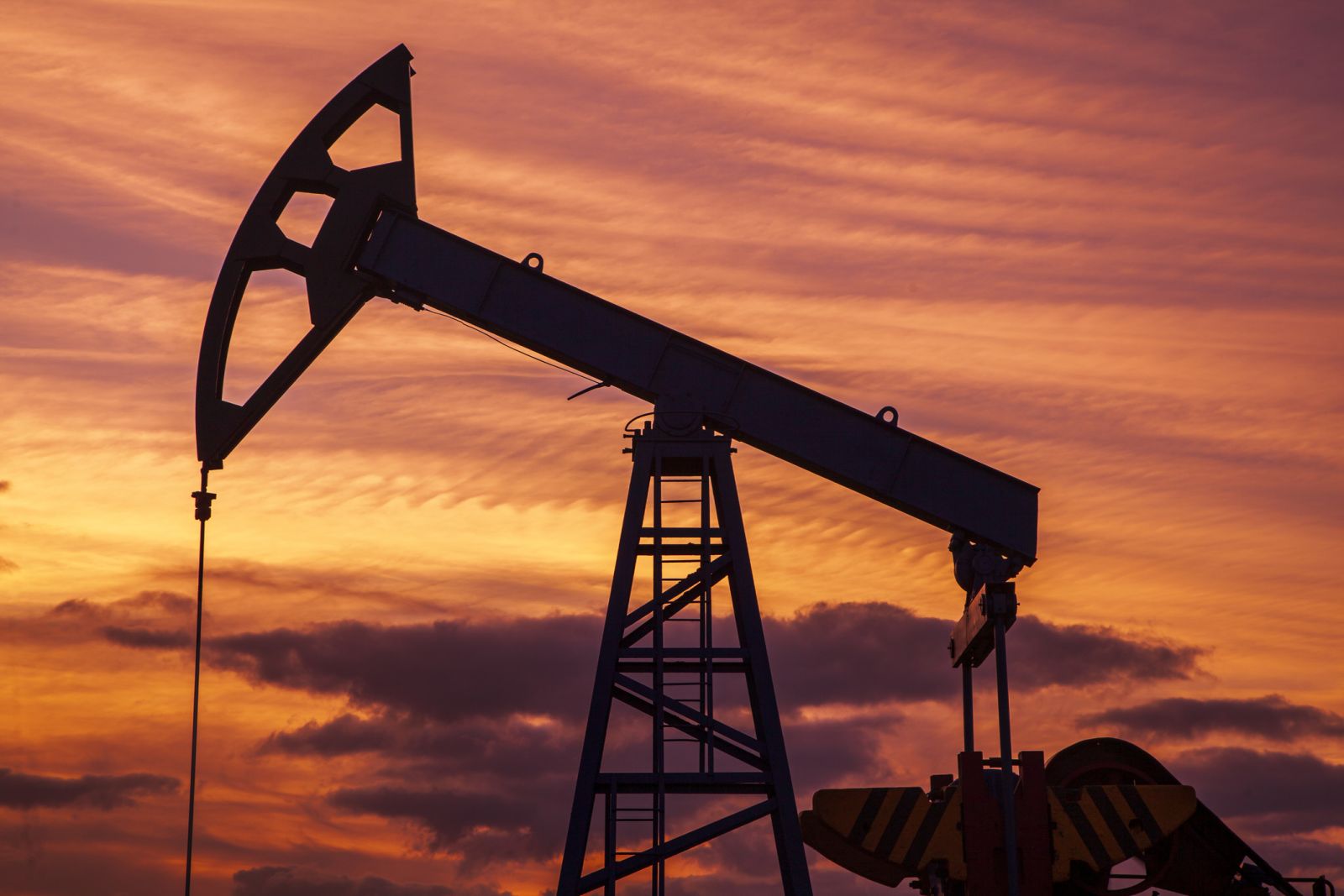
Sep Nymex natural gas (NGU22) on Tuesday rose by +0.244 (+3.22%).
Sep Nymex natural gas on Tuesday rallied by +3.22% on some short-covering after Monday's sharp loss of -5.89% to a 2-1/2 week low.
Despite Tuesday's upward rebound, nat-gas prices are still seeing downward pressure from forecasts for more seasonal temperatures and high U.S. gas production. Maxar on Monday forecasted more normal temperatures in the Eastern states after the recent heat wave.
A negative factor for nat-gas prices is the recent record level of U.S. gas production. Lower-48 dry gas production on Tuesday was 97.1 bcf/day, up +3.0% y/y, according to Bloomberg.
Lower-48 state total gas demand on Monday was 73.6 bcf/day, up +5.8% y/y, according to Bloomberg NEF data. U.S. domestic nat-gas demand for power generation in July jumped by more than +10% y/y to record levels, according to Bloomberg NEF.
BNEF data shows LNG net flows to U.S. LNG export terminals Tuesday was 11.0 bcf/day, -0.04% w/w.
An increase in U.S. electricity output is bullish for nat-gas demand from utility providers. The Edison Electric Institute reported last Wednesday that total U.S. electricity output in the week ended July 30 rose +0.6% y/y to 93,723 GWh (gigawatt hours). Also, cumulative U.S. electricity output in the 52-week period ending July 30 rose +3.1% y/y to 4,119,100 GWh.
Nat-gas prices have support as EU countries agreed to cut nat-gas demand from Russia by 15% over the next eight months. Also, Russia recently slashed nat-gas exports to Europe to 20% of capacity, putting upward pressure on European nat-gas prices. Russia has already halted nat-gas shipments to Demark, Finland, Bulgaria, Netherlands, Poland, and Latvia, and reduced supplies to Germany, for not acceding to its demand for gas payments in Russian rubles.
Nat-gas prices have seen downward pressure from the prolonged outage at the Freeport LNG export terminal, which curbed U.S nat-gas exports and put upward pressure on domestic supplies. The LNG terminal has been closed since a June 8 explosion. Freeport recently reached a deal with regulators to restart operations as soon as October, which was sooner than expected. The Freeport LNG terminal receives about 2 bcf, or 2.5%, of the output from the lower 48 U.S. states.
As a longer-term bullish factor, the ongoing drought in the U.S. West has drained rivers and reservoirs, with Lake Mead recently falling to a record low. That threatens to curb power produced by hydropower dams and will prompt electric utilities in the U.S. West to boost usage of nat-gas to increase electricity to satisfy power demand for air-conditioning this summer. The U.S. Energy Information Administration said on June 1 that the drought could drive down generation at California's hydro dams between June and September to 7 million megawatt-hours, well below the 13 million megawatt-hour median for summer generation between 1980 and 2020.
Last Thursday's weekly EIA report was bearish for nat-gas prices as it showed U.S. nat gas inventories rose +41 bcf to 2,457 bcf in the week ended July 29, above expectations of a +29 bcf increase. Inventories remain tight and are down -9.9% y/y and -12.1% below their 5-year average.
Baker Hughes reported last Friday that the number of active U.S. nat-gas drilling rigs in the week ended Aug 5 rose +4 to 161 rigs, a nearly 3-year high. Active rigs have more than doubled from the record low of 68 rigs posted in July 2020 (data since 1987).
More Natural Gas News from Barchart


/Qualcomm%2C%20Inc_%20logo%20on%20phone-by%20viewimage%20via%20Shutterstock.jpg)
/Advanced%20Micro%20Devices%20Inc_%20logo%20on%20phone%20and%20website-by%20T_Schneider%20via%20Shutterstock.jpg)