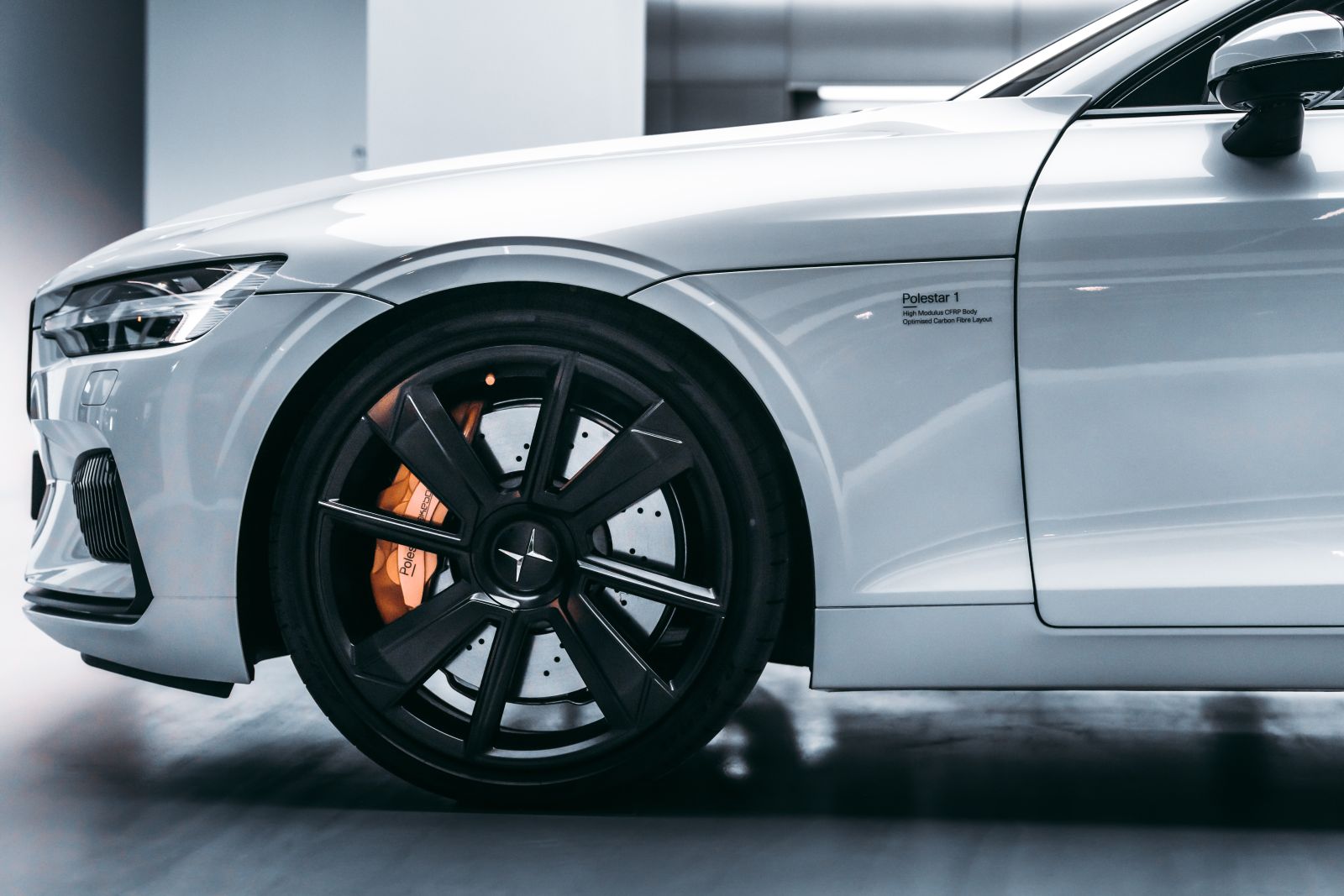
On July 13, less than a month after Polestar (PSNY) merged with the Gores Guggenheim SPAC and began trading on Nasdaq; it announced its deliveries for the first six months of 2022.
Polestar said it delivered 21,200 vehicles in the first six months of 2022, almost 125% higher than the 9,510 delivered in the first half of 2021. As I write this on July 13, PSNY stock is up 3.3% on the news compared to a 0.45% decline on the day for the S&P 500.
The company’s success should not come as a surprise to investors. Here’s why.
Polestar’s Performance-Based History
Polestar’s history dates back to 1996. It was called Cyan Racing at the time. It was a performance-based racing team that used the Volvo 850 Sport Touring edition in its races. Its goal was to win the Swedish Touring Car Championship. The team was renamed Polestar in 2005 to pay tribute to its origins in Sweden’s northlands.
In 2009, it became Volvo’s ( official tuning partner, along the same lines as AMG and Mercedes. It started with the Volvo C30 -- the cute and tiny hatchback coupe discontinued in 2013 -- delivering almost 400 horsepower from a 2.5 liter, highly-tuned engine. It worked on versions of the S60, V60, XC60, and others.
In 2013, Volvo acquired the Polestar brand from Cyan, who kept the racing team. At the time, it had just released the Polestar 1 as a concept car. The Polestar 2 also began as a concept car. It began life as the Volvo 40.2 concept in 2016.
In October, it’s set to launch the Polestar 3 electric SUV.
“Polestar 3 will stand out amongst other SUV offerings and boost our growth trajectory. It also represents the expansion of our manufacturing footprint into the United States as we become even more global. It is an important next step towards our goal of selling 290,000 cars in 2025 – ten times more than we sold in 2021,” CEO Thomas Ingenlath stated in its July 13 press release.
The company expects to deliver 50,000 vehicles for all of 2022. All of them will be Polestar 2 electric performance sedans. The Polestar 1 ended production with the 2021 model year.
Beyond Polestar 2
The company’s factory in Asia is pushing to operate a second shift. By doing so, it will be able to catch up on some of the volume lost from Covid-19 lockdowns. Starting in early 2023, the Polestar 3 SUV will begin production at Volvo Cars’ South Carolina plant.
Following that will be the Polestar 4 -- an SUV coupe -- later in 2023 and the Polestar 5 -- a production version of its 2020 Precept concept sedan -- in 2024. With four production cars available in 2024, it may hit its 290,000 goal by the end of 2025.
Recently, Edmunds.com compared the Polestar 2 with the BMW i4 eDrive40. The automotive site came away impressed with Polestar’s fully-electric sedan.
“You’ll likely be happy with either EV. In Edmunds’ rankings scoring, they are, in fact, statistically tied. Can’t decide? For superior comfort and handling, get the Polestar. But for brand familiarity and rocket-like acceleration, get the BMW,” wrote Edmunds.com contributor Michael Cantu in June.
Almost everything I read about Polestar 2 is positive. And its dual-motor all-wheel-drive version can get 260 miles per charge, making a trip from Chicago to Indianapolis a piece of cake.
Polestar’s Success Was In the Cards
While Polestar appears to be a relatively new company, its Volvo heritage goes back more than 25 years. As I said earlier, its development has been slow-and-steady. In 2021, it delivered 29,000 vehicles. It expects 50,000 in 2022.
As part of its push to 290,000 in 2025, it plans for the Polestar 3 and 4 SUVs to account for 55% of its annual production by then. SUVs have higher margins, so their pathway to profitability will be achieved through the success of these next two vehicles.
Polestar expects to have 160 retail locations by the end of this year. Despite the store openings, it still believes many of its vehicles will be ordered online and delivered to a customer’s front door. CEO Ingenlath believes that the direct-to-consumer process could bring the end customer closer to manufacturers while eliminating the hassles we’ve all experienced when buying a car at a dealership.
If you combine its eagerness to be transparent with customers about pricing, and its desire to build vehicles that are performance-oriented and not for everyone, you see a business that knows where it wants to go.
As a result, I believe it will continue to grow sales. The latest six-month figures should not surprise anyone who’s followed Polestar for a reasonable amount of time.
At $10.20, PSNY is an excellent long-term buy.
More Stock Market News from Barchart

/Dell%20Technologies%20by%20Poetra_RH%20via%20Shutterstock.jpg)
/The%20sign%20for%20Marvell%20Technology%20out%20front%20of%20a%20corporate%20office%20by%20Valeriya%20Zankovych%20via%20Shutterstock.jpg)

/Intel%20Corp_%20badge%20holder-by%20hasrul_rais%20via%20Shutterstock.jpg)