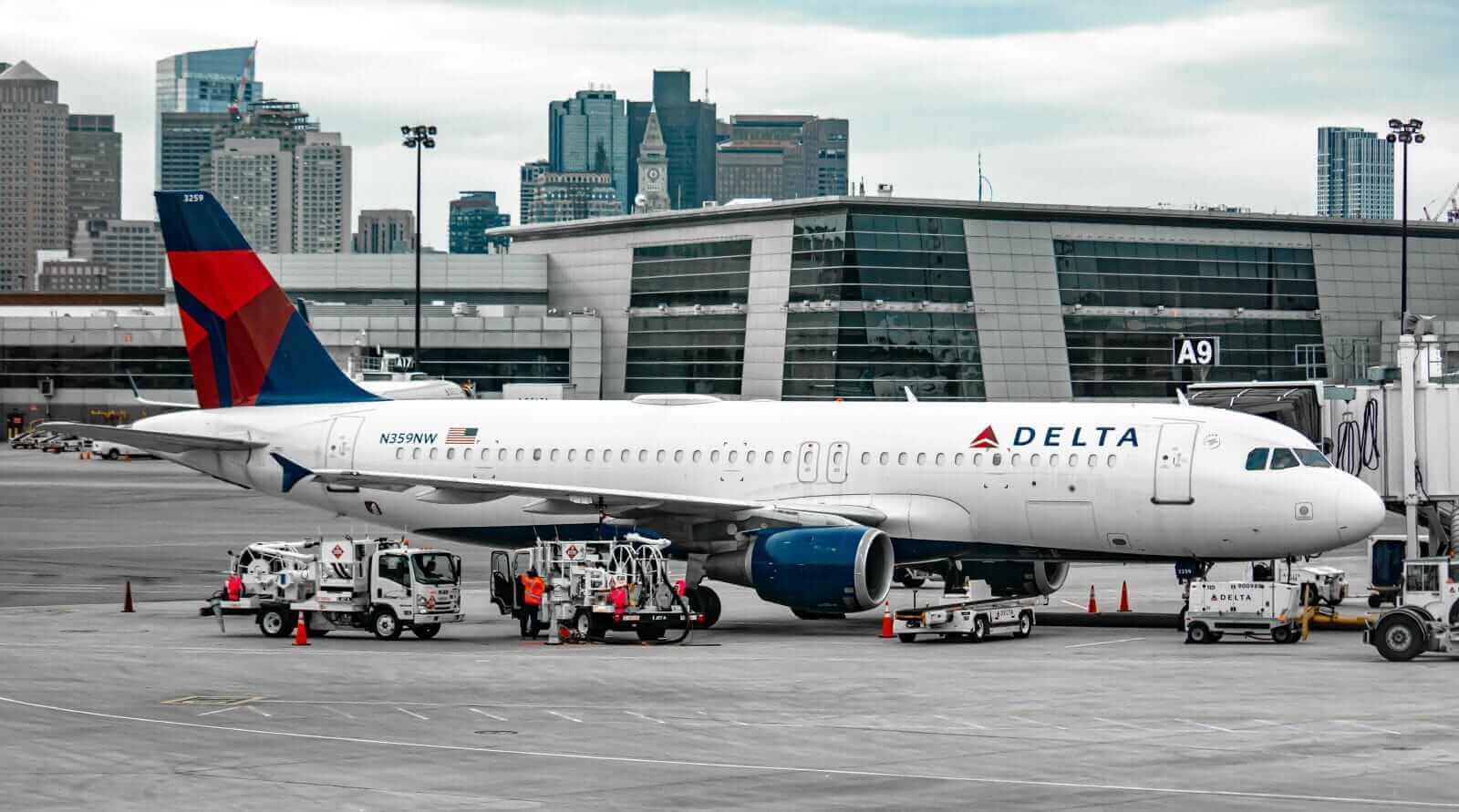
- Although most traders have good reason to be bearish on the consumer economy, unusual options activity for Delta Air Lines introduces a contrarian take.
- A bit counterintuitive, bullish investors have some fundamental justification for betting big on DAL due to the “revenge travel” phenomenon.
- Nevertheless, traders will also want to avoid too much exposure for too long as broader market conditions remain questionable.
Following a higher-than-expected inflation rating (based on a sharp rise in the consumer price index), the Federal Reserve made good on its promise to contain escalating prices, recently raising the benchmark interest rate by 0.75%. However, aggressively hawkish monetary policies increase the risk of a recession since ascendant borrowing costs kill incentives for business growth. Under such circumstances, you wouldn’t expect traders to bet heavily and bullishly on Delta Air Lines (DAL).
Not surprisingly, the core impact of inflation – the erosion of purchasing power – stymies consumer sentiment as households direct more of their discretionary income to essential goods and services. As well, the promise of higher prices may cause consumers to get savvy, increasing their purchases of non-perishable goods to help mitigate inflationary pressures. Such actions may take away funds previously earmarked for purchases such as vacation packages, ultimately hurting DAL stock and its ilk.
At the same time, the COVID-19 pandemic completely uprooted social norms, forcing people into lockdown. As society gradually recovered from the malaise, various governmental powers limited mobility, both on the domestic front as well as internationally. But as weeks turned into months and eventually into years, pent-up demand gave way to a countervailing dynamic: revenge travel.
Indeed, data from UC Davis Health confirmed that even in July 2020 – mere months removed from the initial uprooting of the pandemic – Americans were hit hard with COVID fatigue; the strain on mental and physical health that the crisis broadly engendered. Therefore, when analysts discuss revenge travel, this is a catalyst two years in the making.
Still, is that enough to justify strong optimism for DAL stock?
Flying the (Desperately) Friendly Skies
When the closing bell rang out for the June 15 session, Barchart.com’s screener for unusual options activity listed several bullish call options with heavier-than-usual volume metrics. One of them was Delta, where the $41 call option – with an expiration date of Aug. 19, 2022 – attracted volume of nearly 31,000 contracts against an open interest reading of 465.
Closing at $31.96 on the aforementioned session, DAL stock will need to move over 28% within 65 days for the contract to be in the money. It’s a fairly aggressive bet considering that DAL has shed up to this point nearly 21% on a year-to-date basis. Further, with the Fed committed to doing whatever is necessary to tackle inflation, the risk of business activity deceleration makes this call risky.
Still, from a fundamental perspective, investors who take the bullish wager aren’t irrational. Beyond the psychological catalyst of revenge travel, the present inflationary pressure could be a cynical tailwind for Delta and the wider airliner industry. Essentially, the new normal behooves prospective travelers to book now before prices potentially swing higher still.
How can folks be so sure of rising prices in the transportation sector? For one thing, energy costs seem poised to skyrocket as oil companies are reluctant to invest in new projects, thus exacerbating the global supply crunch. Second, sector-specific challenges – most notably, pilot shortages – could see increased overhead costs handed down to consumers.
With circumstances likely to worsen before they improve, it’s better for households to absorb a lesser pain now, thus translating to near-term bullishness for DAL stock.
Don’t Recline Too Much
Despite some reasonably positive catalysts for Delta, it’s important for investors to realize that the days to expiration for the $41 call option is only a little over two months from now. Even the daring are not bold enough to wager on a sustainable narrative for DAL stock.
Arguably, that’s for good reason as well. Since the start of the troubles (March 2020), the purchasing power of the dollar has declined by 11.6%. Even between April and May of this year, the greenback’s purchasing power declined by almost 1.2%. For context, in all of 2019, the currency lost 2% of purchasing power.
Simply put, inflationary pressures will gradually begin to overwhelm household budgets unless the Fed can put a stop to the bleeding. However, the central bank’s hawkish policies must start biting soon. In April, I mentioned that in major metropolitan areas, Americans are likely paying 40% or more of their household income on core living expenses.
The problem with inflation, of course, is that on a net purchasing power basis, the above metric may start inching its way toward 50%. We’re heading toward uncharted territory, meaning that longer-term projections for DAL stock – or any other consumer-related investment – is difficult to formulate.
Time is the Key
With Delta, participation in the bullish trade depends on your timeline. If you’re thinking in the near term (like two or three months), DAL is not the craziest opportunity. Psychologically, the power of revenge travel is incredibly strong, especially after two years of lockdowns and limitations of mobility. In addition, inflation may inspire travelers to bite the bullet today than pay a steeper price tomorrow.
Against a longer-term framework, the picture for DAL stock gets murkier. Depending on the macroeconomic trajectory, higher costs across the board could significantly impede household budgets. As well, you could be talking about a growing number of layoffs, which naturally would hurt demand. Therefore, the length of time you intend to hold DAL will determine how you should approach it.

/Super%20Micro%20Computer%20Inc%20HQ%20photo-by%20Tada%20Images%20via%20Shutterstock.jpg)
/Micron%20Technology%20Inc_billboard-by%20Poetra_RH%20via%20Shutterstock.jpg)

/Broadcom%20Inc%20logo%20on%20building-by%20Poetra_%20RH%20via%20Shutterstock.jpg)