



This is sponsored content. Barchart is not endorsing the websites or products set forth below.
Investors have a narrow window to participate.
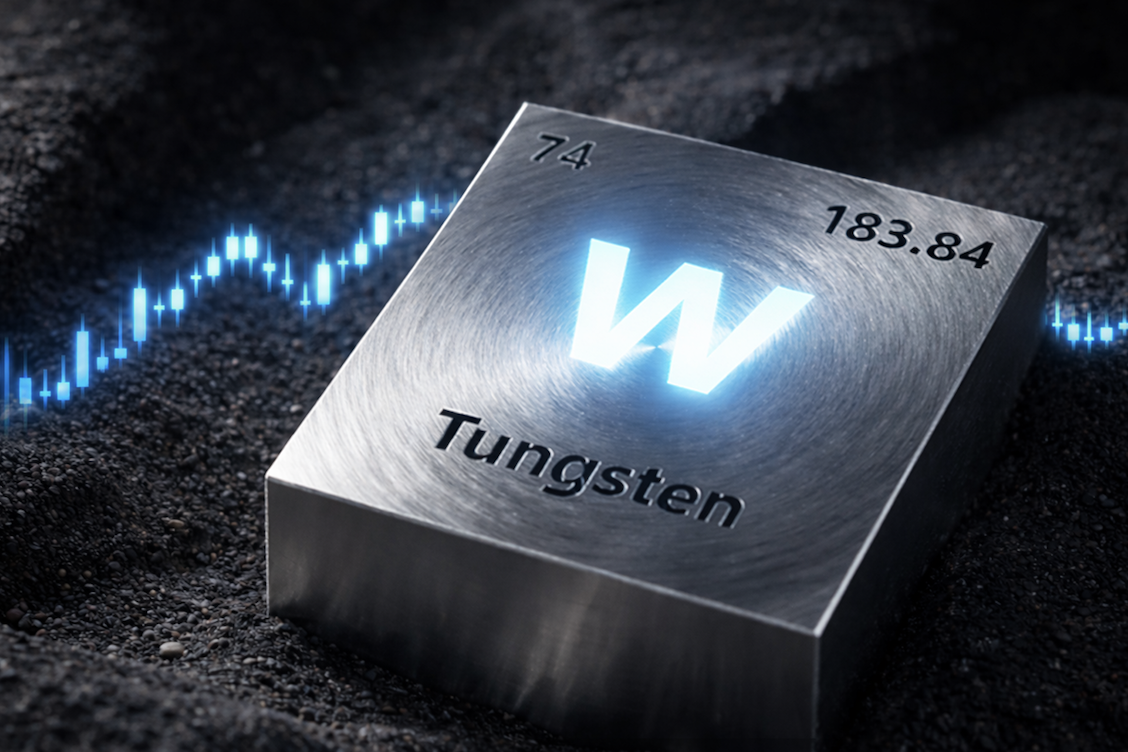
The U.S. military lives and dies by tungsten.
It’s essential to armor-piercing ammunition, missiles, aerospace components, and advanced electronics. There’s just one problem: China controls roughly 84% of the global tungsten supply.
But after decades of outsourcing tungsten production, the federal government has now begun restricting imports.
United States Tungsten founders Stacy Hastie and Randy Waterfield saw this coming.
They’re reviving what was once America’s largest tungsten mine, the Tungsten Queen. It’s a site holding an estimated 1 million tons of tungsten with an in-ground value approaching $450 million.
The company is already in talks with the US Government. Now all they need to do is start digging. Investors have a unique opportunity to share in their growth potential as military spending ramps up.
Here’s why this is such a critical window to join them.
Why Tungsten Is Like Gold in the Defense Industry
Tungsten is denser than lead and tougher than steel. The mineral is uniquely durable in extreme heat, making it the only choice for artillery, tanks, and more.
It’s a $3 billion market for the raw mineral alone.
When you factor in the aftermarket demand for defense hardware and other goods, the conversation shifts to industries worth hundreds of billions of dollars.
But the opportunity gets even bigger as political tailwinds have started to influence the market.
Today’s policymakers are creating just the right environment for a domestic minerals producer to thrive.
The Military’s New $1.5T Spending Goal
The President has called for a $1.5 trillion U.S. military budget in 2027, signaling a continued emphasis on defense readiness, advanced weapons systems, and supply-chain security.
Every increase in military spending compounds demand for tungsten. It’s used where failure isn’t an option: high-temperature, high-stress environments where substitutes simply don’t work. That’s why a huge part of today’s White House policy calls for shifting the supply of critical minerals back onto American soil. And it’s directly aligned with United States Tungsten’s mission to process the mineral.
In short, this is more than speculating into market ups or downs. Tungsten is a mission-critical resource backed by policy and national security priorities, which means demand is consistently baked into the opportunity year to year.
The U.S. Military Is the World’s Best Customer
Few industries offer the kind of guaranteed demand the defense sector does.
The U.S. military is actively seeking secure, domestic sources of tungsten to replace foreign supply. That means producers who can deliver at scale aren’t just selling into a market, they’re becoming strategic long-term partners.
For United States Tungsten, that dynamic changes everything.
A domestic mine aligned with federal policy dramatically increases the likelihood of long-term government contracts, one of the most reliable revenue sources in the world. Unlike cyclical commercial buyers, the U.S. government doesn’t disappear when markets turn, it expands.
And expansion is already underway.
Investors Are Reviving an American Legacy
During World War II and through the late 1960s, the Tungsten Queen mine was one of the largest producers of Tungsten in the United States.
It closed when Chinese tungsten production undercut the market.
But there are at least 1 million metric tons here waiting to be unearthed.
As United States Tungsten sits on approximately $450 million worth of tungsten, investors have a narrow window before production begins.
Learn how you can invest in United States Tungsten here.
This is a paid advertisement for US Tungsten's Regulation CF offering. Please read the offering circular and related risks at invest.ustungsten.com. Barchart has not reviewed, approved, or endorsed the content and was paid $3.00 per click for placement and promotion of the content on this site and other forms of public distribution covering the period of April-May 2026.

/Nike%2C%20Inc_%20swish%20by-%20Tartezy%20via%20Shutterstock.jpg)
/Server%20racks%20by%20dotshock%20via%20Shutterstock.jpg)

/Super%20Micro%20Computer%20Inc%20logo%20on%20building-by%20Poetra_RH%20via%20Shutterstock.jpg)