
Casual salad chain Sweetgreen (NYSE:SG) fell short of the market’s revenue expectations in Q2 CY2026 as sales rose 3.8% year on year to $192.7 million. Its GAAP loss of $0.22 per share was 44% below analysts’ consensus estimates.
Is now the time to buy Sweetgreen? Find out by accessing our full research report, it’s free.
Sweetgreen (SG) Q2 CY2026 Highlights:
- Revenue: $192.7 million vs analyst estimates of $193.9 million (3.8% year-on-year growth, 0.6% miss)
- EPS (GAAP): -$0.22 vs analyst expectations of -$0.15 (44% miss)
- Adjusted EBITDA: -$200 vs analyst estimates of $5.67 million (0% margin, significant miss)
- EBITDA guidance for the full year is -$25 million at the midpoint, below analyst estimates of $2.33 million
- Operating Margin: -14.2%, in line with the same quarter last year
- Free Cash Flow was -$10.57 million compared to -$13.14 million in the same quarter last year
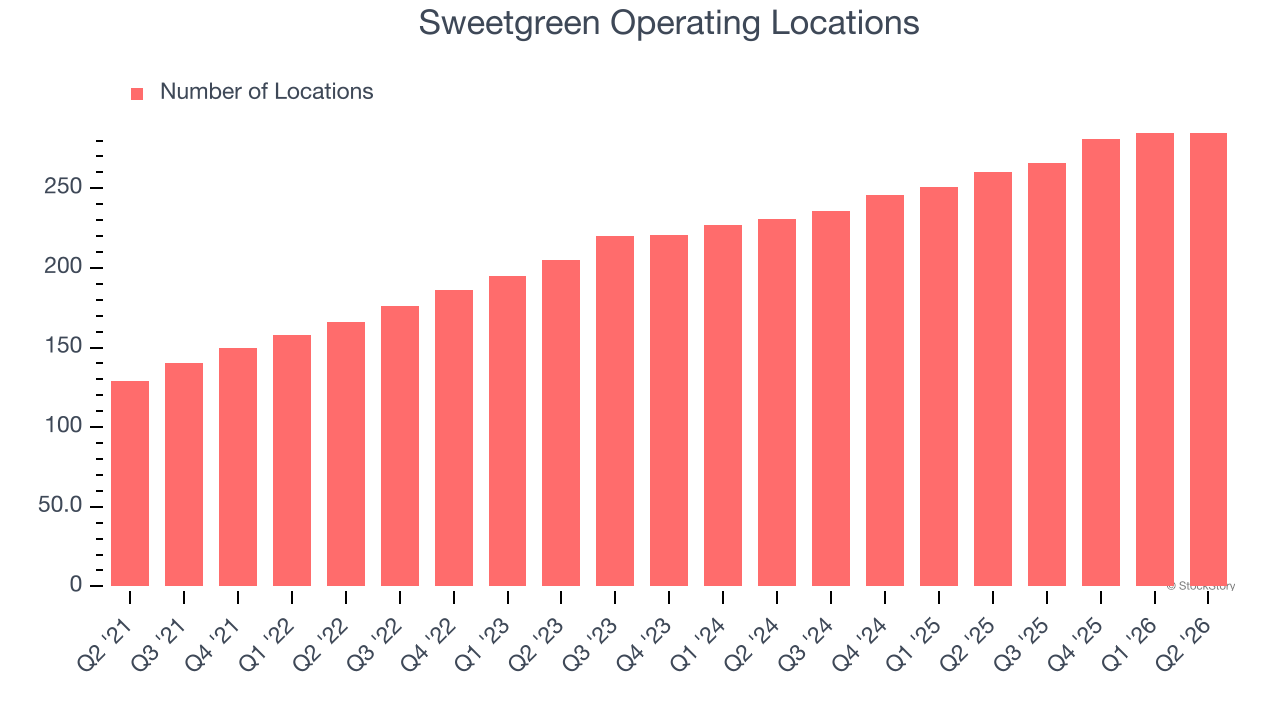
- Locations: 285 at quarter end, up from 260 in the same quarter last year
- Same-Store Sales fell 6.2% year on year (-7.6% in the same quarter last year)
- Market Capitalization: $724.8 million
Company Overview
Founded in 2007 by three Georgetown University alum, Sweetgreen (NYSE:SG) is a casual quick service chain known for its healthy salads and bowls.
Revenue Growth
A company’s long-term sales performance can indicate its overall quality. Any business can experience short-term success, but top-performing ones enjoy sustained growth for years.
With $681.8 million in revenue over the past 12 months, Sweetgreen is a small restaurant chain, which sometimes brings disadvantages compared to larger competitors benefiting from better brand awareness and economies of scale. On the bright side, it can grow faster because it has more white space to build new restaurants.
As you can see below, Sweetgreen grew its sales at an impressive 15.3% compounded annual growth rate over the last seven years as it opened new restaurants and expanded its reach.
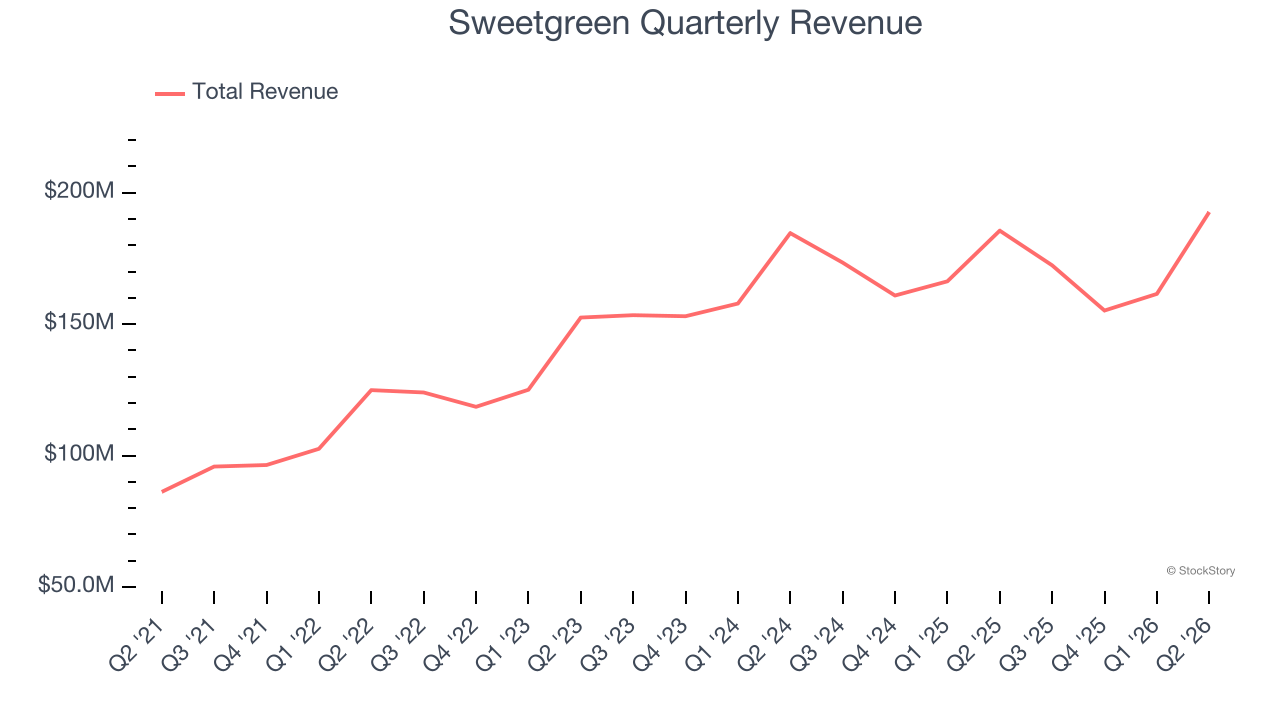
This quarter, Sweetgreen’s revenue grew by 3.8% year on year to $192.7 million, falling short of Wall Street’s estimates.
Looking ahead, sell-side analysts expect revenue to grow 7.3% over the next 12 months, a deceleration versus the last seven years. Still, this projection is above the sector average and suggests the market is forecasting some success for its newer menu offerings.
ALSO WORTH WATCHING: Nvidia’s Quiet Partner. Nvidia’s chips cost a hundred grand. The connectors that make them work cost even more. One company makes them all.
Every AI server needs specialized infrastructure the chip companies don’t make. High-speed cables. Power connectors. Thermal sensors. This 90-year-old company built a monopoly on it. The AI boom just started. This stock is still flying under the radar. Claim The Stock Ticker Here for FREE.
Restaurant Performance
Number of Restaurants
Sweetgreen sported 285 locations in the latest quarter. Over the last two years, it has opened new restaurants at a rapid clip by averaging 11.5% annual growth, among the fastest in the restaurant sector. This gives it a chance to scale into a mid-sized business over time.
When a chain opens new restaurants, it usually means it’s investing for growth because there’s healthy demand for its meals and there are markets where its concepts have few or no locations.
Same-Store Sales
A company’s restaurant base only paints one part of the picture. When demand is high, it makes sense to open more. But when demand is low, it’s prudent to close some locations and use the money in other ways. Same-store sales provides a deeper understanding of this issue because it measures organic growth at restaurants open for at least a year.
Sweetgreen’s demand has been shrinking over the last two years as its same-store sales have averaged 5.1% annual declines. This performance is concerning - it shows Sweetgreen artificially boosts its revenue by building new restaurants. We’d like to see a company’s same-store sales rise before it takes on the costly, capital-intensive endeavor of expanding its restaurant base.
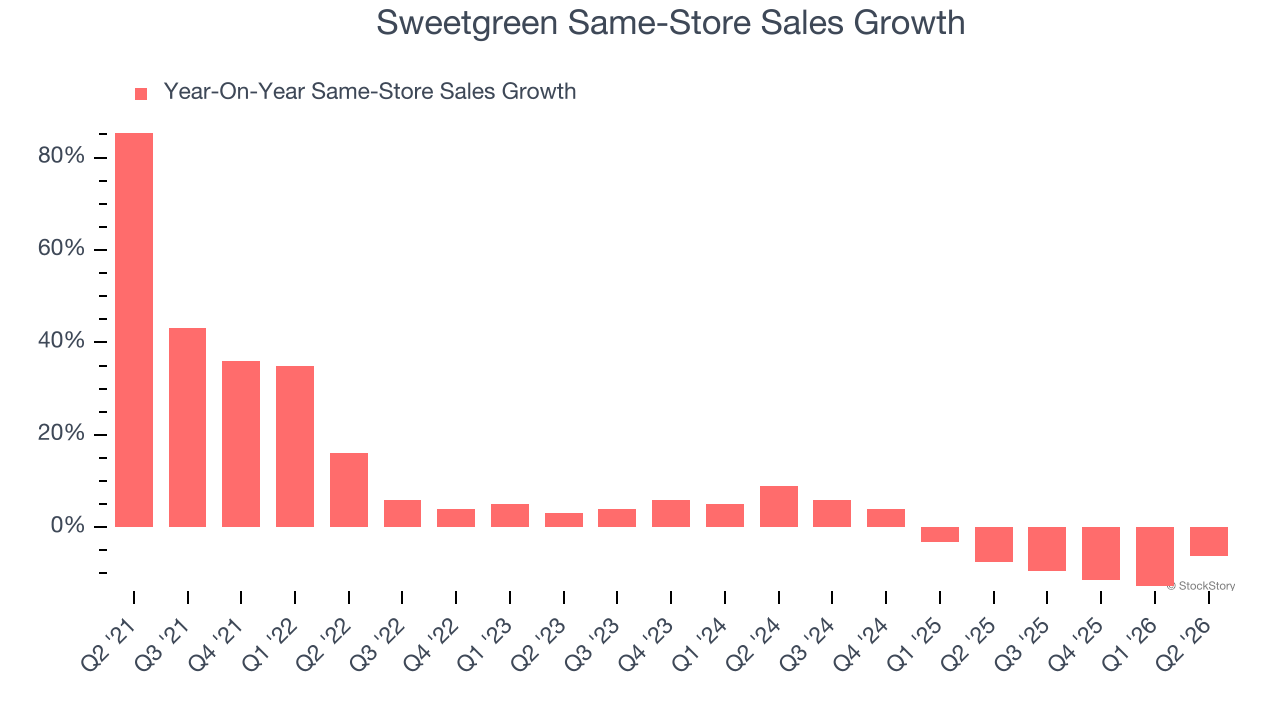
In the latest quarter, Sweetgreen’s same-store sales fell by 6.2% year on year. This decrease represents a further deceleration from its historical levels. We hope the business can get back on track.
Key Takeaways from Sweetgreen’s Q2 Results
We struggled to find many positives in these results. Its full-year EBITDA guidance missed and its EBITDA fell short of Wall Street’s estimates. Overall, this was a softer quarter. The stock traded down 16.8% to $4.99 immediately after reporting.
Sweetgreen didn’t show its best hand this quarter, but does that create an opportunity to buy the stock right now? When making that decision, it’s important to consider its valuation, business qualities, as well as what has happened in the latest quarter. We cover that in our actionable full research report which you can read here (it’s free).



/A%20photo%20of%20a%20Sandisk%20Solid%20State%20Drive%20by%20Top%20Popular%20Vector%20by%20Shutterstock.jpg)