




Summer 2026 has been marked by volatility and downward pressure in tech stocks linked to spending fears and macroeconomic turmoil. The volatility is amplified in many cases by insider selling, raising the question of whether retail investors should get out, too.
The caveat for them is that insiders have reasons to exit these markets that they never will, including share-based compensation and the need to monetize their efforts. Other factors, including institutional activity, reflect a more bullish posture and are the signals investors should follow. They point to double- to triple-digit upsides that will be unleashed by the Q2 and subsequent earnings reports.
NVIDIA, the Source of AI as We Know It, Investing in the Future
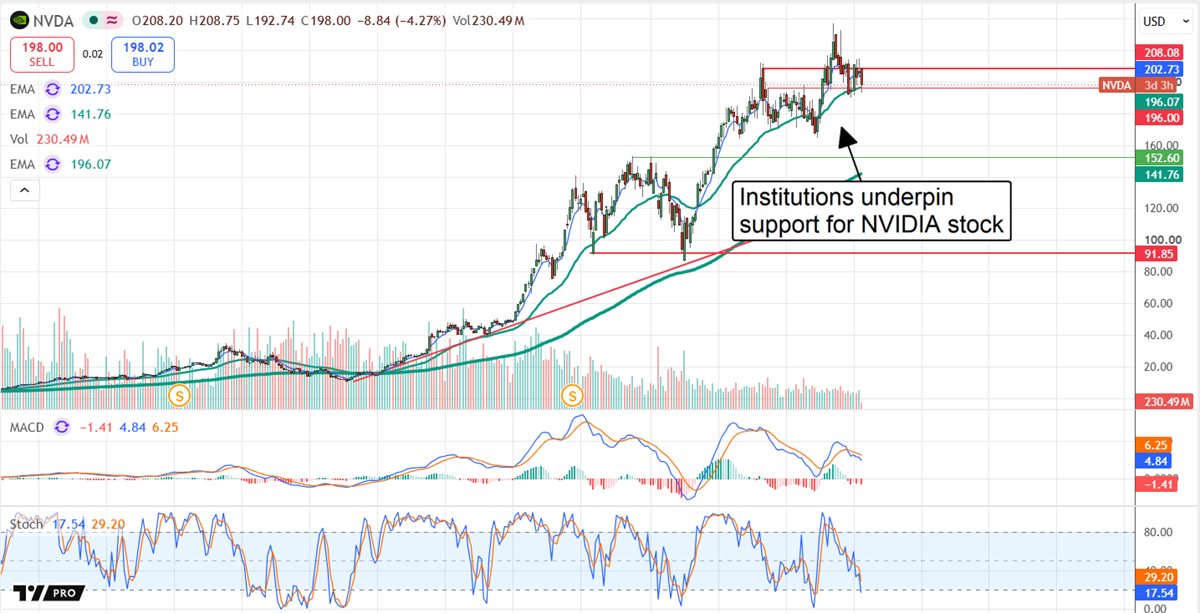
NVIDIA (NASDAQ: NVDA) is the single most important stock for AI, as it is the source of GPUs and the software stack to unlock their power. Its insiders, including CEO Jensen Huang, have sold periodically for quarters and yet the stock price continued to rise. The reason is that demand continues to outpace capacity, quarterly results continue to outpace consensus estimates, and guidance indicates momentum continues to build, pointing to a robust growth cycle that analysts persistently underestimate.
Assuming analysts' earnings forecasts as of late July are correct, this stock trades at pennies on the dollar relative to mid- and long-term forecasts, suggesting its stock price can rise by high triple digits in upcoming years. All it will take is time, which is what institutional investors have aplenty. They own more than 65% of the stock and have been aggressively accumulating at a $ 3-to-$1 pace in 2026, sustaining bullish behavior into early Q3 as NVIDIA invests in its future growth.
Meanwhile, 53 analysts rate NVIDIA as a consensus Buy with 96% Buy-side bias and an uptrend in the price target. Consensus forecasts a 50% upside, while the high-end suggests more than 100% upside is possible.
Oracle, the Most Misunderstood AI Stock on the Market
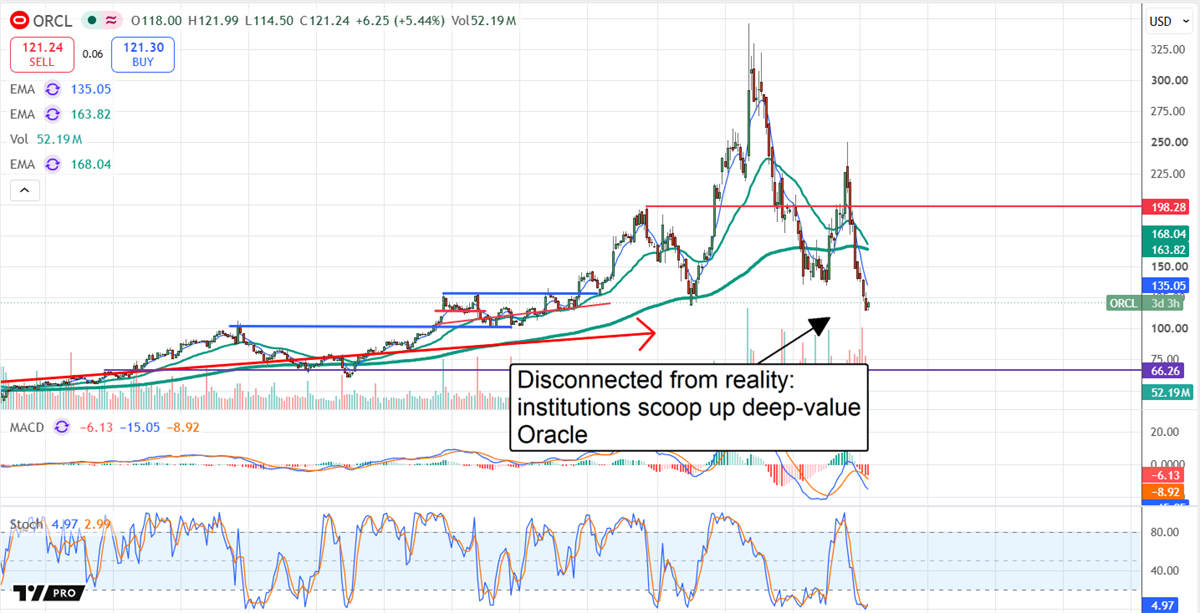
Oracle’s (NASDAQ: ORCL) insider selling played a role in its stock price correction, but this correction is overblown, completely disconnected from reality. Oracle’s market is pricing it like a startup with cash flow and cash burn risk, while it is nothing of the sort. Its massive debt increase is driven by demand and contracts promising long-term, highly visible revenue slated for recognition beginning in 2027.
In this scenario, Oracle’s debt will evaporate quickly, leading to robust free cash flow and capacity for capital returns. Until then, the company’s position as a hyperscaler serving hyperscalers is secured, providing critical data and infrastructure services, and its enterprise services business is also booming.
Institutional activity reveals they are aware of the disconnect. The group owns only 40% of the stock, low until you account for the 40% insider ownership, mostly held by chairman and founder Larry Ellison, but it has been aggressively accumulating. InsiderTrades data reveals a bullish balance for the year, accelerating to an approximate $ 4-to-$1 pace in early Q3 as the share price hit fresh lows. Thirty-nine analysts rate ORCL as a consensus Moderate Buy with potential for more than 100% upside at the consensus price target.
Credo Technology Group Unblocks Data Bottlenecks
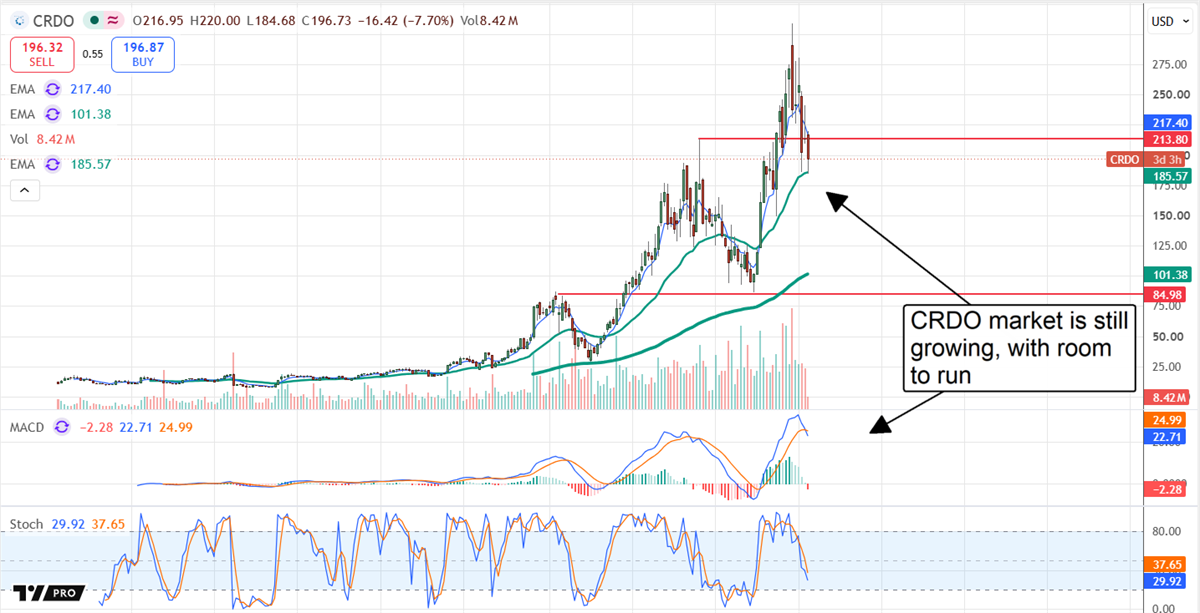
Credo Technology (NASDAQ: CRDO) is AI-critical for several reasons, including current and future revenue streams. Current revenue comes from demand for its active electric cables, useful for connecting servers and clusters, while future revenue comes from optics, optical components, and photonics. Its institutional activity reflects an influx of capital, profit-taking in alignment with recent stock price highs, and the resumption of accumulation following the correction. The takeaway is that this market is still growing, and the analyst trends suggest upside potential remains robust.
Credo Technology's analyst trends include increasing coverage, a solid Moderate Buy consensus among 19, and an uptrend in price targets, suggesting at least 35% upside is possible. Catalysts for the move include upcoming earnings releases, in which Credo is expected to post accelerating growth. Risks include disruption, but those are mitigated by partnerships and contracts with hyperscalers such as Amazon’s AWS and Microsoft, which need Credo technology to tie their GPU clusters together.
Credo’s price action reflects its strong and strengthening market, with volume rising along with prices and MACD converging with the highs. These signals reveal intrinsic strength and a high likelihood of prices retesting the existing highs, if not moving on to set fresh highs. Institutions are the core of the strength, owning more than 80% of the shares and accumulating at an approximate $4-to-$1 pace over the trailing 12 months.
Where Should You Invest $1,000 Right Now?
Before you make your next trade, you'll want to hear this.
MarketBeat keeps track of Wall Street's top-rated and best performing research analysts and the stocks they recommend to their clients on a daily basis.
Our team has identified the five stocks that top analysts are quietly whispering to their clients to buy now before the broader market catches on... and none of the big name stocks were on the list.
They believe these five stocks are the five best companies for investors to buy now...
The article "Insiders Sell, Institutions Buy: The AI Trade Is Getting More Interesting" first appeared on MarketBeat.


/An%20Intel%20sign%20out%20front%20of%20a%20corporate%20office%20by%20wolterke%20via%20Adobe%20Stock.jpeg)

/Space/Cargo%20spacecraft%20in%20low-Earth%20orbit%20by%20Paopano%20via%20Shutterstock.jpg)